Aura Kasih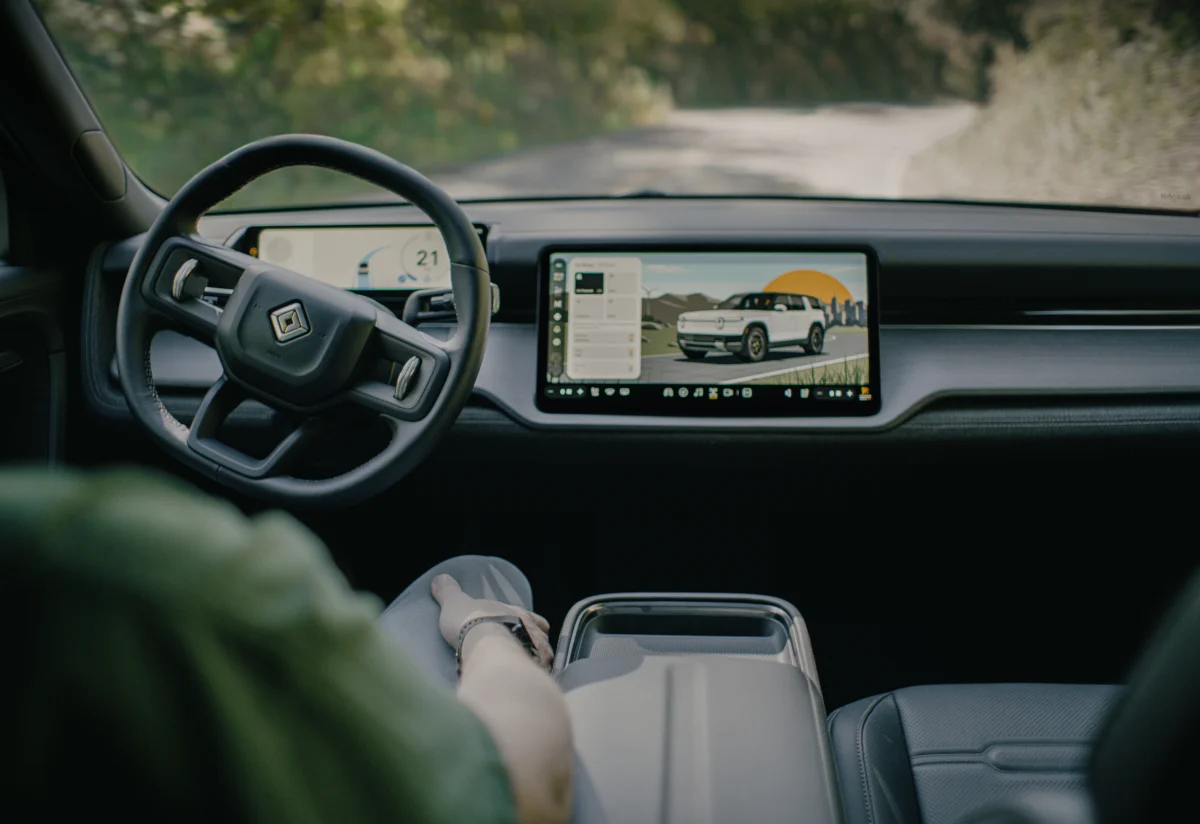
In a significant development poised to reshape the landscape of urban mobility, ride-sharing giant Uber and electric vehicle manufacturer Rivian have unveiled a comprehensive strategic partnership that includes a substantial investment and the ambitious deployment of tens of thousands of autonomous vehicles. This collaboration, announced Thursday, signifies a powerful endorsement of Rivian’s emerging self-driving capabilities and underscores Uber’s aggressive pursuit of a dominant position in the burgeoning robotaxi market.
The cornerstone of this pact is Uber’s commitment to inject up to $1.25 billion into Rivian by 2031. This financial infusion is not a simple cash injection; rather, it is strategically tied to Rivian’s progress in achieving key autonomy benchmarks. An initial $300 million tranche will be disbursed upon the agreement’s finalization, with subsequent payments contingent on Rivian meeting predetermined technological milestones. The entire arrangement is, of course, subject to the necessary regulatory approvals, a common procedural hurdle for such large-scale technological and commercial ventures.
This substantial investment represents a profound vote of confidence in Rivian’s dedicated efforts to develop advanced autonomous driving systems. The company has been proactively designing its own proprietary artificial intelligence chips, a critical component intended to power vehicles capable of Level 4 autonomy – a designation indicating that the vehicle can handle all driving tasks under specific conditions without human intervention. Simultaneously, Uber has been engaged in a concerted strategy of forging alliances across the global autonomous vehicle sector. This "partnering spree," as it has been characterized, aims to assemble a diverse portfolio of autonomous solutions, leveraging its vast customer base and extensive ride-hailing network to provide a ready market for these emerging technologies.
The initial operational phase of the Rivian-Uber alliance will focus on deploying 10,000 of Rivian’s R2 vehicles as fully autonomous taxis. These vehicles are slated to begin service in select urban centers, with San Francisco and Miami identified as the inaugural launch cities in 2028. The companies have outlined an aggressive expansion plan, envisioning the fleet’s presence in an additional 25 metropolitan areas by 2031. A key aspect of this agreement is that Rivian’s autonomous ride-hailing fleet will operate exclusively through Uber’s established application, consolidating service and offering a streamlined user experience.
This partnership bears a striking resemblance to Uber’s previous collaboration with Lucid, announced the previous summer. That deal also featured an initial $300 million investment and a commitment to deploy tens of thousands of autonomous vehicles. The strategic alignment suggests a clear pattern in Uber’s approach to building its autonomous fleet, seeking to secure large-scale deployments with partners capable of manufacturing specialized vehicles. The question arises whether Rivian CEO RJ Scaringe, observing such agreements, identified a parallel opportunity for his company to secure a significant role in this evolving transportation ecosystem.
It is crucial to acknowledge that Rivian’s autonomous driving capabilities, while promising, are still in various stages of development and validation. The company has yet to bring many of its advanced autonomous technologies to market or showcase them extensively in public settings. Last year, Rivian introduced its "Universal Hands-Free" driving feature for second-generation R1 vehicles, which is expected to be rolled out via a software update in December 2025 and will cover over 3.1 million miles of road across the United States and Canada. Furthermore, the company anticipates releasing a point-to-point hands-free driving system later this year, designed to manage complex maneuvers such as turns, intersections, and highway on- and off-ramps. In a significant step toward achieving Level 4 autonomy, Rivian also plans to integrate lidar sensors, a vital component for advanced perception, into its R2 vehicles by the end of 2026.
Should Rivian successfully meet the stringent performance and deployment milestones stipulated in the agreement with Uber, the companies project the deployment of "thousands of unsupervised Rivian R2 robotaxis across 25 cities in the US, Canada, and Europe by the end of 2031." The inclusion of European markets in this deployment strategy is particularly noteworthy, given that Rivian has not yet established an operational presence on the continent. The agreement also provides for an option to negotiate the acquisition of up to an additional 40,000 autonomous vehicles commencing in 2030, potentially bringing the total fleet size to an impressive 50,000 units.
The financial backing from Uber arrives at a pivotal juncture for Rivian, as the company gears up for the initial production phase of its R2 model. As of the beginning of the current year, Rivian reported holding approximately $6 billion in cash reserves, a figure that includes roughly $1 billion secured through its strategic alliance with Volkswagen. However, the company anticipates substantial capital expenditure, likely exceeding $2.5 billion this year alone, dedicated to scaling up R2 production. While Uber’s initial $300 million investment provides a welcome liquidity boost, it represents only a fraction of the total capital required to achieve these ambitious production targets.

Meanwhile, Uber is navigating its own set of complex challenges and strategic imperatives. The company has actively cultivated a broad spectrum of partnerships, engaging with autonomous technology startups such as Motional, Nuro, and Wayve, as well as established automakers like Lucid and Volkswagen. Uber’s overarching objective is to establish itself as the preeminent platform for autonomous ride-hailing services globally. To achieve this, it offers a suite of incentives and advantages to potential partners, including access to its extensive fleet management infrastructure and valuable anonymized training data, crucial for refining autonomous driving algorithms.
Despite these strategic maneuvers, Uber faces the persistent challenge of demonstrating its long-term relevance and ensuring continued income generation for its vast network of human drivers in an era increasingly defined by autonomous vehicle deployment. The company must effectively manage the transition towards an autonomous future while mitigating potential disruption to its existing business model and workforce. The success of these partnerships, including the significant alliance with Rivian, will be critical in shaping Uber’s competitive position and its ability to adapt to the evolving dynamics of personal transportation.
The integration of Rivian’s vehicles into Uber’s platform is more than just a fleet expansion; it represents a confluence of advanced electric vehicle manufacturing and sophisticated ride-hailing logistics. Rivian’s commitment to developing its own AI chips suggests a dedication to vertical integration in its autonomous technology stack, potentially offering a competitive edge in terms of performance and customization. This aligns with Uber’s strategy of securing reliable, technologically advanced vehicles that can be seamlessly integrated into its service ecosystem.
The phased deployment, beginning with major urban centers like San Francisco and Miami, is a pragmatic approach. These cities are often early adopters of new technologies and possess the necessary infrastructure and regulatory frameworks to support autonomous vehicle trials. Success in these pilot programs will be instrumental in building public trust and demonstrating the safety and efficiency of Rivian’s robotaxis. The subsequent expansion to 25 additional cities by 2031, including potential ventures into Europe, indicates a long-term vision for global dominance in autonomous ride-sharing.
From a financial perspective, the $1.25 billion investment, contingent on milestones, is a sophisticated financial instrument. It incentivizes Rivian to accelerate its technological development while mitigating Uber’s upfront risk. This structure allows Uber to allocate capital strategically, prioritizing partners who demonstrate tangible progress in achieving the complex requirements of Level 4 autonomy. The initial $300 million provides immediate relief to Rivian, supporting its ongoing R&D and manufacturing ramp-up for the R2.
The broader implications of this partnership extend beyond the immediate operational goals. It signals a significant shift in the automotive and transportation industries, where established players and innovative startups are increasingly collaborating to bring autonomous mobility to the masses. The deal validates Rivian’s technological roadmap and provides a crucial pathway to market for its autonomous aspirations, which have been a key part of its long-term strategy. For Uber, it solidifies its position as a central orchestrator of future mobility, aiming to be the indispensable platform connecting consumers with a diverse range of autonomous transportation options.
The competitive landscape for robotaxis is intensifying, with numerous companies vying for market share. Uber’s strategy of forming multiple alliances allows it to hedge its bets and tap into the unique strengths of different technology providers and vehicle manufacturers. However, the ultimate success of this strategy hinges on the widespread adoption and acceptance of autonomous vehicles by the public. Regulatory hurdles, public perception, and the ongoing development of robust safety protocols will all play a critical role in determining the pace and scale of robotaxi deployment.
As Rivian works towards integrating lidar and further refining its AI capabilities for the R2, the partnership with Uber provides a clear demand signal and a substantial financial anchor. The prospect of deploying up to 50,000 autonomous vehicles over the next decade represents a significant volume, which can drive economies of scale for Rivian and accelerate the maturation of its autonomous technology. The inclusion of European markets, if realized, would mark a significant international expansion for Rivian, leveraging Uber’s existing global presence.
In conclusion, the Uber-Rivian alliance is a landmark agreement that underscores the accelerating pace of innovation in autonomous vehicle technology and ride-sharing services. It represents a substantial financial commitment, a strategic alignment of technological development and market deployment, and a clear indication of the future direction of urban mobility. The success of this ambitious venture will be closely watched as a key indicator of the viability and widespread adoption of robotaxi services in the years to come.




 Safa Marwah
 Ayu Aulia
 Lisa Mariana