Lisa Mariana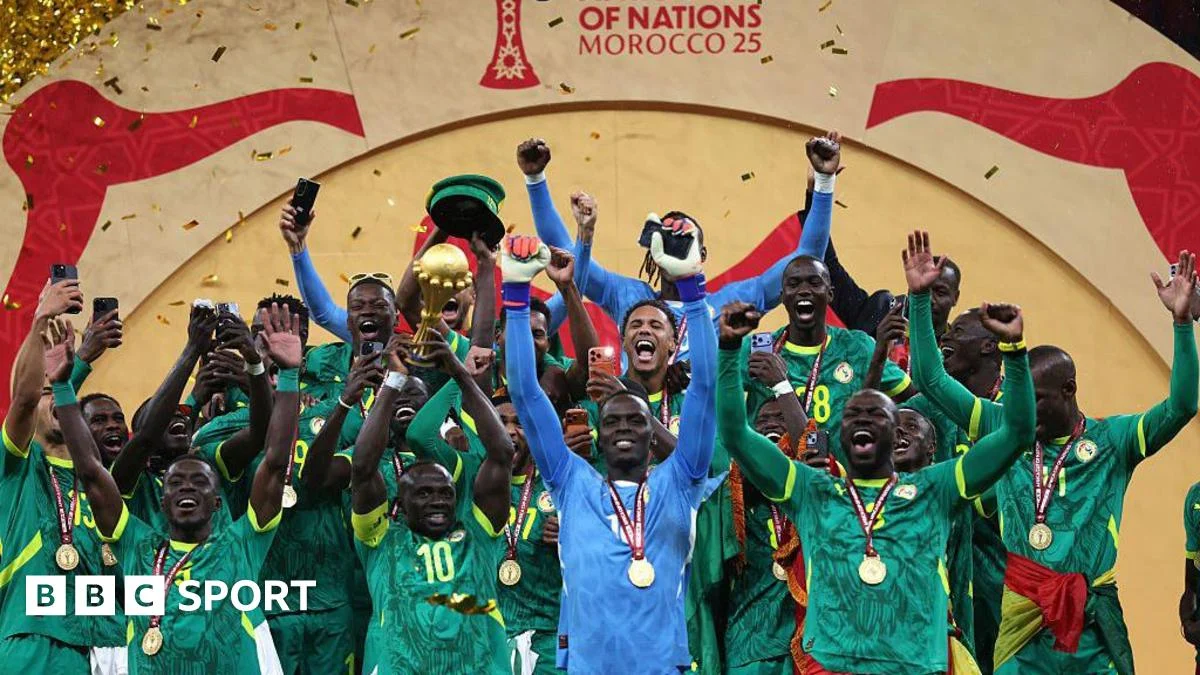
The Confederation of African Football (CAF) has officially conferred the 2025 Africa Cup of Nations (Afcon) championship upon Morocco, concluding a dramatic and controversial saga that unfolded during the tournament’s final match against Senegal. This pivotal decision reverses the on-field outcome where Senegal had initially claimed victory, attributing the title to Morocco subsequent to an appeal by the Moroccan Football Federation (FRMF) and a subsequent ruling by CAF’s appeals board citing violations of competition regulations by the Senegalese team.
The incident at the heart of this unprecedented reversal occurred on January 18, during what was anticipated to be a crowning moment for African football. The final, contested between host nation Morocco and defending champions Senegal, was marred by an extraordinary stoppage in play. With the score deadlocked at 0-0 deep into added time, the referee, Jean Jacques Ndala, awarded Morocco a penalty after a Video Assistant Referee (VAR) review indicated a foul by Senegal’s El Hadji Malick Diouf on Brahim Diaz. This decision, following an earlier disallowed goal for Senegal, triggered an immediate and defiant response from the Senegalese squad.
Led by head coach Pape Thiaw, the Senegalese players, incensed by the referee’s judgment, collectively walked off the pitch, effectively halting the match. This remarkable protest persisted for approximately seventeen minutes, during which time attempts were made by various officials and even some players, notably Sadio Mane, to persuade the team to resume play. Eventually, the Senegalese contingent returned to the field. Diaz subsequently stepped up to take the penalty, but his ‘Panenka’ attempt was comfortably saved by Senegal’s goalkeeper, Edouard Mendy. The match continued into extra time, where Villarreal midfielder Pape Gueye scored what was then considered the winning goal, securing a 1-0 victory for Senegal and what would have been their second Afcon title in five years.
However, the celebratory scenes that followed, including a bus parade in Senegal with the trophy, were overshadowed by the formal appeal lodged by the FRMF. CAF’s appeals board, after a thorough review, has now nullified Senegal’s on-field triumph. A statement from African football’s governing body explicitly declared Senegal to have "forfeited the final match," with the official score recorded as a 3-0 victory in favour of Morocco. This ruling, according to CAF, stems from Senegal’s infringement of Article 82 of the Africa Cup of Nations regulations, which stipulates that a team refusing to play or abandoning the pitch without referee’s authorization will be considered to have lost and be eliminated from the competition. Article 84 further complements this by establishing a default 3-0 loss and permanent elimination for any team violating Article 82.
The Senegalese Football Federation (FSF) has vehemently rejected CAF’s decision, branding it "unfair, unprecedented and unacceptable." In response, the FSF has announced its intention to escalate the matter to the Court of Arbitration for Sport (CAS), indicating a prolonged legal battle over the championship title. This stance underscores the profound disagreement and the perceived injustice felt by the Senegalese camp, particularly given their on-field performance and the emotional investment in what they believed was a legitimate victory. The public display of their celebration, captured in a video posted on the national team’s social media, further illustrates the stark contrast between their perceived achievement and the subsequent administrative verdict.
From Morocco’s perspective, the appeal was not an attempt to diminish Senegal’s sporting performance but rather a principled stand for the consistent application of competition rules. The FRMF’s statement clarified that their action was "never intended to challenge the sporting performance of the teams" but was a demand for "the application of the competition’s regulations." This position emphasizes a commitment to regulatory adherence, clarity within the competitive framework, and maintaining stability across African football tournaments, portraying their appeal as a defense of the integrity of the game’s statutes.
This extraordinary turn of events introduces a complex layer of implications for African football, touching upon issues of sporting integrity, regulatory enforcement, and the emotional connection of fans to the game. As Maher Mezahi, a North African football journalist, highlighted, the administrative decision, while legally binding, cannot erase the vivid memories of the match’s dramatic conclusion for those who witnessed it. The visual and emotional impact of Senegal lifting the trophy and conducting a victory parade remains a potent counter-narrative to the formal declaration of Morocco as champions. This dissonance between the legal outcome and the lived experience of the event poses a significant challenge to the narrative of fair play and undisputed victory.
The role of VAR in high-stakes matches also comes under renewed scrutiny. While intended to enhance accuracy, its interventions often lead to prolonged delays and intense debate, sometimes overshadowing the flow of the game itself. The contentious penalty decision, following a VAR review, was the immediate catalyst for Senegal’s walk-off, underscoring the delicate balance between technological assistance and maintaining the game’s momentum and spirit. The subsequent reaction from Senegal’s coach, Pape Thiaw, who later admitted to acting "in the heat of the moment" when ordering his team off the pitch, points to the immense pressure and emotional volatility inherent in such crucial encounters. FIFA President Gianni Infantino’s strong condemnation of the "ugly scenes" further amplified the global concern over the conduct displayed during the final.
The broader implications extend to the governance of CAF and its ability to manage controversies of this magnitude. The decision sets a significant precedent for future infractions of disciplinary codes within African competitions. It reinforces the notion that even in the most high-profile matches, regulatory breaches will be met with severe penalties, irrespective of on-field performance. This firm stance by CAF, while potentially unpopular in certain quarters, aims to uphold the sanctity of its rulebook. However, the impending appeal to CAS suggests that the final word on this championship may yet be some time away, with the international sports tribunal being the ultimate arbiter. A ruling by CAS could either solidify CAF’s authority or, conversely, challenge its judgment, potentially leading to further instability.
For Morocco, being declared champions of Afcon 2025 carries particular significance as the nation is set to host the tournament. Winning the title, albeit through an administrative decision, provides a certain momentum and prestige for the host nation, reinforcing its position within African football. This outcome, however, also places a spotlight on the team’s coaching staff, with Morocco having previously parted ways with head coach Walid Regragui on March 5, months before the World Cup finals, in a move that might have been indirectly influenced by the tumultuous Afcon final and its aftermath.
The long-term impact on Senegal, beyond the immediate disappointment, could include reputational damage and a period of introspection regarding team discipline and adherence to regulations. The FSF’s resolute determination to pursue the matter through CAS indicates their commitment to clearing their name and reclaiming what they perceive as a stolen victory. This legal battle will be closely watched by the global football community, as it could shape how similar incidents are handled in the future and redefine the boundaries of protest and regulatory compliance in major tournaments. Ultimately, this episode serves as a stark reminder that the drama of football extends far beyond the ninety minutes of play, often entangling itself in complex legal and ethical considerations that profoundly affect its participants and governing bodies.




 Aura Kasih
 Safa Marwah
 Ayu Aulia