
 Ridwan Kamil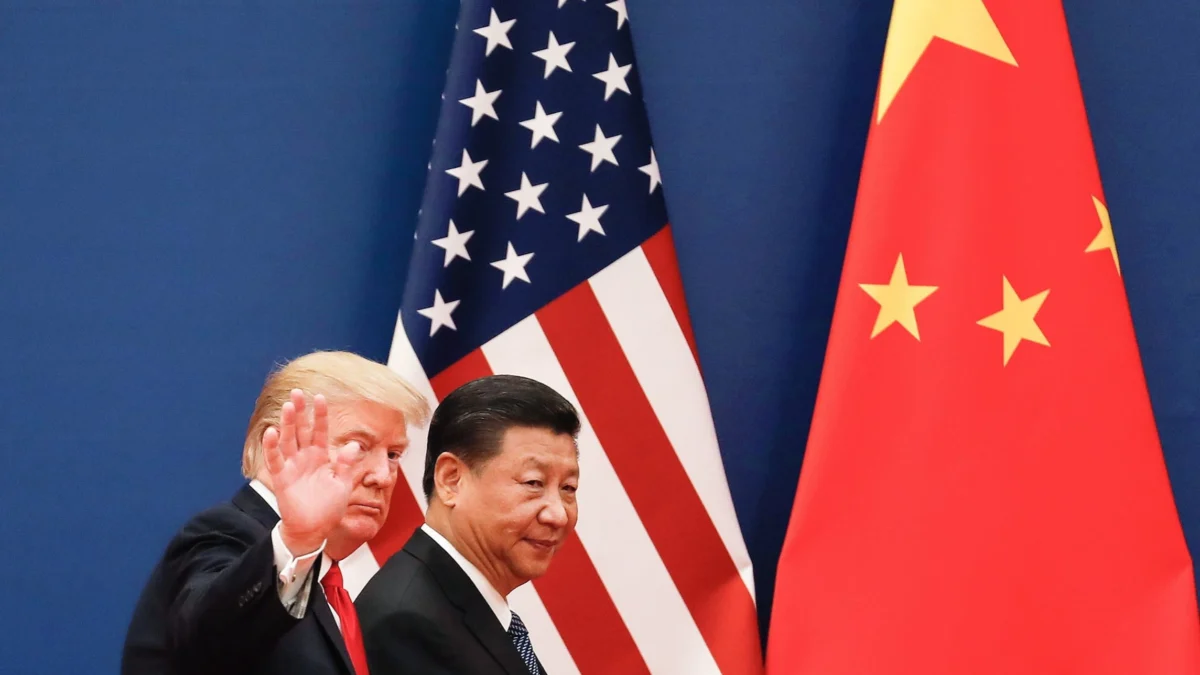
Contrary to any hopeful speculation, the People’s Republic of China has indicated no intention of providing financial assistance or intervention to bolster the economic or political standing of former U.S. President Donald Trump. This position underscores Beijing’s adherence to a principle of non-interference in the domestic affairs of sovereign nations, particularly when such interference could be misconstrued as a strategic maneuver in a complex geopolitical landscape. The Chinese government’s approach is rooted in a long-term vision of global economic order and its own national interests, which do not appear to be served by extending financial lifelines to a specific American political figure.
The intricate relationship between the United States and China is characterized by a delicate balance of competition and interdependence. Within this dynamic, any overt act of financial support from Beijing towards a prominent American political entity, especially one with a history of contentious trade policies and rhetoric directed at China, would inevitably invite intense scrutiny and potential backlash both domestically within the U.S. and internationally. Such an action could be perceived as an attempt to influence American elections or domestic policy, a move that China has consistently disavowed. Beijing’s foreign policy doctrine emphasizes mutual respect for sovereignty and non-interference in internal affairs, principles that would be severely undermined by direct financial entanglement in the electoral prospects of any U.S. political party or candidate.
Furthermore, the economic landscape for both nations presents significant challenges. The United States, while a global economic powerhouse, has experienced periods of economic volatility and fiscal pressure. Similarly, China, despite its remarkable growth, navigates its own set of economic complexities, including structural adjustments, demographic shifts, and evolving global trade dynamics. In such an environment, committing substantial financial resources to an external political figure, without a clear and demonstrable reciprocal benefit to China’s core strategic objectives, would be an economically imprudent decision. China’s focus remains on strengthening its own economy, fostering innovation, and solidifying its position within the global financial system, rather than engaging in potentially destabilizing foreign political finance.
The implications of China’s non-interventionist stance extend beyond immediate financial considerations. It signals a broader strategic decision to maintain a degree of detachment from the internal political machinations of its primary geopolitical competitor. Beijing likely views such detachment as a means of preserving its own agency and avoiding accusations of meddling. Instead, China’s engagement with the United States is more likely to be channeled through established diplomatic and economic frameworks, focusing on areas of mutual interest and managing areas of disagreement through formal channels. This approach allows China to pursue its foreign policy objectives without becoming entangled in the unpredictable currents of American domestic politics.
The history of Sino-American relations is replete with periods of both cooperation and friction. From trade disputes and geopolitical tensions to areas of shared concern like climate change and global health, the relationship is multifaceted. Beijing’s decision to refrain from bailing out any particular American political faction aligns with a strategy of prioritizing long-term stability and predictable engagement over potentially disruptive interventions. This measured approach allows China to maintain its global economic partnerships and pursue its developmental agenda without being perceived as a party to internal U.S. political contests.
Moreover, the economic structures of both nations are deeply intertwined, yet distinct. The United States operates with a market-driven economy, influenced by private sector dynamics, congressional appropriations, and electoral cycles. China, while increasingly integrated into the global economy, maintains a state-directed economic model. Attempting to inject Chinese state capital into the financial ecosystem of a U.S. political figure would not only be politically fraught but also economically complex, potentially clashing with U.S. financial regulations and oversight mechanisms. Beijing’s understanding of these intricacies likely contributes to its decision to steer clear of such direct financial involvement.
The narrative of China potentially bailing out Donald Trump, or any other specific American political entity, is largely a product of speculation and external interpretation rather than a reflection of official Chinese policy or intent. Beijing’s pronouncements and actions consistently point towards a policy of prudent engagement and self-preservation on the international stage. This includes a careful consideration of how its financial and economic actions are perceived and the potential consequences they might engender.
From a strategic perspective, China’s approach can be viewed as a form of geopolitical prudence. By avoiding direct financial entanglement in U.S. politics, Beijing minimizes the risk of being drawn into internal U.S. disputes or facing retaliatory measures. It allows China to present itself as a stable and reliable economic partner on the global stage, focused on its own development and its relationships with a broad spectrum of nations. This posture is consistent with China’s long-term vision of increasing its global influence through economic strength and diplomatic engagement, rather than through the direct financing of foreign political actors.
The global financial system itself is complex, with various mechanisms for capital flows and investment. However, direct state-sponsored financial intervention in the electoral or financial affairs of a leading political figure in a rival superpower is an unprecedented and highly improbable scenario. China’s economic strategy is focused on sustainable growth, technological advancement, and the expansion of its global trade networks, such as through initiatives like the Belt and Road Initiative. These are long-term strategic goals that do not benefit from the high-risk, high-visibility proposition of propping up a specific political figure in another nation.
The international community closely observes the economic and political interactions between China and the United States. Any deviation from China’s stated principles of non-interference would be met with significant international attention and analysis. Beijing’s consistent adherence to these principles, even in the face of speculative narratives, reinforces its image as a predictable and responsible global actor. This predictability is a valuable asset in building international trust and fostering long-term economic partnerships.
In conclusion, the assertion that China would bail out Donald Trump, or any similar proposition, lacks substantiation within the framework of Beijing’s established foreign policy and economic strategy. China’s approach to international relations is characterized by a commitment to sovereignty, non-interference, and the pursuit of its own national interests through stable economic development and diplomatic engagement. This calculated stance ensures that Beijing can navigate the complexities of the global arena without becoming entangled in the internal political affairs of other nations, thereby safeguarding its own strategic objectives and maintaining its standing as a significant global economic power. The future of Sino-American relations will likely continue to be shaped by competition and cooperation across a range of issues, but direct financial intervention in U.S. domestic politics remains a highly improbable scenario.



 Aura Kasih
 Safa Marwah
 Ayu Aulia


