Lisa Mariana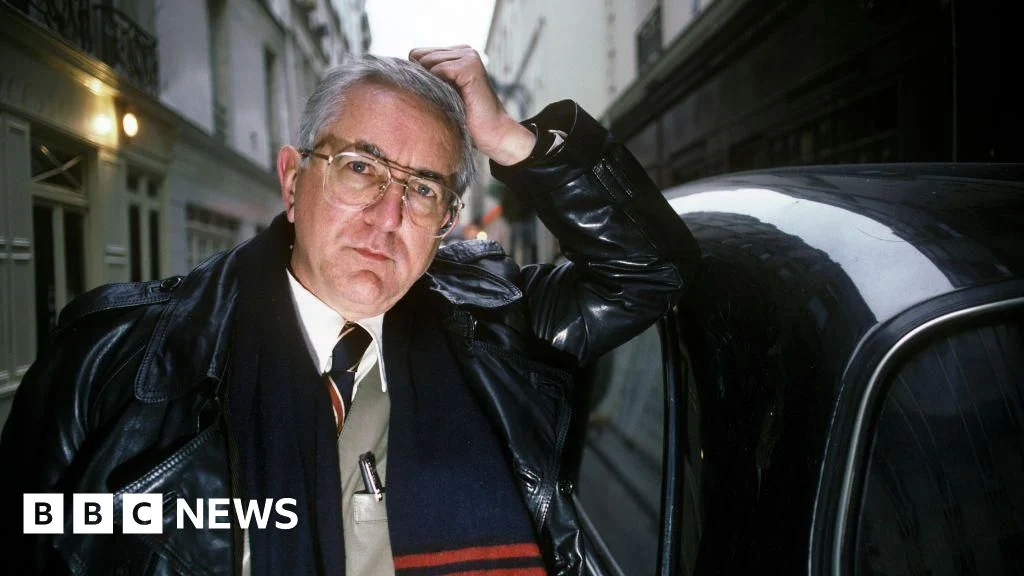
The literary world mourns the passing of Len Deighton, the seminal British author whose distinctive blend of meticulous research, working-class sensibility, and dry wit transformed the spy genre, challenging the glamorous conventions of his contemporaries. Deighton, who died at the age of 97, forged an extraordinary career that spanned espionage novels, historical non-fiction, and even pioneering cookery writing, leaving an indelible mark on post-war British culture.
Born Leonard Cyril Deighton in Marylebone, London, on February 18, 1929, his early life was shaped by circumstances far removed from the exotic locales of international intrigue he would later pen. His arrival in the sick bay of a workhouse, due to the local hospital’s overcrowding, underscored a background rooted in the realities of working-class Britain. His mother served as a cook and his father as a chauffeur for a wealthy family, experiences that provided Deighton with an intimate understanding of social strata and the subtle power dynamics often at play behind closed doors. This upbringing fostered a keen observational eye and a nuanced perspective on class that would later become a hallmark of his most famous characters.
A pivotal moment in his formative years occurred in 1940 when Anna Wolkoff, a client of his mother, was apprehended by British Security Services on suspicion of wartime Nazi espionage. This dramatic event, witnessed firsthand, profoundly influenced the young Deighton. "It was a major factor in my decision to write a spy story at my first attempt at fiction," he later reflected, revealing the deep-seated origins of his fascination with the hidden world of intelligence. This personal encounter with the shadowy underbelly of national security provided a potent, authentic seed for the sophisticated narratives he would later construct.
Deighton’s formal education was, by his own admission, less than inspiring. He found school tedious, often playing truant. However, this aversion to structured learning did not equate to a lack of intellectual curiosity. Instead, it fueled a voracious appetite for self-education. Encouraged by his father to apply himself to reading, Deighton spent countless hours immersed in books at the local library, a solitary pursuit he wryly described as a "terrible kind of sedentary childhood." This period of self-directed learning honed his analytical skills and exposed him to a vast array of subjects, contributing to the impressive breadth of knowledge evident in his diverse bibliography.
His National Service in the Royal Air Force provided practical, hands-on experience that would prove invaluable for his future career. Here, he acquired an eclectic mix of skills, including photography, flying, and scuba diving—abilities that could easily belong to a fictional secret agent. These experiences grounded his narratives in a convincing realism, a stark contrast to the more fantastical elements often found in contemporary thrillers. Before settling into writing, Deighton held various jobs, including a railway clerk and an air steward, further broadening his understanding of different walks of life.
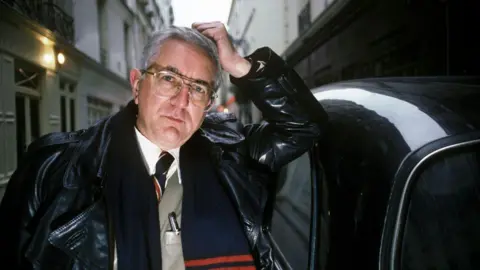
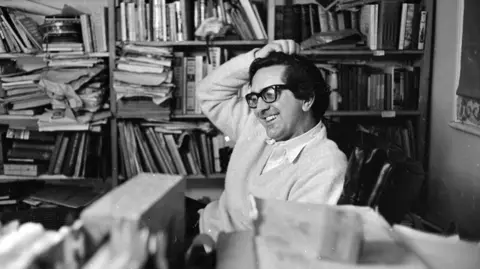
After his military service, Deighton pursued his artistic talents, studying at the Royal College of Art. He embarked on a successful career as a book illustrator, a skill that showcased his visual flair and attention to detail. This artistic background was not merely a stepping stone but an integral part of his creative identity; he personally designed over 200 book covers, including the iconic first UK edition of Jack Kerouac’s On The Road. His illustrative prowess extended to his passion for food. A dedicated gourmand, Deighton created and illustrated a popular cartoon cookery strip for the Daily Express, which later transitioned to The Observer in 1962. These strips were compiled into influential cookbooks such as The Len Deighton Action Cookbook and Ou Est le Garlic (Where is the Garlic), which were instrumental in demystifying French cuisine for a British audience and catering to the emerging demographic of young, independent singles navigating domestic life for the first time. His culinary contributions were significant, introducing sophisticated, yet accessible, gastronomy to a nation still largely recovering from wartime rationing.
It was during a holiday that Deighton began to craft a story about a secret agent, initially without any intention of publication. The cultural zeitgeist, however, was shifting. The release of the first James Bond film, Dr. No, had ignited widespread public interest in the espionage genre. A fortuitous encounter with a literary agent led to his manuscript being sold, and in 1962, The Ipcress File was unleashed upon the world. The novel immediately garnered critical acclaim, often cited by reviewers as a refreshing counterpoint to the more flamboyant adventures of Ian Fleming’s 007. Deighton later quipped that critics "used me as a blunt instrument to beat Ian Fleming over the head," a testament to the novel’s immediate impact.
The success of The Ipcress File was cemented when film producer Harry Saltzman acquired the rights. Though the protagonist remained unnamed in Deighton’s original text, the character was famously christened Harry Palmer for the 1965 film adaptation, brought to life by the incomparable Michael Caine. Palmer represented a radical departure from the archetypal spy. His world was not one of dazzling casinos and exotic liaisons but rather the mundane, often frustrating, bureaucracy of 1960s London. He was a working-class hero, a conscious choice by Deighton, influenced by his experiences on an advertising agency board where he was surrounded by Eton-educated colleagues. Palmer’s struggles with expense reports and internal office politics offered a relatable, cynical perspective on the world of espionage, a stark contrast to Bond’s effortless charm and globe-trotting escapades. Deighton deliberately eschewed gratuitous violence, adhering to a personal code that "violence must not solve the problem."
Deighton took a keen personal interest in the filming process, frequently visiting the set and forging a lasting friendship with Michael Caine. His practical skills even made it into the film; it was Deighton’s hands, not Caine’s, that deftly cracked two eggs simultaneously in the memorable omelette-making scene. The film adaptation of The Ipcress File was a critical and commercial triumph, earning a BAFTA, and cementing Harry Palmer as an enduring cinematic icon. Caine reprised the role in four subsequent film adaptations, including Funeral in Berlin and Billion Dollar Brain, further solidifying Deighton’s place in the pantheon of spy fiction. Funeral in Berlin notably spent six months on The New York Times bestseller list, and An Expensive Way to Die was serialized in Playboy, for which Deighton also served as a travel writer.
The 1960s were a vibrant period for Deighton, who became an integral part of London’s dynamic arts scene. His renowned culinary skills often saw him hosting lavish dinner parties for a constellation of celebrities. In 1969, he ventured into filmmaking, co-producing and writing the screenplay for the film adaptation of the satirical musical, Oh! What a Lovely War. He famously persuaded Richard Attenborough to make his directorial debut on the project, though an attempt to enlist Paul McCartney for a leading role, orchestrated over a curry at Deighton’s home, ultimately proved unsuccessful. Despite his significant contribution, Deighton was dissatisfied with the final cut of the film and insisted on removing his name from the credits, a decision he later conceded was "childish." Nonetheless, his resourcefulness on set endeared him to the crew when he skillfully hot-wired several cars that needed to be relocated for filming.
Beyond espionage, Deighton demonstrated his versatility with works like Bomber (1970), a powerful anti-war novel meticulously detailing an RAF raid over Germany from multiple perspectives: the bomber crews, German fighter pilots, and the terrified townspeople below. Published just a quarter-century after the events it depicted, Bomber caused considerable discussion due to its unflinching portrayal of German civilian suffering, challenging prevailing narratives of wartime heroism. Literary giant Kingsley Amis recognized its profound impact, listing it among the 99 greatest novels since 1939, and the BBC later produced a real-time radio dramatization to commemorate the 50th anniversary of World War II’s end.
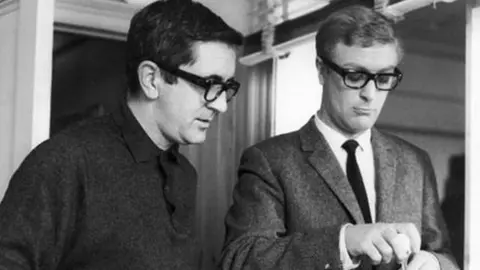
Deighton continued to explore the 20th century’s most devastating conflict in both non-fiction and alternative history. His 1977 non-fictional account of the Battle of Britain, Fighter, garnered praise even from unlikely sources, with Hitler’s former armaments minister, Albert Speer, describing it as "excellent." A year later, SS-GB offered a chilling alternative history envisioning a scenario where Germany had triumphed in the Battle of Britain, predating similar concepts by other authors like Robert Harris by two decades. These works cemented Deighton’s reputation not just as a master of spy fiction, but as a perceptive historian and an imaginative speculative writer.
The 1980s saw the introduction of a new spy protagonist, Bernard Samson, in the novel Berlin Game. Like his earlier unnamed agent, Samson was depicted as a jaded and cynical figure, grappling with an often-incompetent bureaucracy and a healthy disregard for his superiors. This character anchored three trilogies of novels published between 1983 and 1996, further exploring the moral ambiguities and psychological toll of espionage. While a lavish 12-part Granada Television adaptation of the first trilogy, Game, Set and Match, was produced, its poor reception led Deighton to forbid its subsequent broadcast, underscoring his uncompromising artistic standards.
After completing Faith, Hope and Charity in 1996, Deighton decided to take a sabbatical. This break, however, unexpectedly marked the end of his literary career. In a 2006 interview with BBC Radio 4, he candidly revealed to Patrick Humphries that he had come to view writing as "a mug’s game" and expressed no desire to resume. Following his retirement, he relocated to Ireland with his second wife, Ysabele, and their two sons, later dividing their time between residences in Portugal and Guernsey, a retirement he publicly confirmed in 2016.
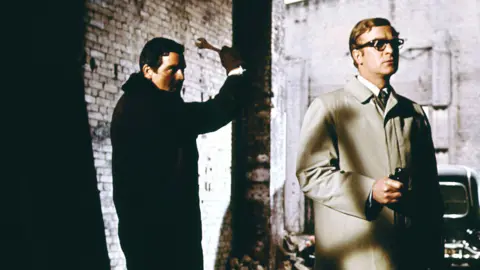
For a period, Deighton’s spy novels experienced a decline in public prominence, overshadowed by the continuous marketing juggernaut of the James Bond film franchise. However, a significant revival of interest in his work has occurred in recent years. In 2017, the BBC broadcast a critically acclaimed dramatization of SS-GB, nearly four decades after its initial publication, bringing his prescient alternative history to a new generation. This resurgence continued in 2022 with a new ITV adaptation of The Ipcress File, starring Joe Cole, Lucy Boynton, and Tom Hollander, reaffirming the enduring relevance and timeless appeal of his original vision.
Len Deighton, a man who rarely granted interviews, never considered himself a natural writer. He once mused on BBC’s Desert Island Discs, "The best thing about writing books… is being at a party and telling some pretty girl you write books. The worst thing is sitting at a typewriter and actually writing the book." Yet, he understood the profound impact of his craft. He famously likened the act of creating a book to manufacturing a hand grenade: "It’s a dull process but when you throw it the person at the other end gets the effect." This analogy perfectly encapsulates his legacy: a meticulous craftsman who, with quiet precision, fashioned narratives that exploded conventional expectations, forever altering the landscape of spy fiction and beyond. His unique voice, spanning gritty realism, historical insight, and culinary flair, ensured his place as one of the most original and influential British authors of the 20th century.




 Aura Kasih
 Safa Marwah
 Ayu Aulia