Lisa Mariana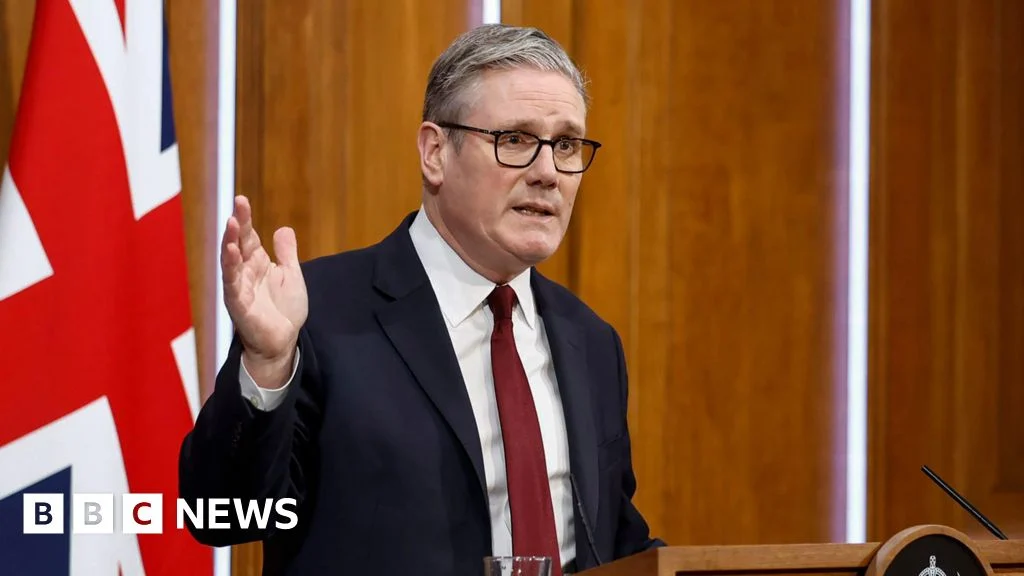
In a complex geopolitical landscape, the United Kingdom’s Prime Minister, Sir Keir Starmer, has adopted a meticulously calculated stance on recent international conflicts, a position that has drawn consistent and sharp public criticism from the current US President, Donald Trump. This dynamic interplay between London’s assertion of strategic autonomy and Washington’s vocal dissatisfaction highlights the evolving contours of the transatlantic alliance, compelling a closer examination of the principles guiding British foreign policy decisions and their potential implications.
President Trump’s recent public pronouncements have underscored an unusual strain in diplomatic relations between two historically close allies. In numerous public appearances over recent days, the American President has repeatedly directed critical remarks towards the British Prime Minister and the United Kingdom’s foreign policy approach. Known for his unfiltered communication style, President Trump’s sustained and often unsolicited criticisms have been notably pointed, employing vivid and memorable language that has resonated widely across global media platforms. This consistent public rebuke, while undeniably creating an awkward diplomatic situation for Prime Minister Starmer, is not universally perceived within British political circles as entirely detrimental to his strategic objectives.
A significant dimension of the current diplomatic friction revolves around differing interpretations of recent high-level communications. Specifically, there exists a discernible disagreement regarding the precise details of discussions held between the two leaders over recent weeks, particularly concerning specific requests made by Washington and the responses provided by London. While Downing Street has maintained a cautious approach, refraining from engaging in a public war of words with the White House, informed sources within Whitehall contend that the President’s public recounting of these private conversations has contained inaccuracies. These sources suggest that certain specifics of the leaders’ discussions have been misrepresented in President Trump’s public statements.
For instance, British sources categorically refute the assertion that a request was ever made for the deployment of British aircraft carriers to the Gulf region, or that an offer to provide such assets was ever extended. They emphasize that the strategic utility of aircraft carriers lies in their capacity to provide a mobile aerial platform where land-based facilities are absent. However, the United Kingdom already possesses a strategically vital land-based airbase, RAF Akrotiri in Cyprus, which offers similar operational capabilities within the region, rendering a carrier deployment in the Gulf less imperative for certain types of air operations. This clarification underscores a potential misunderstanding or mischaracterization of British military capabilities and strategic planning.
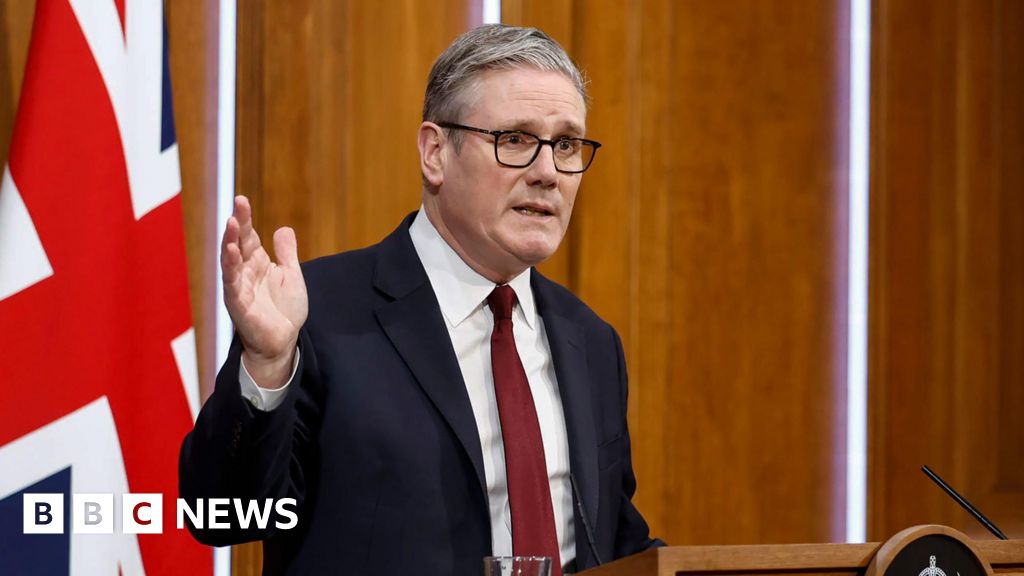
Furthermore, detailed accounts from British officials delineate three distinct formal requests conveyed by Washington to the United Kingdom during the recent period of heightened regional tension. The initial request pertained to the use of British airfields for offensive operations in the context of the early stages of the conflict; this request was respectfully declined. Subsequently, a second request sought the use of these same airfields for purely defensive purposes, particularly in response to Iran’s retaliatory strikes against neighbouring states; this request was granted. The third formal request involved British support to ensure the unimpeded passage of oil tankers through the vital Strait of Hormuz, a critical maritime choke point; negotiations regarding the modalities of this support are currently ongoing. These distinctions highlight a nuanced approach by the UK, differentiating between offensive military participation and defensive or maritime security cooperation.
British political circles also offer a different perspective on President Trump’s characterization of Prime Minister Starmer’s insistence on consulting his "team." From Westminster’s viewpoint, this was not an act of prevarication or indecision, but rather a standard and prudent exercise in due diligence. It represented a commitment to thorough consultation with senior British military commanders and defence strategists to ascertain the practical feasibility and strategic implications of any proposed action. Moreover, it reflected a dedication to coordinating with other international allies, ensuring a coherent and multilateral response rather than an isolated or precipitous one. This interpretation frames Starmer’s approach as one of responsible leadership, prioritizing careful assessment over immediate compliance.
Beyond the formal exchanges and the public airing of grievances, a deeper analysis reveals a profound sense of conviction underpinning Prime Minister Starmer’s foreign policy decisions. There is a discernible confidence within his government that the chosen path, despite the formidable pressure from Washington, represents the most judicious course of action. This conviction appears to be rooted in a convergence of several key strategic and political considerations.
Firstly, Starmer’s judgment in the current conflict appears significantly informed by historical parallels, particularly his consistent reference to the Iraq War of two decades prior. A vocal opponent of that conflict at the time, Starmer has repeatedly emphasized the lessons learned from that intervention, notably the perils of unilateral action, the importance of robust intelligence, and the long-term destabilizing consequences of ill-conceived military engagements. By drawing these parallels, he signals a commitment to avoiding past errors, suggesting that a cautious and principled approach is paramount. This historical perspective serves as a powerful anchor for his current policy, resonating with a segment of the British public and political establishment still grappling with the legacy of Iraq.
Secondly, a foundational element of Starmer’s approach is a steadfast adherence to international law. His government’s position, shared by a substantial, though not universal, segment of international legal opinion, posits that certain actions undertaken by the United States and its allies in the recent conflict may have constituted breaches of established international legal frameworks. This commitment to upholding the international rules-based order is not merely an abstract principle but a pragmatic component of British foreign policy, serving to legitimize actions and build international consensus. By prioritizing international law, Starmer aims to position the UK as a responsible global actor, distinct from more unilateralist approaches.
Furthermore, Starmer’s strategic decisions demonstrate a remarkable alignment across various critical constituencies. Domestically, his foreign policy stance aligns closely with the prevailing sentiment among Labour Members of Parliament. For any Prime Minister, maintaining the confidence and support of their parliamentary party is indispensable, and in this instance, Starmer’s cautious and principled approach appears to have successfully navigated potential internal divisions, fostering a sense of unity within his political base. This internal cohesion is a crucial asset, particularly when facing external pressures.
Concurrently, this approach also resonates with the broader British public opinion. Polling data indicates a significant public appetite for restraint and a preference for diplomatic solutions over military escalation in the region. This convergence of parliamentary and public sentiment provides a robust domestic mandate for Starmer’s government, enabling him to assert a degree of independence in foreign policy without significant internal dissent. The alignment of these diverse political and public sentiments is a rare occurrence on complex international issues, granting Starmer a strong foundation for his decisions.
Despite this internal coherence and strategic rationale, the shadow of President Trump’s persistent disapproval remains a significant and undeniable factor. The frequency and intensity of his criticisms suggest a deep-seated dissatisfaction that is unlikely to be easily forgotten or dismissed. This enduring grievance poses a distinct challenge for future US-UK relations, particularly anticipating any subsequent direct encounters between Prime Minister Starmer and President Trump. Such future interactions are poised to be highly scrutinized spectacles, emblematic of the broader diplomatic tensions.
The implications of this diplomatic friction extend beyond immediate bilateral relations. The UK’s assertion of strategic independence, particularly in the face of strong US pressure, could redefine its role on the global stage. It signals a potential shift towards a more autonomous foreign policy, less tethered to Washington’s immediate demands and more aligned with a multilateral, rules-based international system. This could bolster the UK’s standing among European allies and other nations wary of unilateralism, but simultaneously risks alienating a key security and economic partner in the United States, especially under a Trump presidency.
Looking ahead, the trajectory of the US-UK "special relationship" hinges significantly on how these differences are managed. While the current dynamic is undoubtedly strained, it also presents an opportunity for the UK to demonstrate its capacity for independent thought and action, particularly concerning military interventions and adherence to international legal norms. The ability to navigate such a high-stakes diplomatic tightrope, balancing allied solidarity with national interest and principled conviction, will be a defining test of Starmer’s premiership. Ultimately, Prime Minister Starmer remains steadfast in his conviction that the prevailing evidence and unique circumstances of the conflict left his government with a limited array of viable alternatives, compelling him towards the path he has chosen. The full ramifications of this calculated stance will unfold as geopolitical events continue to evolve and the nature of transatlantic relations is re-evaluated in this new era.



 Aura Kasih
 Safa Marwah
 Ayu Aulia