Lisa Mariana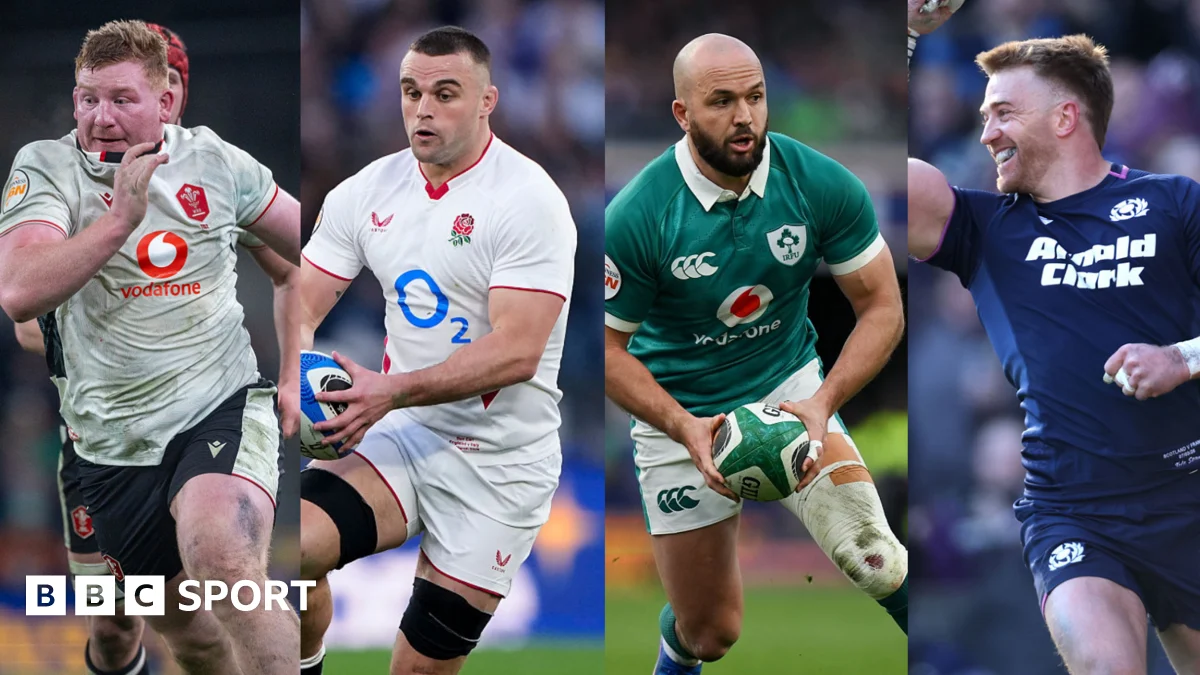
The conclusion of the 2026 Six Nations Championship, culminating in France’s record-setting eighth title after a dramatic Parisian encounter with England, has ignited fervent debate across the rugby landscape regarding individual performances. Widely acclaimed as perhaps the most compelling tournament in history, its intensity and unpredictable nature have presented a unique challenge for post-championship analysis, particularly in the selection of an elite team. Prominent analytical figures from the BBC Rugby Special program, former Wales captain Sam Warburton and erstwhile Scotland skipper John Barclay, have meticulously constructed their respective "Teams of the Tournament," offering profound insights into the attributes deemed most impactful in an era of heightened athletic and tactical demands.
Despite Les Bleus’ triumphant campaign, the notable absence of their talismanic captain, Antoine Dupont, from the scrum-half position in both expert selections underscores the extraordinary depth of talent and the highly competitive nature of the tournament. Similarly, the exclusion of Scottish maestro Finn Russell, despite moments of breathtaking ingenuity, highlights the rigorous criteria applied by the pundits. Intriguingly, only one English player found a place across both teams, specifically in Warburton’s forward pack, indicating a tournament dominated by other national contingents. While the two analysts presented divergent choices for their forward units, a remarkable consensus emerged in their backline selections, pointing to a shared appreciation for specific offensive and defensive attributes among the tournament’s most effective outside backs and centres.
The exercise of selecting a "Team of the Tournament" extends beyond mere statistical aggregation; it is a qualitative assessment of influence, consistency under pressure, and the capacity to elevate team performance. Pundits often weigh factors such as clutch moments, leadership in challenging circumstances, and the ability to consistently deliver high-impact contributions across multiple phases of play. The 2026 championship, characterized by razor-thin margins and several upsets, provided a fertile ground for such nuanced evaluation, where individual brilliance often translated directly into pivotal match outcomes. The following detailed analysis dissects the rationale behind each selection, offering a deeper understanding of what constituted elite performance in this memorable Six Nations edition.
The Front Row: Power, Precision, and Relentless Work Rate
The foundational battleground of rugby, the front row, saw distinct preferences from Warburton and Barclay, reflecting differing emphasis on specific attributes.
At hooker, Sam Warburton’s choice of Dewi Lake (Wales) speaks volumes about the evolving demands of the position. Lake’s statistical output throughout the championship was exceptional, mirroring what Warburton termed a "triple-double" in basketball parlance. This refers to his consistent, high-volume contributions across ruck hits, ball carries, and tackles – a testament to his relentless work rate and omnipresence in the loose. His physical prowess and abrasive scrummaging further solidify his value in the modern game, where hookers are increasingly expected to be dynamic, all-field operators rather than solely set-piece specialists. While acknowledging that his line-out throwing might be an area for ongoing refinement, Lake’s leadership, particularly in steering a Welsh side through a challenging campaign, showcased an invaluable ability to "front up" in adversity, a hallmark of true captaincy.
Conversely, John Barclay’s selection of Julien Marchand (France) highlights a different, yet equally critical, set of virtues. Marchand’s consistent high-level performance across all facets of the game – robust carrying, astute decision-making, precise line-out darts, and strong scrummaging – underscores his status as a benchmark hooker. His reliability and technical proficiency in the core duties of the position, combined with his contributions in open play, made him an indispensable component of France’s title-winning effort.
In the crucial tight-head prop position, Barclay made a compelling case for Simone Ferrari (Italy). His inclusion is a powerful endorsement of Italy’s significant strides in scrummaging dominance throughout the tournament. Ferrari’s ability to dismantle opposition scrums, famously exemplified by his physical dominance in lifting opponents "to the clouds," speaks to a rare blend of power and technical mastery. The impact of his absence was palpable, as noted by Italian rugby legend Sergio Parisse, who highlighted Ferrari’s critical role in Italy’s forward platform. His presence fundamentally altered the dynamics of the set-piece, providing a solid foundation from which Italy could launch their attacking initiatives and generate penalties.
The Engine Room: Destructive Force and Versatile Leadership
The second row, often referred to as the engine room, saw a shared French presence in Barclay’s selection, highlighting the immense physical and tactical contributions from Les Bleus’ heavy hitters.
Charles Ollivon (France), a player renowned for his versatility, earned a place in Barclay’s second row. While primarily known as a back-row forward, Ollivon’s ability to transition into the lock position showcases his exceptional rugby intelligence and physical adaptability. His involvement in critical game moments and strong support play underline his status as a "classy player." In the second row, his role would shift towards the more traditional "heavy lifting" – the less glamorous but equally vital work of rucking, mauling, and set-piece engagement. This strategic deployment speaks to his comprehensive skillset and willingness to undertake the fundamental "nuts and bolts" duties essential for forward pack solidity.
Alongside Ollivon, Emmanuel Meafou (France) was Barclay’s pick, lauded for his sheer destructive power. Meafou’s ball-carrying ability, whether from kick-offs or in tight exchanges, is described as unparalleled in the Northern Hemisphere. The impact of his collisions, creating significant go-forward momentum and breaking the gain line, provides a crucial attacking platform. Warburton echoed this sentiment, emphasizing Meafou’s role as an "enforcer" within the pack, particularly evident in the final rounds, where his physical presence proved decisive. His selection, even with fewer starts than some peers, underscores the value placed on game-changing impact and the ability to dominate physically.
The Back Row: Dynamic Workhorses and Unyielding Leadership
The back row, a crucible of athleticism, tactical acumen, and tireless effort, presented distinct individual selections from the two pundits, each championing different facets of modern loose forward play.
At blind-side flanker, Sam Warburton’s choice of Tadhg Beirne (Ireland) acknowledges his consistent delivery of "massive game-playing" contributions in pivotal moments. Beirne’s ability to influence contests through turnovers, powerful carries, and disruptive defensive work has consistently positioned him as one of the game’s most effective operators, particularly in high-stakes encounters.
The open-side flanker position saw Warburton advocate for Ben Earl (England), a player he has consistently admired. His selection at number seven, a slight positional shift from his usual number eight, reflects a desire to accommodate his exceptional talent. Earl’s relentless go-forward momentum, delivered consistently regardless of England’s overall performance, highlighted his extraordinary work rate and athleticism. His ability to break tackles, make crucial defensive interventions, and maintain a high tempo throughout matches makes him a standout performer in the demanding open-side role.
In contrast, John Barclay opted for Rory Darge (Scotland) as his open-side flanker. Darge’s championship was characterized by a significant step up in performance, especially given the emergence of younger contenders for his position. His ability to consistently perform at a high level, influencing breakdowns and contributing defensively, reaffirmed his standing as a key player for Scotland.
The number eight position brought forth two distinct yet equally impactful selections. John Barclay highlighted Jack Dempsey (Scotland) for his profound impact on the Scottish campaign. Dempsey’s ball-carrying quality and sheer volume of work were unparalleled, distinguishing him as a rare commodity in the Scottish squad. Beyond his physical contributions, his leadership, particularly in motivating the team during challenging periods, underscored his broader influence. His tournament-leading statistics in turnovers further illustrate his disruptive presence and his capacity to turn defense into attack.
Sam Warburton’s selection of Aaron Wainwright (Wales) as his number eight celebrated a player who has consistently delivered high-quality performances. Wainwright’s transition to the number eight role has been seamless, showcasing his versatility and suitability for the position’s varied demands – from linking play to powerful carries. His consistent displays throughout a difficult period for Welsh rugby position him as a highly sought-after talent, with his impending move to Leicester Tigers signaling a recognition of his elite-level capabilities.
The Backline: Unanimous Acclaim for Pace, Power, and Precision
Remarkably, both Sam Warburton and John Barclay arrived at identical conclusions for their backline selections, a testament to the undeniable impact of these individuals across the championship. This consensus highlights the universal appreciation for speed, incisive running lines, defensive solidity, and the ability to execute under extreme pressure.
On the left wing, Louis Bielle-Biarrey (France) garnered unanimous approval. His extraordinary try-scoring prowess, including an unprecedented record of scoring in every Six Nations game for two consecutive tournaments, sets a new benchmark for wing play. His electric pace, elusive running, and clinical finishing demonstrate a profound understanding of attacking space and timing, making him a constant threat and a key weapon in France’s offensive arsenal.
The centre pairing comprised a blend of experience and burgeoning talent. Stuart McCloskey (Ireland), at the age of 33, has finally achieved a breakthrough season at inside centre. Both pundits lauded his exceptional performances, which saw him effectively orchestrating much of Ireland’s midfield play. His powerful carrying, intelligent distribution, and defensive prowess, notably his memorable tackle against Marcus Smith, underscore his comprehensive skillset. His sustained run of form firmly places him in contention for hypothetical elite touring squads, signifying his arrival as a truly dominant force at this level.
Alongside McCloskey, Tommaso Menoncello (Italy) was a unanimous choice, a player whose meteoric rise has been astonishing. His consistent excellence across the championship, demonstrating a mature blend of power, agility, and defensive acumen, led Barclay to suggest he could be a contender for player of the tournament. Menoncello’s ability to break tackles, offload under pressure, and read the game intelligently has made him a cornerstone of Italy’s exciting new generation, embodying their resurgence.
On the right wing, Kyle Steyn (Scotland) was a popular selection, lauded for his "nuts and bolts" approach to the game. While perhaps not always grabbing headlines with extravagant flair, Steyn’s consistent work rate, defensive diligence, and crucial contributions in attack make him an invaluable asset. His breakthrough season underscores the importance of players who consistently execute their roles with precision and dedication, contributing significantly to team cohesion and performance.
Finally, at full-back, Thomas Ramos (France) received universal acclaim. His consistent excellence, notably securing the top points-scorer title for the fourth consecutive year, highlights his unerring accuracy from the tee and his tactical kicking prowess. Beyond his goal-kicking, Ramos demonstrated an extraordinary temperament under pressure, exemplified by his calm and assured execution of the match-winning penalty against England. His willingness to step up in crucial moments, embodying a profound sense of self-belief, marked him as a leader by example and a master of high-stakes rugby. His overall influence on France’s attacking shape and defensive organization from the backfield further solidified his standing as the tournament’s premier full-back.
Implications and Future Trajectories
The selections made by Warburton and Barclay offer more than just a retrospective look at individual brilliance; they provide a lens through which to examine the contemporary evolution of rugby union. The emphasis on versatile forwards with high work rates (Lake, Ollivon, Earl, Dempsey, Wainwright) and destructive power (Meafou, Ferrari) reflects the increasing physicality and speed of the game, demanding players who can contribute across multiple phases and positions. The unanimous agreement on the backline selections underscores the paramount importance of dynamic wingers (Bielle-Biarrey, Steyn), powerful and intelligent centres (McCloskey, Menoncello), and composed, influential full-backs (Ramos) in creating and finishing scoring opportunities, while also maintaining defensive integrity.
The notable omissions, particularly Antoine Dupont and Finn Russell, highlight the exceptionally high bar for individual performance in the Six Nations. Even players considered generational talents must consistently deliver transcendent performances to warrant inclusion in such an elite selection. This speaks to the depth of talent emerging across the participating nations and the fierce competition within each position.
Looking ahead, the performances highlighted by these pundit teams will undoubtedly influence national team strategies, selection for future international series, and even hypothetical touring squads. The emergence of players like Menoncello and Bielle-Biarrey signifies a vibrant future for attacking rugby, while the sustained excellence of veterans like McCloskey and Ramos demonstrates the enduring value of experience and composure. The 2026 Six Nations, through the analytical lens of these expert selections, not only celebrated individual mastery but also illuminated the strategic and athletic trends shaping the sport’s trajectory. The discussions generated by such teams serve to enrich the ongoing discourse surrounding rugby excellence, offering a structured framework for appreciating the nuanced contributions that collectively define a championship-winning effort.

 Aura Kasih
 Safa Marwah
 Ayu Aulia