Ridwan Kamil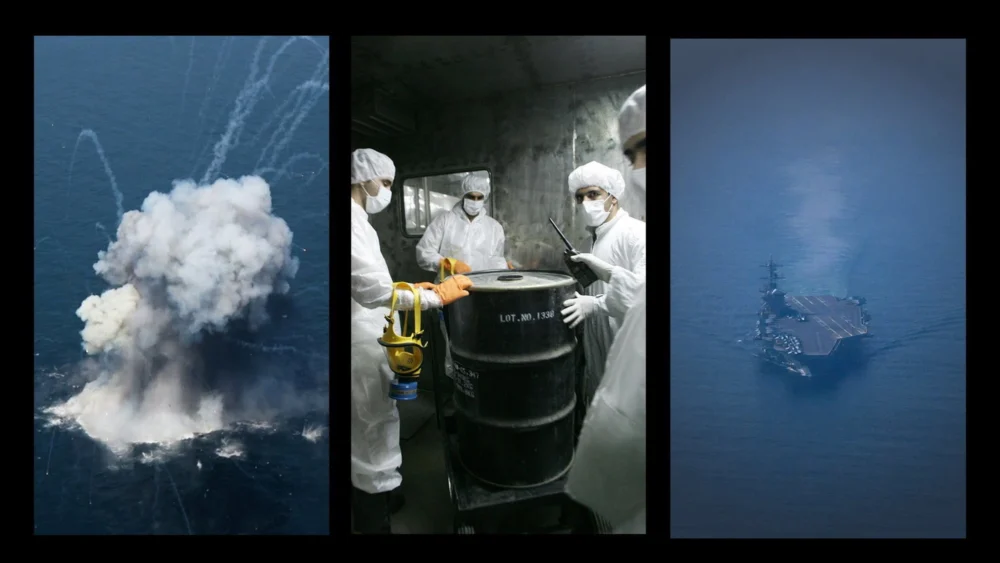
Despite intense geopolitical pressure and a declared objective to curb Iran’s nuclear ambitions, the Islamic Republic’s fissile material stockpile has seemingly remained a static, unquantified entity throughout the Trump administration, presenting a persistent enigma for international observers and policymakers alike.
The period between 2017 and 2021 marked a significant shift in United States foreign policy towards Iran, characterized by a withdrawal from the Joint Comprehensive Plan of Action (JCPOA) – the landmark multilateral agreement designed to limit Tehran’s nuclear program in exchange for sanctions relief. This withdrawal, coupled with the imposition of a "maximum pressure" campaign, aimed to compel Iran back to the negotiating table with a more restrictive deal, or failing that, to cripple its economy to the point where nuclear development would be unsustainable. Central to this strategy was the perceived imperative to prevent Iran from accumulating enough enriched uranium or plutonium for a nuclear weapon. Yet, as international inspectors and intelligence agencies have monitored the situation, the actual physical quantity of Iran’s weaponizable nuclear material has not been a primary subject of overt public discussion regarding its increase or decrease under this specific administration’s policy. This raises a critical question: why, despite the maximalist approach, has the physical accumulation of Iran’s nuclear material not been the central, vocalized point of contention or achievement from the perspective of the Trump administration’s stated goals?
The answer lies in a complex interplay of strategic calculations, inherent limitations of international oversight, Iran’s own strategic patience, and the very nature of the JCPOA’s original framework. While the Trump administration vehemently opposed the JCPOA and sought to dismantle its legacy, it did not, for the most part, initiate overt military actions or direct interventions aimed at physically destroying or confiscating Iran’s existing nuclear material stockpiles. This decision, while seemingly counterintuitive to a policy of "maximum pressure," can be attributed to several key factors, including the potential for catastrophic escalation, the practical difficulties of such an undertaking, and a tacit understanding of certain red lines that, if crossed, would trigger an unmanageable regional conflict.
The JCPOA’s Legacy and the "Breakout Time" Calculation
The JCPOA, negotiated under the Obama administration, was fundamentally premised on extending Iran’s "breakout time" – the theoretical period required for Tehran to acquire enough fissile material for a single nuclear weapon. The agreement achieved this by imposing strict limits on Iran’s uranium enrichment capacity, the number and type of centrifuges, and the level of enrichment. It also mandated a significant reduction in Iran’s stockpile of enriched uranium. However, the agreement did not dismantle Iran’s nuclear infrastructure entirely; rather, it placed it under rigorous international monitoring by the International Atomic Energy Agency (IAEA).
When the Trump administration withdrew from the JCPOA in 2018, it effectively removed the constraints on Iran’s nuclear activities. This withdrawal, however, did not automatically erase the existing fissile material. Iran, facing renewed sanctions and international isolation, had a strategic choice: either to immediately pursue weaponization, thereby crossing an undeniable red line with severe consequences, or to gradually increase its enrichment levels and stockpile within the existing, albeit now unmonitored by the JCPOA’s specific provisions, infrastructure.
The Trump administration’s rhetoric often focused on preventing Iran from ever obtaining a nuclear weapon, a broad objective that encompassed both the acquisition of fissile material and the weaponization process itself. However, the tangible, measurable element that international bodies and intelligence agencies primarily track is the quantity of enriched uranium and plutonium. While the JCPOA’s restrictions were lifted, Iran did not immediately surge towards a weapon’s worth of material. This strategic restraint, exercised by Tehran, created a complex situation.
Strategic Restraint and the Art of Nuclear Ambiguity
Iran’s decision to incrementally increase its enrichment levels and stockpile, rather than making a rapid dash for a weapon, can be interpreted as a sophisticated strategy aimed at maintaining a degree of nuclear ambiguity. By staying "on the cusp" of weaponization, Iran could leverage its nuclear program as a deterrent and a bargaining chip without triggering an immediate, overwhelming military response. This approach allowed Iran to:
- Demonstrate defiance: By exceeding the JCPOA’s limits, Iran signaled its displeasure with the US withdrawal and the sanctions regime.
- Retain technical capacity: Continuing enrichment activities allowed Iran to maintain its technical expertise and operational readiness, should it decide to accelerate its program in the future.
- Gain leverage: A larger stockpile of enriched uranium, even if below weapons-grade, provided Iran with greater leverage in any future negotiations.
- Avoid outright war: A swift move towards a weapon would have almost certainly provoked a military strike, a scenario Iran, with its asymmetric military capabilities, would likely seek to avoid.
The Trump administration’s "maximum pressure" policy, while imposing severe economic hardship on Iran, did not necessarily translate into a direct physical reduction of its nuclear material. Sanctions aimed to starve the regime of resources that could fund its nuclear program, but they did not provide a mechanism for the physical dismantling or confiscation of existing fissile material. Furthermore, the international community, while largely aligned in its concern over Iran’s nuclear program, was not unified behind a military solution.
The Limits of Oversight and Intelligence Gathering
The IAEA, the primary international body responsible for verifying Iran’s compliance with its safeguards agreements, continued its monitoring activities even after the US withdrawal from the JCPOA. However, the scope and intrusiveness of its inspections were significantly curtailed compared to the enhanced access provided under the JCPOA. This meant that while the IAEA could report on Iran’s declared enrichment activities and material, its ability to detect undeclared activities or material was more limited.
Intelligence agencies worldwide were undoubtedly monitoring Iran’s nuclear program closely. However, the precise quantities of fissile material are highly classified, and public pronouncements from intelligence agencies are often couched in cautious language. The absence of public, definitive statements from the Trump administration or allied intelligence agencies about a significant increase in Iran’s stockpile beyond a certain threshold, despite the policy of maximum pressure, suggests several possibilities:
- Iran’s calculated pace: As discussed, Iran may have deliberately maintained a measured pace of enrichment and accumulation, staying within a range that was concerning but not yet an immediate existential threat requiring overt military intervention.
- Effectiveness of sanctions (indirectly): While sanctions did not physically remove material, they may have constrained Iran’s ability to significantly accelerate its program or expand its enrichment capacity beyond what was already established.
- Intelligence limitations: The inherent challenges of monitoring a clandestine and sensitive nuclear program mean that precise knowledge of stockpiles can be difficult to ascertain.
The "Untouched" Dilemma: A Strategic Stalemate?
The phrase "untouched" in the context of Iran’s nuclear material stockpile under the Trump administration does not imply stagnation. Instead, it highlights a period where the physical quantity of fissile material available for potential weaponization remained a persistent concern, but one that the prevailing US policy did not directly address through kinetic means or explicit disarmament actions. The Trump administration’s focus was on revoking the JCPOA and imposing sanctions, with the implicit hope that this would lead to a new, more stringent agreement that would address the material issue.
This approach created a strategic stalemate. Iran continued its nuclear activities within its existing capabilities, while the US maintained its pressure campaign, stopping short of direct military intervention to physically eliminate the material. This allowed Iran to maintain a degree of nuclear latency, a capability that remained a significant concern for regional stability and international non-proliferation efforts.
Implications and Future Outlook
The legacy of the Trump administration’s approach to Iran’s nuclear program is one of heightened tension and unresolved proliferation concerns. While the physical quantity of fissile material may not have dramatically increased in a way that triggered immediate military action, the removal of JCPOA constraints allowed Iran to advance its technical capabilities and stockpile enriched uranium beyond the agreement’s limits.
The subsequent Biden administration has sought to re-engage in diplomatic efforts to revive a nuclear deal, acknowledging the persistent threat posed by Iran’s nuclear activities. However, the intervening years have seen Iran’s program evolve, potentially making a return to the JCPOA’s original terms more challenging.
The question of Iran’s nuclear material stockpile remains a critical factor in regional security. The absence of overt, dramatic changes in its physical quantity under the Trump administration does not signify a resolution to the proliferation challenge. Instead, it underscores the complex, often indirect, nature of nuclear diplomacy and deterrence, where strategic patience, economic pressure, and the ever-present threat of escalation can create a precarious balance. The "untouched" nature of the stockpile, in this context, is less a sign of passive inaction and more a reflection of the deeply entrenched strategic calculus that has characterized the Iran nuclear issue for decades. Future efforts to curb Iran’s nuclear ambitions will undoubtedly continue to grapple with the implications of this period and the enduring challenge of verifiable constraints on fissile material production.

 Aura Kasih
 Safa Marwah
 Ayu Aulia