Lisa Mariana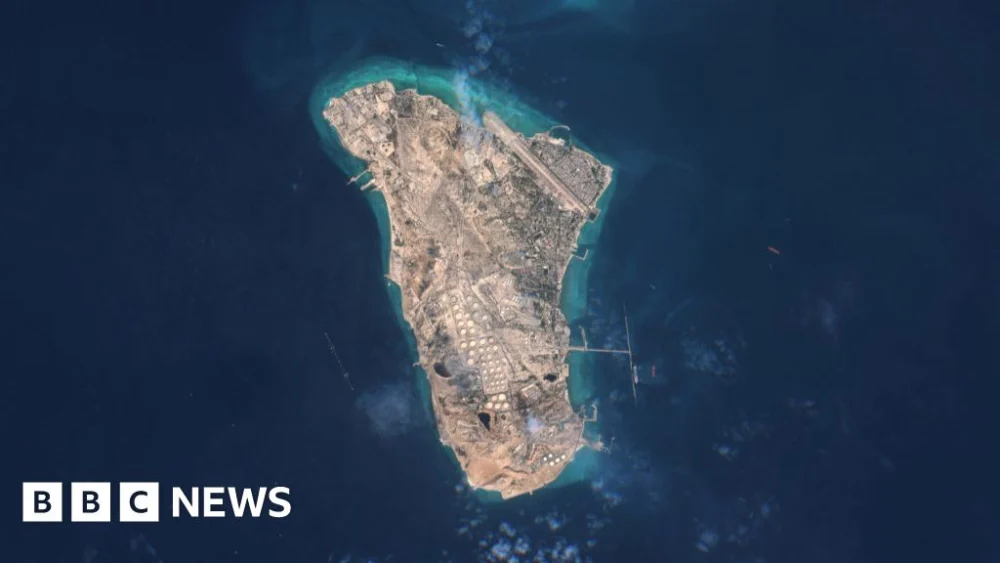
Recent military operations by the United States have brought Kharg Island, a vital Iranian outpost in the Persian Gulf, into sharp focus. The targeted strikes by U.S. forces against military assets on this small yet profoundly strategic landmass represent a calculated escalation in the ongoing regional tensions, underscoring its pivotal role in Iran’s economic and military calculus. This analysis delves into the geographical and economic significance of Kharg, the precise nature of the U.S. intervention, the strategic rationale behind sparing its critical oil infrastructure, and the potential ramifications for regional stability and global energy markets.
Kharg Island: Iran’s Indispensable Economic Lifeline
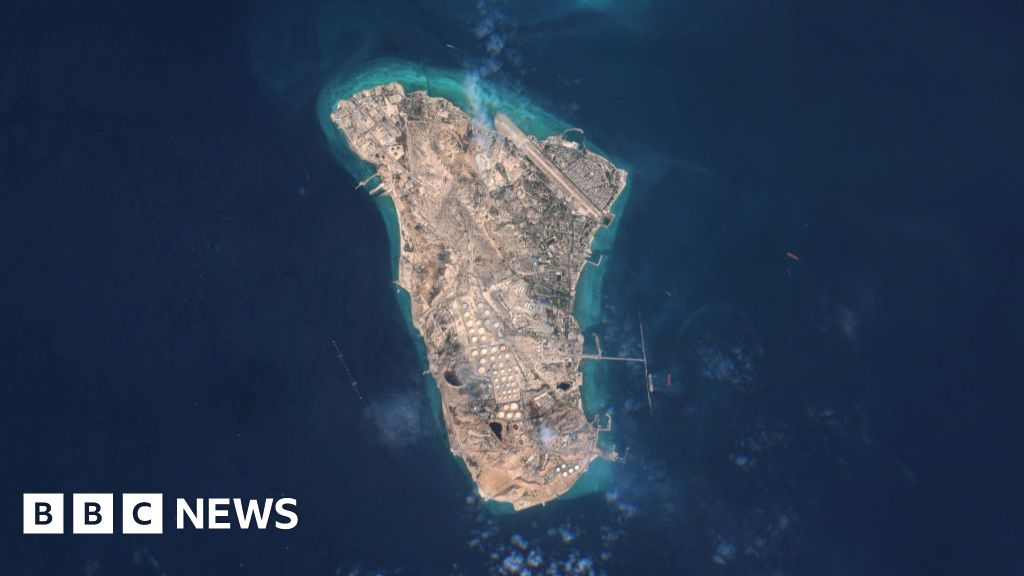
Situated merely 24 kilometers off the Iranian coastline, Kharg Island, despite its modest dimensions, holds disproportionate importance as the central conduit for Iran’s crude oil exports. It is not merely an island; it is the physical manifestation of Iran’s economic resilience and its primary connection to international energy markets. Approximately 90% of Iran’s crude oil output is channeled through the terminal facilities on Kharg, transported via an extensive pipeline network from mainland production sites. This concentration of export capacity renders the island an economic choke point of immense strategic value.
The island’s unique geographical characteristics further amplify its significance. Unlike the comparatively shallower coastal waters of the Iranian mainland, Kharg’s proximity to deep water channels allows for direct access by Very Large Crude Carriers (VLCCs) – supertankers capable of transporting up to 85 million gallons of oil. These colossal vessels dock at the island’s expansive jetties, facilitating the efficient loading and dispatch of crude oil, predominantly destined for major consumers like China. This logistical advantage is unparalleled within Iran’s maritime infrastructure, making Kharg an irreplaceable component of its energy export chain. Beyond its national economic imperative, the revenue generated from these oil exports is understood to be a substantial funding source for entities such as the Islamic Revolutionary Guard Corps (IRGC), thereby intertwining the island’s economic function with Iran’s broader military and political objectives. Any disruption to Kharg’s oil infrastructure would, therefore, strike at the very heart of Iran’s financial capability and its capacity to project power.
The American Strategic Calculus: A Precision Strike with Deliberate Restraint
In a significant military development, the U.S. Central Command confirmed that its forces executed a series of targeted bombing raids on Kharg Island. Statements from the U.S. leadership indicated that these operations aimed at "totally obliterating" designated military targets, distinguishing them from the island’s vital oil infrastructure. Specific assets reportedly neutralized included naval mine storage facilities, various missile bunkers, and other strategic military sites. The deliberate exclusion of oil facilities from the targeting matrix represents a calculated decision, designed to achieve specific military objectives while simultaneously signaling a nuanced strategic posture.
U.S. officials articulated a clear warning: while the oil infrastructure was spared in the initial wave of attacks, this forbearance was conditional. The U.S. leadership explicitly stated that any actions by Iran or its proxies that might "interfere" with the unimpeded passage of commercial shipping through the Strait of Hormuz – a globally critical maritime chokepoint situated south of Iran – would prompt a reconsideration of this restraint. This declaration underscores the U.S. commitment to safeguarding freedom of navigation in international waters, framing the strike on Kharg as both a punitive measure against specific military capabilities and a deterrent against broader regional destabilization.
Responses and Damage Assessment: Divergent Narratives
Following the U.S. military actions, both American and Iranian authorities presented accounts of the impact, revealing a degree of convergence on certain aspects while diverging on others. U.S. Central Command asserted the destruction of "more than 90 Iranian military targets" on Kharg Island, reiterating that the oil infrastructure remained intact. Iranian state media corroborated the absence of damage to oil facilities, though it detailed specific military targets reportedly hit, including air defense systems, a naval base, the airport control tower, and a helicopter hangar.
Official Iranian statements sought to project an image of operational continuity and minimal disruption. Ehsan Jahanian, a political deputy to the governor of Bushehr province, which encompasses Kharg Island, affirmed that no casualties were sustained among military personnel, oil company employees, or residents. He further stated that oil export operations from Kharg were "fully under way" and that all activities on the island were proceeding without interruption, a claim echoed by the IRGC-affiliated Tasnim news agency. In response to the U.S. strikes and the implicit threat to its oil facilities, the Iranian military issued a stern warning: any future attack on its energy infrastructure would result in the "immediate destruction" of oil and energy assets belonging to companies associated with the U.S. This declaration underscores the high stakes involved and the potential for rapid escalation should the conflict extend to Iran’s economic bedrock.
The Deliberate Restraint: A Geopolitical Gambit
The U.S. decision to avoid targeting Kharg Island’s oil facilities, despite their immense strategic value to Iran, is a critical element of the current geopolitical dynamic. This restraint is not an act of benevolence but a calculated strategic choice, likely driven by a confluence of complex factors.
Firstly, a direct assault on Kharg’s oil export capabilities would inflict profound and immediate damage on Iran’s economy, effectively severing its primary revenue stream. While seemingly advantageous in a conflict scenario, such a move carries significant international implications. It would almost certainly trigger a dramatic surge in global oil prices, potentially destabilizing the world economy and alienating international allies who rely on stable energy markets. The U.S. would face intense pressure to mitigate these global economic repercussions, complicating its strategic objectives.
Secondly, the destruction of Iran’s oil infrastructure would represent a severe escalation of hostilities, pushing the conflict into an uncharted and potentially uncontrollable phase. Such an action would likely provoke a more aggressive and widespread retaliatory response from Iran. Tehran possesses the capacity to deploy a range of asymmetric warfare tactics, including the launch of numerous low-cost, high-explosive drones against neighboring Gulf Arab states and commercial shipping vessels. Crucially, Iran could broaden its targeting scope to include critical civilian infrastructure, such as desalination plants, which provide essential drinking water to millions across the region. The humanitarian and economic fallout from such a scenario would be catastrophic, far exceeding the localized impact of the initial strikes.
Military analysts view the U.S. strategy as a sophisticated form of deterrence. By demonstrating the capability to "obliterate" military targets on Kharg while deliberately sparing the oil facilities, the U.S. leadership is sending a clear, albeit conditional, message. This approach, as articulated by experts, allows the U.S. to exhibit its punitive capabilities without irrevocably destroying Iran’s long-term economic viability. It acts as a warning to the IRGC, indicating that while their military assets are vulnerable, a complete economic collapse of Iran, which would entail immense hardship for the Iranian populace, is not the immediate objective. Previous instances, such as the destruction of Kharg’s oil infrastructure during the Iran-Iraq war in the 1980s, demonstrated the protracted and arduous nature of rebuilding such complex facilities. Such widespread devastation would undermine any stated U.S. objective of fostering conditions for internal change within Iran, as it would devastate the country’s future economic prospects.
Potential for Escalation and Regional Repercussions
The strategic interplay surrounding Kharg Island carries substantial implications for the broader region and global stability. The Strait of Hormuz, through which a significant portion of the world’s seaborne oil passes, remains a critical flashpoint. U.S. warnings about interference with shipping underscore the heightened sensitivity surrounding this vital waterway. Any Iranian action perceived as threatening this passage could trigger a swift and severe U.S. response, potentially leading to further military engagements.
Moreover, the conflict’s trajectory could see an expansion of targets. Iran’s capacity for asymmetric responses, including drone and missile attacks, could be directed at a wider array of energy infrastructure across the Gulf, impacting production, refining, and export capabilities of other regional players. This would not only exacerbate regional tensions but also create profound ripple effects on global energy markets, driving up prices and contributing to economic uncertainty worldwide. The potential for such actions underscores the delicate balance of power and the intricate web of interdependencies that characterize the Middle East.
The Question of Future Control: A Strategic Enclave?
Amidst the ongoing military posturing, speculation has emerged regarding the possibility of U.S. forces attempting to seize control of Kharg Island. Such an operation would represent a dramatic escalation, moving beyond targeted strikes to a direct occupation of Iranian territory. The strategic advantages of controlling Kharg are compelling: it would effectively sever Iran’s primary oil export route, delivering a crippling blow to its economy and severely curtailing the IRGC’s funding. Furthermore, a seized Kharg Island could serve as a forward operating base, providing a strategic platform for projecting power and launching further operations against the Iranian mainland.
Reports of U.S. amphibious ships, carrying thousands of Marines and sailors, being deployed to the Gulf region have fueled this speculation. While the Pentagon has refrained from commenting on these deployments in the context of Kharg Island, the presence of such formidable assets undeniably enhances the U.S.’s operational capabilities for a range of contingencies, including potential amphibious assaults. The seizure of Kharg would undoubtedly be a complex and high-risk undertaking, potentially leading to prolonged engagement and a significant human cost. However, from a strategic perspective, it would offer a powerful means of exerting pressure and crippling Iran’s economic lifeline, thereby directly impacting its ability to sustain a prolonged conflict.
Conclusion
The U.S. military operations targeting Kharg Island represent a pivotal moment in the escalating tensions in the Persian Gulf. The precise and deliberate nature of these strikes, particularly the decision to spare the vital oil infrastructure, reveals a complex strategic calculus aimed at achieving military objectives and delivering a strong deterrent message without triggering a full-scale economic collapse or an uncontrollable regional conflagration. Kharg Island’s unique geographical and economic significance makes it an indispensable asset for Iran, and consequently, a critical pressure point in any conflict scenario. The ongoing interplay between U.S. strategic signaling, Iranian warnings, and the ever-present threat to global energy flows ensures that Kharg Island will remain at the forefront of geopolitical considerations in the Middle East, with its fate inextricably linked to the broader trajectory of regional stability.




 Aura Kasih
 Safa Marwah
 Ayu Aulia