Lisa Mariana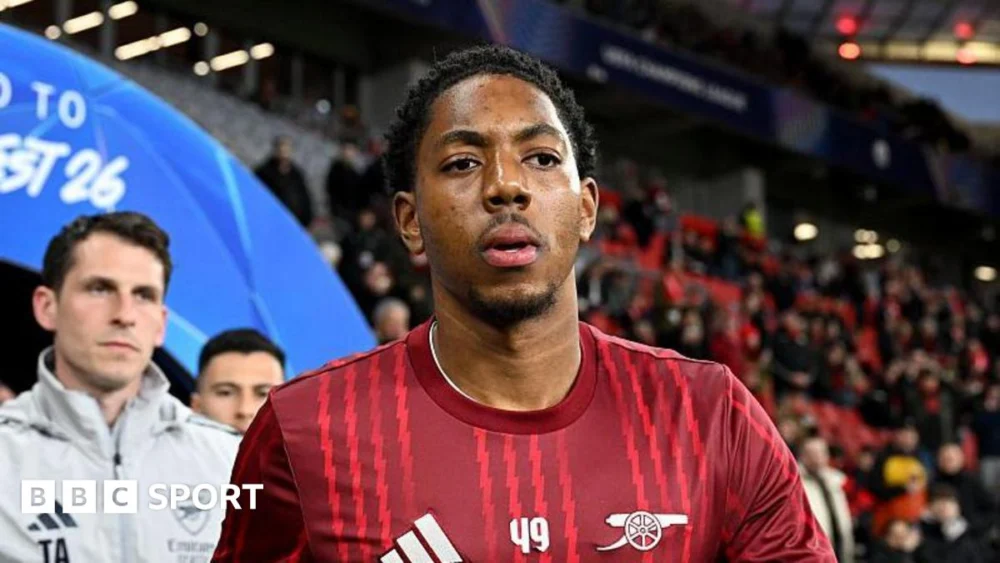
As Arsenal intensifies its quest for Premier League supremacy, driven by Mikel Arteta’s unyielding demand for immediate success, the development pathway for emerging talents like Myles Lewis-Skelly faces unprecedented challenges, prompting critical evaluation of his role within the club’s evolving strategic landscape. The North London club’s formidable ambition, following three consecutive seasons culminating in a runner-up position, necessitates a pragmatic approach devoid of emotional considerations, prioritizing seasoned professionals capable of delivering immediate dividends in their pursuit of an elusive league title.
The pressure emanating from the fanbase to end a league title drought stretching back to 2004 is palpable. This deep-seated yearning for silverware has profoundly influenced Mikel Arteta’s strategic blueprint. The Spanish tactician has meticulously sculpted his current Arsenal squad into a cohesive tactical framework, characterized by a more direct attacking impetus and robust physical presence compared to his earlier iterations. This evolution reflects a deliberate pivot towards acquiring players who possess the physical and mental fortitude to compete at the highest echelons of English football, capable of imposing themselves on any opponent in the league.
This strategic recalibration has manifested in a series of high-profile acquisitions designed to bolster the squad with immediate impact. The summer of 2024 saw Arsenal secure the services of Riccardo Calafiori for a reported £42 million, a move swiftly followed by the arrival of Piero Hincapie from Bayer Leverkusen on a loan deal with an approximate £45 million option to buy. These defensive reinforcements underscore Arteta’s commitment to fortifying the backline with players who are not only technically proficient but also possess the physical attributes and competitive aggression demanded by the Premier League. Beyond defense, the club’s "win now" philosophy extended to other areas of the pitch, with seasoned talents such as Viktor Gyokeres, Martin Zubimendi, and Eberechi Eze brought in during the prime of their careers. These signings represent a clear declaration of intent: Arsenal is no longer merely building for the future but is actively investing in proven quality to secure immediate triumph.
For burgeoning academy prospects like Myles Lewis-Skelly, this intensified focus on experienced, immediate-impact players inevitably creates a bottleneck. The pathway from Hale End to regular first-team football, already arduous, has become even more congested. A stark illustration of this reality is the case of fellow academy graduate Ethan Nwaneri, who, despite his immense potential, was dispatched on loan to Marseille after struggling to secure consistent minutes within the senior squad. While Lewis-Skelly was retained within the first-team environment, the arrival of players such as Hincapie directly impacts his opportunities. Hincapie, notably a key component of the Bayer Leverkusen squad that clinched the 2024-25 Bundesliga title undefeated and secured the 2023-24 German Cup, brings a winning pedigree and an elite defensive profile that is highly valued by Arteta.
Arteta frequently extols Hincapie’s physical prowess and defensive intensity, characteristics that align seamlessly with the manager’s evolving tactical demands. The appointment of Gabriel Heinze to the backroom staff this year further reinforces this preference. Heinze, a former uncompromising defender known for his passionate approach, is reportedly a keen admirer of Hincapie’s attributes, highlighting a shared tactical vision within the coaching setup. Complementing Hincapie’s defensive solidity, Calafiori offers an element of unpredictability to Arsenal’s attacking transitions, particularly emphasizing the inverted full-back role in forward play. This strategic shift, where full-backs are integral to initiating and sustaining attacks, has consequently pushed Lewis-Skelly from being a prominent fixture last season to third choice in the pecking order this term.
Despite a significant reduction in his on-field minutes, particularly after being thrust into the intense environment of a title challenge as an 18-year-old last season, Lewis-Skelly’s situation is not entirely devoid of positives. The previous campaign saw him make a remarkable 26 starts across 42 appearances, a testament to his burgeoning talent and the trust placed in him. However, this extensive game time was partly necessitated by a spate of injury concerns affecting senior players like Calafiori, Oleksandr Zinchenko, and Kieran Tierney. This period undoubtedly provided invaluable experience but might also have cultivated an expectation of continued prominence that has not materialized this season.
In the current campaign, Lewis-Skelly has accumulated 12 starts across 26 appearances, a respectable tally for a young player, yet critically, only one of these starts has been in the Premier League. While the early whispers of him becoming a future starting England left-back may have surfaced ahead of his projected career timeline, his contributions this season are not insignificant. Should Arsenal succeed in their championship bid, he will have played a sufficient number of games to receive a Premier League winner’s medal, a remarkable achievement for a player of his age. Furthermore, his involvement in the UEFA Champions League has been substantial, featuring in six of Arsenal’s nine European fixtures. These appearances included impressive performances in victories over continental giants Bayern Munich and Atlético Madrid, where he notably executed a line-breaking run culminating in an assist. He also completed the full 90 minutes in Arsenal’s triumphant encounter against Inter Milan at the iconic San Siro, demonstrating his capability to perform on the grandest stages.
Mikel Arteta, when questioned about Lewis-Skelly’s fluctuating game time, provided a pragmatic assessment: "Every season is different. He had very good moments in this season. He had other moments when he hasn’t played that much." The manager cited various contributing factors, including a recent suspension in the FA Cup that precluded his participation, and, significantly, "the good form of your team-mates." This explanation underscores the fiercely competitive environment within a squad vying for top honors, where consistent performance from senior players can inevitably limit opportunities for younger talents. While Arteta is known for his willingness to integrate youth, evidenced by six academy players making their debuts this season, there remains a distinct difference between providing a taste of first-team football and entrusting a young player with a starting berth in critical, high-stakes encounters.
Lewis-Skelly has consistently excelled in the role of an inverted full-back, demonstrating proficiency in transitioning from defense into midfield with possession. However, the tactical adjustments implemented this season, particularly regarding the specific responsibilities of Arsenal’s full-backs in the build-up phase, have subtly altered the requirements. The attributes that once made his skillset uniquely valuable in possession-based phases may now be less overtly prioritized in the club’s current tactical setup, which leans more towards directness and physical assertion.
The recent decision to loan out Ethan Nwaneri serves as a recent precedent that will undoubtedly remain fresh in the minds of both the club’s hierarchy and Lewis-Skelly himself. Furthermore, the financial implications of an academy graduate like Lewis-Skelly, who represents pure profit on the balance sheet, add another layer of complexity to discussions regarding his future. In an era of stringent financial fair play regulations, the potential for significant transfer revenue from homegrown talent is an intriguing factor.
At just 19 years old, Lewis-Skelly has already amassed a commendable list of achievements, far exceeding the typical trajectory for players of his age. His exposure to elite-level football, including significant Champions League minutes, is invaluable. Nevertheless, with the prospect of selection for the senior World Cup squad appearing increasingly remote in the immediate future, a crucial juncture approaches. The summer transfer window will almost certainly necessitate profound discussions regarding his immediate career progression. These deliberations could encompass a range of options, from a carefully considered loan spell to gain consistent first-team football, to a permanent move should a suitable offer materialize, or a renewed commitment from the player to fight for his place within Arsenal’s intensely competitive and title-chasing squad. The balance between nurturing long-term potential and fulfilling immediate ambitions will define Lewis-Skelly’s next steps in a career already marked by both rapid ascent and formidable challenges.


 Aura Kasih
 Safa Marwah
 Ayu Aulia