Lisa Mariana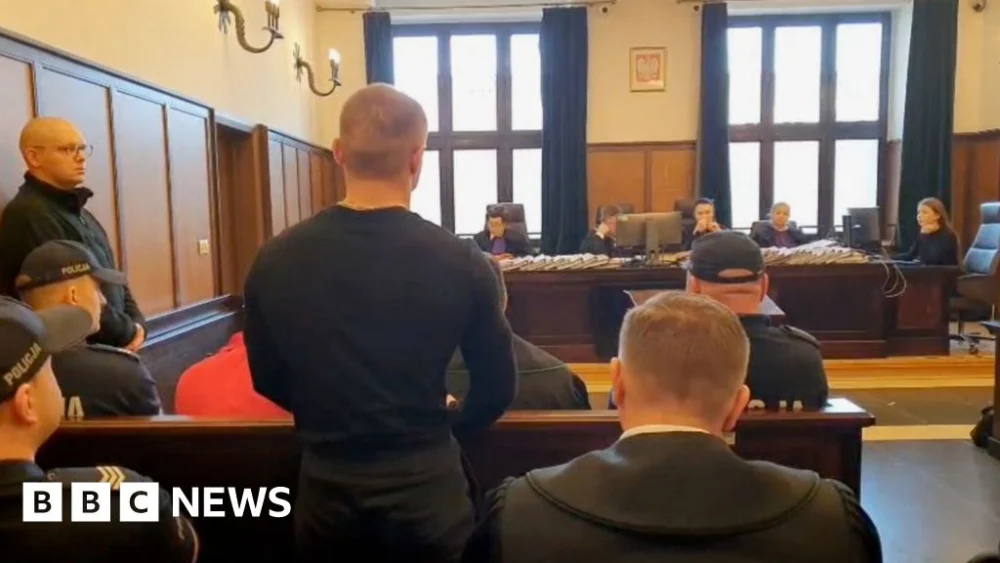
Proceedings have commenced in a Polish court against five individuals implicated in a sophisticated operation involving the dispatch of parcels containing highly volatile liquid explosives to destinations in the United Kingdom and within Poland, an alleged clandestine initiative attributed to Russian intelligence services.
The opening of this high-stakes trial in Warsaw casts a stark light on the escalating hybrid warfare tactics employed across Europe, particularly since the comprehensive invasion of Ukraine by Russia. The five defendants, identified as Ukrainian and Russian nationals, face grave charges, including participation in an act of terrorism stemming from incidents in the summer of 2024 where three of the illicit packages spontaneously combusted during transit. One particularly alarming incident saw a device ignite moments before its intended loading onto a DHL cargo aircraft bound for the UK, underscoring the severe potential for catastrophic loss of life and extensive material damage.
Unveiling a Coordinated Plot
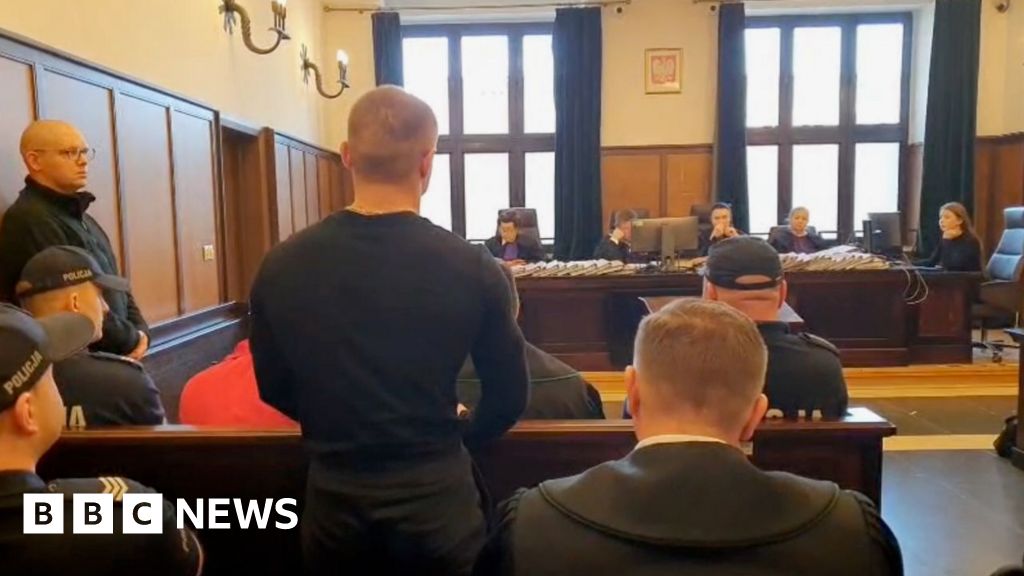
The initial court session provided a detailed exposition of the alleged plot, painting a picture of a meticulously organized, cross-border network. Four of the accused were escorted into the courtroom on Friday morning, clad in distinctive orange prison attire, their ankles and wrists secured by chains, a visible testament to the seriousness of the accusations. Under the watchful eyes of police guards flanking each defendant, the prosecutor meticulously outlined the various roles played by the group, asserting that their actions were orchestrated remotely by handlers based in Russia, communicating primarily through the encrypted messaging application Telegram.
Central to the prosecution’s case is the ingenious, albeit perilous, concealment method employed. The incendiary devices were reportedly constructed using liquid explosives cleverly disguised within tubes of face cream, with the critical ignition mechanisms intricately embedded within massage cushions. This sophisticated layering of components allowed the dangerous packages to bypass conventional security screening protocols, highlighting a significant vulnerability in international logistics and courier services. The prosecution forcefully articulated the group’s alleged objective: to engineer a major catastrophe through mid-air ignition, thereby causing extensive disruption and "intimidating large numbers of people" across multiple nations.
During this inaugural hearing, the court focused primarily on the testimony of Ukrainian national Vladislav D., identified by Polish authorities. While acknowledging his role in handing over four boxes containing the cushions and cosmetics to an "unknown man" in Vilnius, Lithuania, Vladislav D. vehemently denied any affiliation with Russian intelligence or any intent to act against Polish interests. "I did not act in the interests of Russia, or against Poland and others. I do not admit that I carried out an act of sabotage," he declared, subsequently declining to answer further questions from the court.
However, the prosecution swiftly countered by presenting previous statements made by Vladislav D., which reportedly contained a comprehensive account of his actions, including the activation of the ignition devices before their onward transmission for posting. In these earlier statements, Vladislav D. had allegedly claimed to have acted under duress, threatened by a handler code-named "Warrior," who reportedly possessed sensitive information concerning his relatives in Ukraine. The contrasting accounts underscore the complex dynamics of alleged state-sponsored covert operations, often involving coercion and exploitation of personal vulnerabilities. While Vladislav D. spoke, the other defendants reportedly exhibited a disconcerting demeanor, occasionally smirking and engaging in conversation with their guards, seemingly unfazed by the gravity of the proceedings.
The Broader Context of Hybrid Aggression
This trial unfolds against a backdrop of increasing concern across Europe regarding the overt and covert activities of Russian intelligence services. Since the full-scale invasion of Ukraine in February 2022, a noticeable intensification of alleged Russian state-sponsored sabotage, espionage, and disinformation campaigns has been observed. These activities, often categorized under the umbrella of hybrid warfare, aim to destabilize Western societies, erode public trust, and undermine support for Ukraine without resorting to direct military confrontation.
The parcel plot is not an isolated incident but rather one element in a broader pattern of alleged Russian aggression. European intelligence agencies have reported a surge in cyberattacks targeting critical infrastructure, state institutions, and private enterprises. There have also been numerous instances of suspected arson, industrial sabotage, and attempts to disrupt supply chains, all attributed, directly or indirectly, to Moscow. Examples range from alleged arson attacks on warehouses in the UK and Germany to cyber incursions aimed at crippling essential services. These operations often rely on a network of proxies, sometimes unwitting, sometimes ideologically motivated, and at other times, financially incentivized individuals, making attribution and prevention challenging. The use of commercial courier services, as seen in this case, demonstrates an opportunistic exploitation of global logistics networks, which are designed for efficiency rather than rigorous national security screening of every package.
Intelligence Analysis and Implications
From an intelligence perspective, the alleged use of liquid explosives concealed within innocuous consumer products represents a significant escalation in the audacity and technical sophistication of state-sponsored sabotage. The specific choice of targets – international cargo flights and potentially other critical infrastructure – indicates a strategic intent to cause widespread panic, severe economic disruption, and potentially mass casualties, thereby demonstrating Russia’s capacity to project destructive capabilities deep within adversary territories.
The coordination of operatives via encrypted messaging applications like Telegram, coupled with the exploitation of individuals with ties to the region, reflects a standard operational methodology for plausible deniability. Should the allegations prove true, the handlers in Russia would seek to distance themselves from direct involvement, presenting the operatives as rogue actors or common criminals, even if the strategic direction originates from state apparatuses. The alleged coercion of Vladislav D., referencing threats to his family, further illustrates the ruthless tactics employed by state intelligence agencies to compel cooperation from their assets.
The involvement of multiple nationalities (Ukrainian and Russian citizens) in the alleged network highlights the transnational nature of these threats and the complex web of individuals that can be drawn into such operations. The fact that twenty-two suspects have been arrested in total across both Poland and Lithuania, from where the parcels were dispatched via DHL and DPD courier services, underscores the extensive reach of the alleged network and the robust international law enforcement cooperation that led to its partial dismantling. The testimony of individuals like Alexander Suranovas, who allegedly mailed the parcels without knowledge of their contents and was subsequently hired for repeat assignments, illustrates how individuals can be unknowingly instrumentalized in such plots, further complicating investigative efforts.
Future Outlook and Countermeasures
The ongoing trial in Warsaw, alongside the impending legal proceedings for five other suspects in Lithuania next month, carries significant implications for European security. A successful prosecution would not only bring justice for the alleged acts but also serve as a powerful deterrent to future attempts at state-sponsored sabotage. It would underscore the commitment of European nations to prosecute such offenses vigorously, irrespective of the complexity of attribution or the nationality of the perpetrators.
In response to these evolving threats, European nations are intensifying their efforts to enhance counter-intelligence capabilities, strengthen border security, and implement more sophisticated screening technologies for cargo and postal services. There is an increasing emphasis on sharing intelligence rapidly and seamlessly across national borders, recognizing that these threats are inherently transnational. Furthermore, public awareness campaigns about suspicious activities and the importance of reporting them are becoming critical components of national security strategies.
The trial is expected to continue in mid-April, with further hearings anticipated to delve deeper into the evidence, the alleged chain of command, and the precise roles of each defendant. Its outcome will be closely watched by intelligence agencies and policymakers across Europe, as it provides a crucial insight into the nature of contemporary state-sponsored aggression and the collective resolve to counter it effectively. The case serves as a stark reminder that the battle for European security is increasingly being fought not on traditional battlefields, but within the intricate networks of global commerce and communication, requiring perpetual vigilance and unwavering international collaboration.




 Aura Kasih
 Safa Marwah
 Ayu Aulia