Lisa Mariana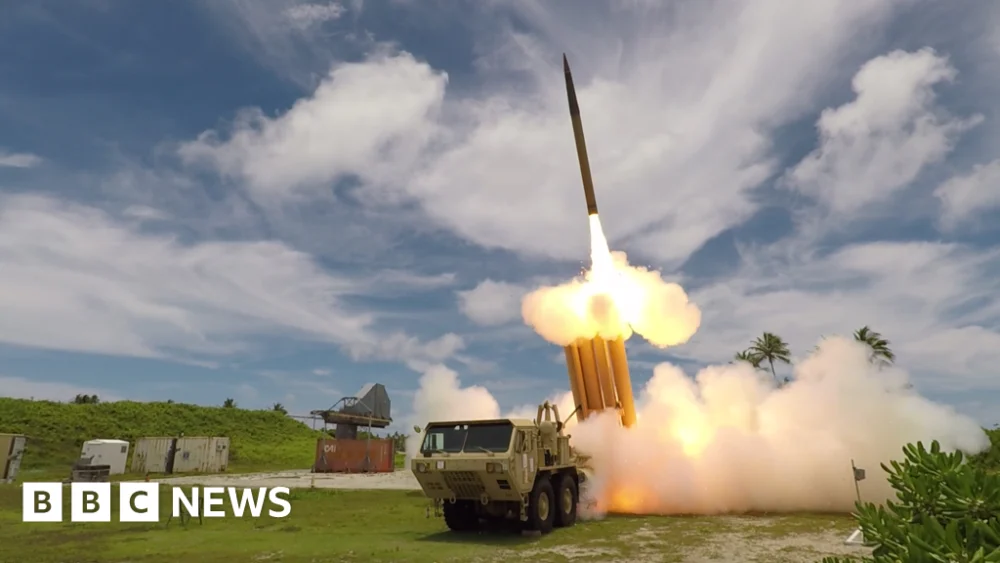
A significant strategic maneuver by the United States is currently unfolding, involving the relocation of critical components of its Terminal High-Altitude Area Defense (THAAD) missile interception system from its long-standing deployment in South Korea to the volatile Middle East. This pivotal decision, reportedly driven by escalating regional conflicts and the imperative to bolster defenses against sophisticated ballistic missile threats, has immediately triggered a cascade of geopolitical reverberations, sparking unease among allies, prompting critical analysis from strategic observers, and drawing pointed reactions from rival powers. The complex interplay of urgent defensive needs in one theater against established deterrent postures in another underscores the profound challenges facing global security architectures.
The THAAD System: A Linchpin of High-Altitude Defense
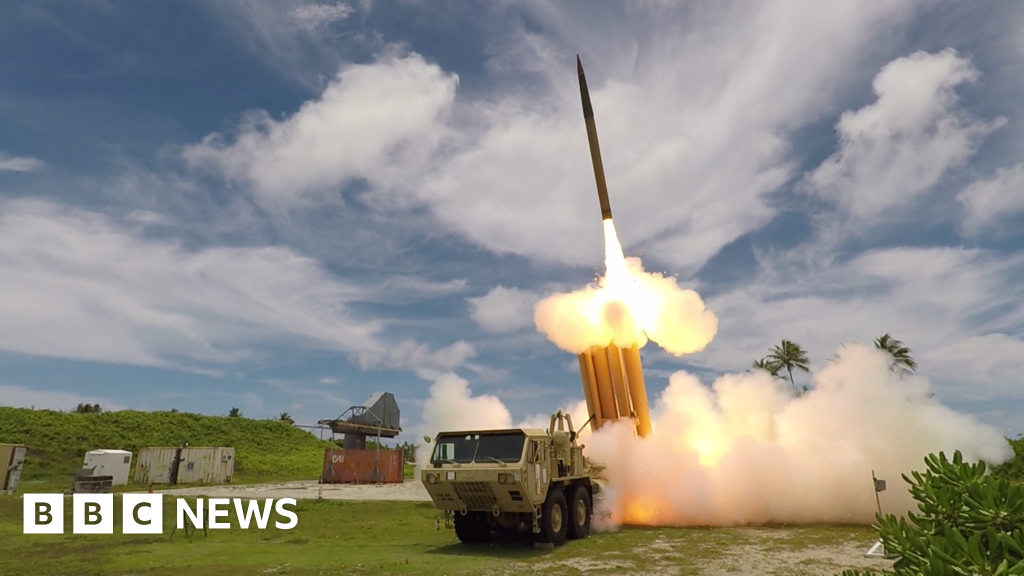
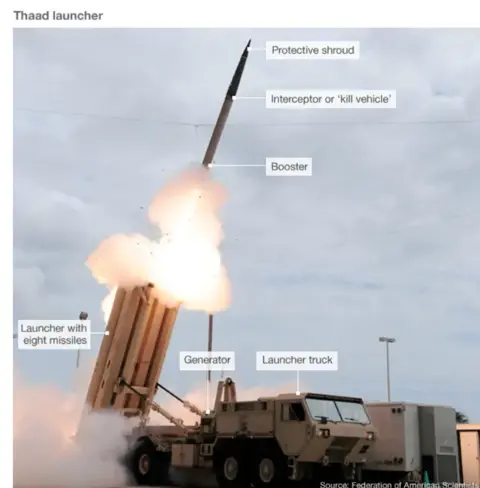
The Terminal High-Altitude Area Defense (THAAD) system, manufactured by Lockheed Martin, represents a sophisticated capability within the layered missile defense strategy of the United States and its allies. Designed to intercept short, medium, and intermediate-range ballistic missiles in their terminal phase, THAAD operates at very high altitudes, often outside the Earth’s atmosphere. Its unique "hit-to-kill" technology involves directly impacting the incoming warhead with kinetic energy, thereby destroying it before it can reach its target. This non-explosive intercept mechanism is particularly critical when dealing with potential weapons of mass destruction, as it aims to prevent the detonation of a nuclear or chemical payload. Each THAAD battery comprises six truck-mounted launchers, each capable of firing eight interceptors, alongside a powerful X-band AN/TPY-2 radar system for detection, tracking, and guidance. Requiring approximately 100 personnel for operation, a single THAAD battery represents a substantial investment, costing roughly one billion US dollars. The US currently maintains a limited global inventory of these advanced systems, underscoring the strategic importance of each deployment.
THAAD’s Genesis in South Korea: A Shield Against Northern Aggression
The initial deployment of a THAAD battery to South Korea in 2017 was a direct response to the escalating ballistic missile and nuclear weapons programs pursued by North Korea. Facing an increasingly belligerent Pyongyang, which demonstrated continuous advancements in its missile capabilities, Washington and Seoul asserted the necessity of THAAD to protect the Republic of Korea (ROK) and US forces stationed on the peninsula. The system was envisioned as a crucial layer of defense, particularly effective against the high-altitude trajectory of some North Korean ballistic missiles, offering an intercept capability beyond that of existing Patriot missile batteries.
However, the deployment was not without significant domestic and regional controversy. Within South Korea, the decision sparked considerable public opposition and protests. Local communities near the designated deployment site in Seongju expressed concerns over potential health risks from the powerful radar emissions, environmental impact, and the broader fear that hosting such a high-value US military asset would transform their nation into a primary target in any conflict involving North Korea. These sentiments often intertwined with broader debates regarding national sovereignty and the extent of US military presence.
China’s Vehement Opposition and Economic Retaliation
Regionally, China emerged as the most vocal and robust critic of THAAD’s presence in South Korea. Beijing’s objections stemmed from several strategic concerns. Primarily, the AN/TPY-2 radar, with its extensive detection range, was perceived as capable of peering deep into Chinese territory, potentially monitoring its own ballistic missile launches and compromising China’s strategic deterrent capabilities. China viewed the deployment not merely as a defensive measure against North Korea, but as a direct challenge to its regional security interests and a significant enhancement of American military power in Northeast Asia.
In response, Beijing initiated a series of unofficial but impactful economic and cultural retaliatory measures against South Korea. These included an effective ban on Chinese group tours, restrictions on Korean cultural content (K-pop, K-dramas), and boycotts of South Korean goods and businesses, most notably Lotte Group, which provided the land for the THAAD site. These punitive actions, which lasted for several years, inflicted substantial economic damage on South Korea and severely strained bilateral relations, illustrating the geopolitical leverage China was willing to exert.
The Middle Eastern Imperative: A System Under Strain
The reported relocation of THAAD components to the Middle East arrives amidst a period of intense regional volatility, characterized by an ongoing, multifaceted conflict involving US and Israeli forces against Iran and its proxies. Recent reports, including suggestions that a critical THAAD radar in Jordan was incapacitated by an Iranian strike, underscore the acute and immediate need for enhanced missile defense capabilities in the theater.
The conflict has witnessed an unprecedented volume of ballistic missile and drone attacks launched by Iran and its proxies targeting US military installations and allied nations. While many of these incoming threats have been successfully intercepted by existing defense systems, the sheer scale and sustained nature of these barrages are placing considerable strain on Washington’s military inventory. Interceptors, particularly for high-end systems like THAAD, are costly and produced in finite numbers. A prolonged conflict risks depleting these crucial assets, creating potential vulnerabilities.
In this context, THAAD’s specialized capability to intercept high-altitude ballistic missiles becomes critically important. It offers a defensive layer against more sophisticated Iranian ballistic missile variants, which could potentially evade lower-tier defense systems. The move, described by one US official as a "precautionary measure," is widely interpreted by strategic analysts, such as Professor John Nilsson-Wright of Cambridge University, as a direct necessity to compensate for the heavy utilization and potential damage to existing missile defense assets in the Middle East. It reflects a strategic rebalancing of resources to address the most pressing, immediate threats to US personnel and regional allies.
Implications for South Korea: A Test of Alliance and Deterrence
The reported removal of THAAD elements from South Korea carries significant implications for Seoul’s defense posture and its alliance with the United States. While President Lee Jae-myung publicly affirmed that the withdrawal would not compromise South Korea’s deterrence strategy, acknowledging that Seoul had "expressed opposition" to the move, his statement highlighted a potential point of friction. Professor Nilsson-Wright characterized Lee’s remarks as an "unusual public expression of opposition," suggesting that while the US decision might be militarily justifiable for its own urgent needs, it may not have been fully welcomed by its East Asian ally.
From Seoul’s perspective, any reduction in its high-end missile defense capabilities, even if partial, raises concerns about its readiness against North Korean threats. While South Korea possesses its own indigenous missile defense assets and additional Patriot batteries, THAAD offered a unique and highly effective layer against certain ballistic missile profiles. The move could be perceived by some domestic critics as a weakening of the US commitment to South Korean security, potentially fueling existing debates about self-reliance and the nature of the alliance. It also compels South Korea to re-evaluate its immediate defensive contingencies and potentially accelerate its own defense acquisition programs.
Geopolitical Ripple Effects: China, North Korea, and Global Power Dynamics
The redeployment also resonates deeply within the broader geopolitical landscape. China’s Foreign Ministry Spokesman Guo Jiakun reiterated Beijing’s "unchanged" opposition to THAAD in the Republic of Korea, implicitly recognizing the US move while maintaining its long-standing stance. While a permanent removal of THAAD from South Korea would undoubtedly be hailed as a diplomatic victory by Beijing, a temporary or partial relocation still offers China a potential strategic advantage. Professor Nilsson-Wright suggested that Beijing might view the Middle East conflict as a beneficial distraction, drawing US military resources away from the Indo-Pacific, a region where China seeks to expand its influence. This could potentially create perceived windows of opportunity for China in areas such as the South China Sea or vis-à-vis Taiwan.
North Korea, typically quick to exploit perceived weaknesses or distractions among its adversaries, has remained publicly silent on the matter. While some analysts, like Nilsson-Wright, believe Kim Jong Un is unlikely to "exploit these changes" directly, others caution against underestimating the potential for opportunistic provocations. A perceived shift in US focus or a temporary reduction in South Korea’s advanced defense capabilities could embolden Pyongyang to conduct new missile tests or engage in other forms of coercive diplomacy, testing the resolve and responsiveness of the US-ROK alliance.
A Stretched Global Posture: The Broader Implications
Ultimately, this strategic reallocation underscores a more profound concern articulated by Professor Ian Chong of the National University of Singapore: "Whether a prolonged conflict with Iran will deplete US missiles to a degree to which responding to contingencies elsewhere becomes difficult." The US operates a finite number of advanced missile defense systems and interceptors globally. The urgent demand in the Middle East, necessitating the redeployment from a critical theater like Northeast Asia, highlights the increasing strain on US military resources in an era of simultaneous global challenges.
This situation raises critical questions about the sustainability of the US’s global security commitments and its ability to simultaneously deter and defend against multiple high-intensity threats. It suggests a potential need for a broader reassessment of US defense industrial capacity, strategic asset allocation, and the prioritization of security interests across different regions. The move from South Korea to the Middle East is not merely a logistical exercise; it is a vivid illustration of a world grappling with escalating conflicts and the complex, often zero-sum, choices that major powers must make to safeguard their interests and allies. The long-term implications for regional stability in both East Asia and the Middle East, as well as for the global balance of power, remain to be fully understood.




 Aura Kasih
 Safa Marwah
 Ayu Aulia