Lisa Mariana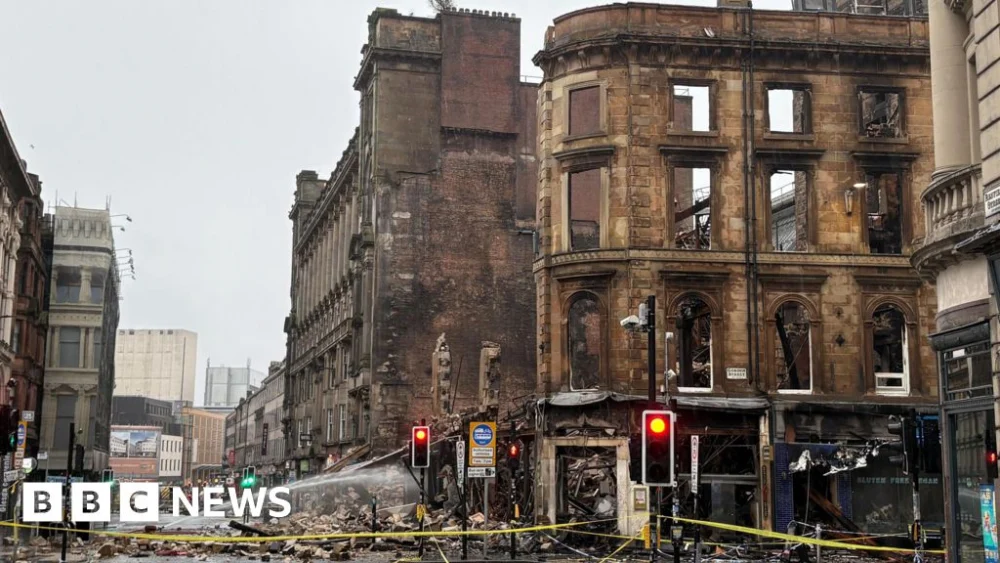
Glasgow authorities have mandated the immediate demolition of the remaining unstable structure of a significant historic building on Union Street, following a catastrophic fire that has crippled a vital section of the city centre and disrupted operations at the adjacent Glasgow Central Station. The decision, driven by escalating safety concerns as sections of the fire-ravaged edifice continue to dislodge, marks a profound loss for the city’s architectural heritage and signals a complex recovery process for one of Scotland’s busiest urban hubs.
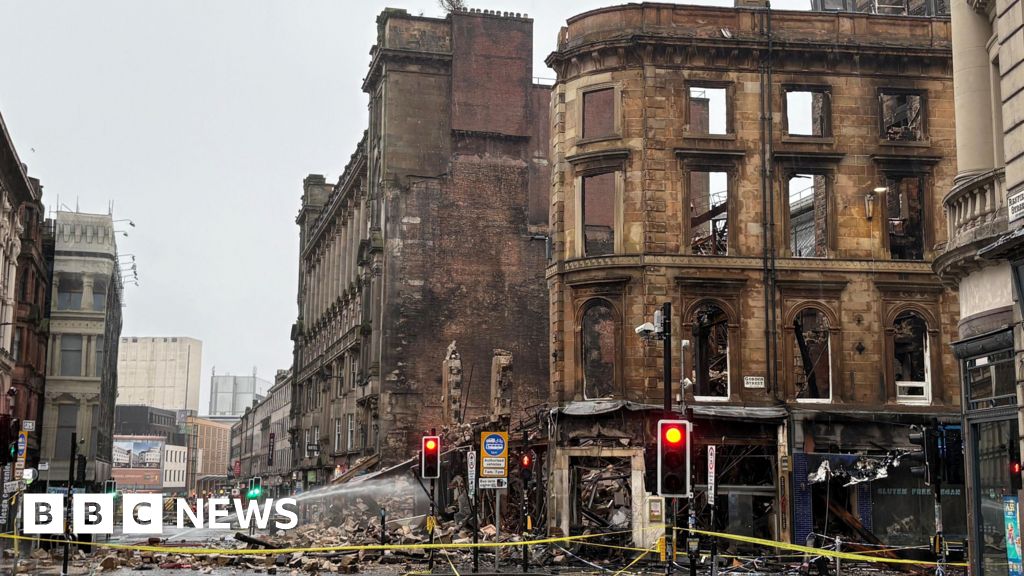
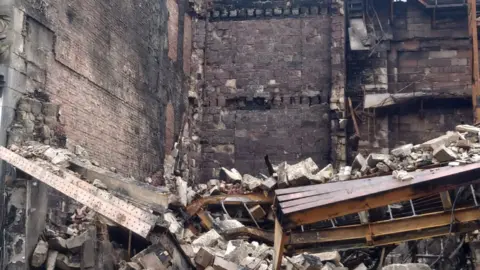
The directive for demolition was issued by Glasgow City Council after a thorough structural assessment concluded that the integrity of the remaining walls of the Union Corner building posed an unacceptable risk to public safety. This assessment followed the handover of the site from the Scottish Fire and Rescue Service (SFRS), which had battled the intense blaze for days, continuing to cool persistent hotspots. The urgency of the situation is underscored by reports of ongoing structural degradation, necessitating rapid intervention to prevent uncontrolled collapse and further hazard. While the exact timeline for the demolition operation remains undisclosed, a significant "safe zone" has been established around the perimeter, extending to encompass parts of Glasgow Central Station, to mitigate risks to the public and critical infrastructure.
The destruction of the Union Corner building represents a considerable blow to Glasgow’s rich architectural tapestry. Erected in 1851, predating the grand Glasgow Central Station by nearly three decades, the B-listed structure was a quintessential example of Victorian commercial architecture. Designed by the esteemed firm Brown & Carrick, with James Brown at the helm, it was originally commissioned for Francis Orr & Sons, a prominent Glaswegian stationery and publishing house. Over its 170-year history, the building evolved, housing numerous businesses, most recently including the popular Blue Lagoon fish and chip shop and Sexy Coffee, along with the vape shop where the inferno originated. Its distinctive corner dome, once adorned with iconic advertisements for Irn Bru and Bells, cemented its status as a recognizable landmark, deeply embedded in the collective memory of Glaswegians and visitors alike. The loss extends beyond mere bricks and mortar; it eradicates a tangible link to the city’s industrial and commercial past, contributing to a broader erosion of its historic urban fabric.
The incident’s ramifications extend far beyond the immediate site of the fire, profoundly impacting the operational capacity of Glasgow Central Station, a cornerstone of Scotland’s rail network. While Network Rail engineers have reported no significant structural damage to the station itself, the high-level platforms remain closed for the remainder of the week due to the severe instability of the adjacent building’s façade. Water ingress, a common secondary damage in major fires, has been identified in a localized area on the Union Street side of the station, but is reportedly contained. The disruption has necessitated a complex re-routing of services and significant inconvenience for thousands of daily commuters and travelers. Although the station’s low-level platforms, serving the Argyle line north of the River Clyde, have partially reopened, the full restoration of services hinges on the safe demolition of the hazardous structure and subsequent comprehensive safety clearances. Network Rail is actively exploring all avenues for a phased or partial reopening of the high-level platforms, emphasizing the critical importance of passenger and staff safety.
The swift decision to demolish has ignited a contentious debate concerning the balance between immediate public safety imperatives and the preservation of irreplaceable architectural heritage. Paul Sweeney, a prominent Glasgow Member of the Scottish Parliament, voiced strong opposition to the rapidity of the demolition order, particularly highlighting the absence of documented consultation with conservation-accredited engineers. Sweeney drew parallels to the contentious demolition processes observed at other historic sites, such as the Ayr Station Hotel, arguing that elements of this "iconic listed building" might be unnecessarily destroyed. He advocated for a more deliberate approach, including laser scanning of the surviving elevations to facilitate faithful reinstatement and a careful, "flat pack" hand demolition process designed to preserve as much of the original structure as possible, ideally through the erection of retaining scaffolding. This perspective underscores a recurring tension in urban planning and disaster response, where the immediate exigencies of safety often clash with the long-term goals of heritage conservation.
The Scottish government has responded to the crisis by establishing a ministerial board, chaired by Justice Secretary Angela Constance, with the active participation of Glasgow City Council leader Susan Aitken. This high-level body is tasked with coordinating recovery efforts and developing a comprehensive support package for affected local businesses. The economic fallout from the closure of a major transport hub and the destruction of commercial properties is substantial, impacting not only the directly affected businesses but also the wider ecosystem of retailers, hospitality venues, and service providers in the city centre. The First Minister, John Swinney, addressing MSPs, affirmed the government’s commitment to gathering information from impacted businesses and swiftly announcing details of financial assistance. This focus on economic recovery highlights the broader societal and commercial costs associated with such urban disasters.
Beyond the immediate crisis, the fire has brought into sharp focus broader regulatory and operational questions. The inferno’s origin in a vape shop has prompted the Scottish government to initiate discussions on tighter regulation for such establishments. The potential flammability of materials stored in vape shops, including e-liquids and lithium-ion batteries, presents unique fire safety challenges, particularly when housed within historic buildings not originally designed for such risks. This incident may catalyze a re-evaluation of fire safety protocols and licensing requirements for businesses dealing with potentially hazardous materials in densely populated urban areas.
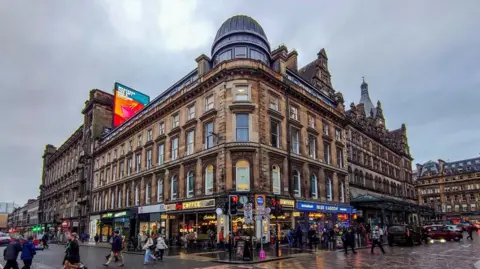
Furthermore, the adequacy of fire service resourcing has become a point of contention. Scottish Labour leader Anas Sarwar raised concerns during First Minister’s Questions regarding alleged cuts to high-reach appliances in Glasgow, claiming a reduction from six to two, with both reportedly unavailable for annual inspection on the night of the fire. This assertion suggests that a critical appliance had to be deployed from Edinburgh, potentially impacting initial response capabilities. While First Minister Swinney maintained that sufficient resources were available to tackle the blaze, these claims underscore the ongoing scrutiny of emergency service funding and preparedness, particularly in the context of protecting urban heritage and densely populated areas.
The path to full recovery for Union Street and Glasgow Central Station will be protracted and complex. The demolition, while essential for safety, marks the definitive end of a chapter for the Union Corner building. The future of the site remains an open question: whether it will see a faithful reconstruction, a modern redevelopment, or a combination thereof, will depend on myriad factors including economic viability, planning regulations, and public sentiment. The ministerial board’s mandate to oversee a support package and coordinate recovery efforts will be crucial in mitigating the long-term impact on local businesses and the city’s economy. This incident serves as a stark reminder of the vulnerability of historic urban centers to catastrophic events and the multifaceted challenges inherent in their preservation, protection, and regeneration. As Glasgow navigates this difficult period, the focus remains on ensuring public safety, supporting affected communities, and drawing lessons to safeguard its valuable heritage for future generations.




 Aura Kasih
 Safa Marwah
 Ayu Aulia