Lisa Mariana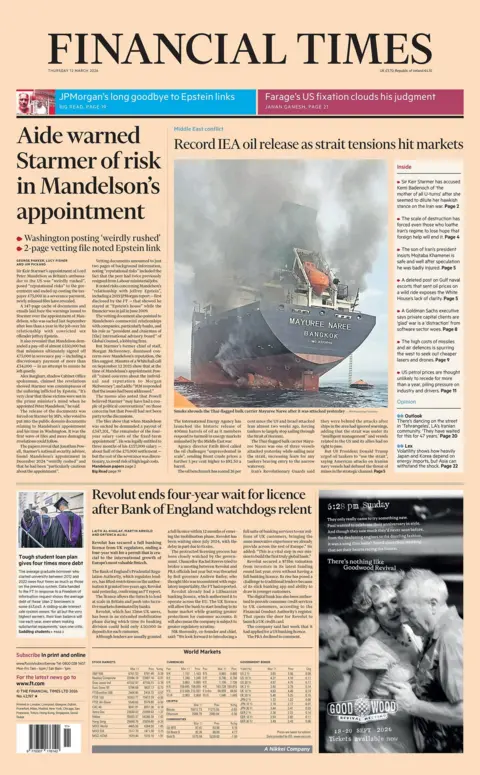
The United Kingdom’s political landscape is currently dominated by revelations from recently declassified documents pertaining to Lord Mandelson’s controversial appointment and subsequent dismissal as the nation’s ambassador to the United States, casting a shadow over Prime Minister Sir Keir Starmer’s judgment. Simultaneously, international attention remains fixed on the volatile Middle East, where escalating maritime incidents in the Strait of Hormuz have triggered an unprecedented global oil reserve release and heightened concerns over energy security. These two distinct yet equally impactful narratives are shaping national discourse and international relations, underscoring periods of significant domestic scrutiny and global instability.
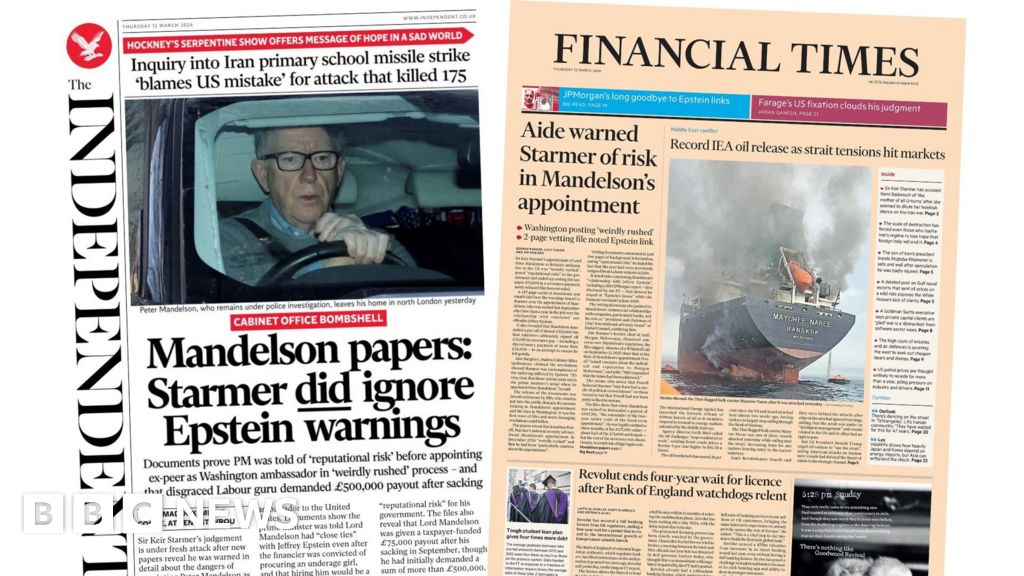
The release of official government papers concerning Lord Peter Mandelson’s brief tenure as the UK’s envoy to Washington has ignited a political inferno, placing Prime Minister Sir Keir Starmer squarely under pressure. The documents reportedly indicate that Sir Keir was apprised of significant "reputational risks" associated with Lord Mandelson’s appointment, specifically due to his well-documented association with the late financier and convicted sex offender, Jeffrey Epstein. This information directly challenges Sir Keir’s prior assertions that he was unaware of the "extent and depth" of the relationship between Lord Mandelson and Epstein when the appointment was made.
Multiple media outlets have highlighted the specific warnings issued to the Prime Minister. Reports suggest that senior foreign policy officials had explicitly flagged concerns regarding Mandelson’s "close ties" to Epstein, even following Epstein’s conviction for procuring an underage girl. The implications of a Prime Minister proceeding with a high-profile diplomatic appointment despite such grave warnings are considerable, raising fundamental questions about due diligence, ethical leadership, and the integrity of governmental processes. The role of UK Ambassador to the US is one of the most prestigious and strategically vital diplomatic postings, requiring impeccable judgment and unassailable public trust. Any perceived compromise in the selection or vetting process for such a position can have far-reaching consequences for international standing and national security.

Further complicating the narrative, additional revelations from Number 10 files suggest that Lord Mandelson was granted access to highly classified material even before his full security clearance was finalized. This "weirdly rushed" vetting process, as described by some observers, introduces a critical security dimension to the controversy. Standard protocol for such sensitive roles mandates rigorous background checks and full clearance before an individual is privy to national secrets. Bypassing or accelerating these procedures, particularly for someone with documented controversial associations, represents a significant deviation from established norms and potentially exposes the nation to undue risks. Analysts suggest that this aspect of the controversy could lead to calls for a comprehensive review of vetting procedures for senior government appointees, potentially involving parliamentary oversight or independent inquiry.
The political fallout has been swift and severe. Kemi Badenoch, the leader of the Conservative Party, has publicly questioned Sir Keir Starmer’s fitness to govern, unequivocally stating that he is "not fit to lead the country" and urging Labour Members of Parliament to consider removing him from office. This aggressive stance by the opposition signals a deliberate attempt to capitalize on the perceived lapse in judgment, positioning the incident as a litmus test for the Prime Minister’s ethical compass and leadership capabilities. The Sun newspaper, in its editorial, evocatively described a "moral vacuum" at the heart of government, a sentiment echoed across various political commentaries that underscore growing public unease regarding the transparency and accountability of those in power.

Beyond the initial appointment, the circumstances surrounding Lord Mandelson’s dismissal in September, triggered by new revelations about his friendship with Epstein, have also come under intense scrutiny. Documents suggest that following his sacking, Lord Mandelson explored the possibility of a severance payment exceeding £500,000. While the BBC understands that Lord Mandelson disputes this specific claim, the Treasury ultimately agreed to a payment of £75,000. This alleged demand for a substantial payout after being relieved of duties due to controversial associations has been widely criticized, with publications like the Daily Mirror describing it as a "shameless peer’s cash bid" and the Daily Express labeling the entire episode a "grubby saga." The principle of public service and the responsible use of taxpayer money are central to this debate, and the optics of a significant payout under such circumstances are deeply unfavorable, potentially fueling public cynicism about political elites.
Global Energy Markets Rattled by Strait of Hormuz Tensions
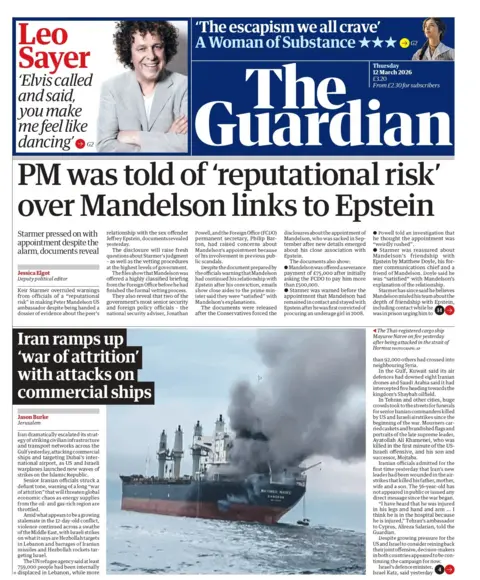
Parallel to the domestic political upheaval, the international arena is grappling with heightened tensions in the Middle East, particularly concerning the critical Strait of Hormuz. The past day has witnessed a significant escalation, with multiple commercial vessels reportedly struck by "unknown projectiles" in the strategic waterway. This series of attacks, accompanied by images of smoke billowing from damaged ships, signals a dangerous intensification of the ongoing conflict between Iran and what the Guardian describes as "US-Israeli forces."
The Strait of Hormuz is unequivocally one of the world’s most vital maritime chokepoints, through which approximately one-fifth to one-quarter of the world’s petroleum supply transits daily. Any disruption in this narrow passage has immediate and profound implications for global energy markets and the broader economy. Iran’s Islamic Revolutionary Guard Corps (IRGC) has explicitly threatened to block the passage of "a litre of oil" through the Strait, a declaration that, if acted upon, could send crude oil prices soaring to unprecedented levels, potentially reaching $200 a barrel as warned by Iran. Such a price spike would trigger widespread inflation, severely impacting global economies already contending with post-pandemic recovery challenges and existing supply chain vulnerabilities.

In response to this escalating turmoil, the International Energy Agency (IEA) has initiated a "historic release" of 400 million barrels of oil from its member countries’ strategic reserves. This coordinated action, the largest in the IEA’s history, underscores the severity of the perceived threat to global energy security. The IEA’s mandate is to ensure stable energy supplies, and this emergency measure aims to mitigate the immediate impact of supply disruptions and stabilize volatile energy markets. While such releases can provide temporary relief, they also deplete reserves intended for more prolonged crises, highlighting the precariousness of the current geopolitical climate.
The broader conflict in the Middle East, characterized by a "war of attrition," has seen Iran actively targeting commercial shipping across the Gulf region, as reported by the Guardian. This tactic aims to exert economic pressure and demonstrate capability, but it also carries a significant risk of miscalculation and direct confrontation with international naval forces present in the region. The Times’ editorial has called for a robust international response to Iran’s threats, acknowledging the considerable economic costs and military complexities involved in securing the Strait against such determined aggression. The global community faces a delicate balancing act: deterring further Iranian actions without inadvertently escalating the conflict into a full-scale regional war.

Adding another layer of concern, the Daily Telegraph has highlighted reports from the FBI warning of potential Iranian drone attacks targeting California. This intelligence suggests a possible retaliatory strategy by Iran against US strikes, extending the geographical scope of the conflict beyond the Middle East. Police departments along the US west coast are reportedly on heightened alert, indicating the seriousness with which these warnings are being treated. Such threats introduce a new dimension to state-sponsored aggression, potentially bringing geopolitical conflicts directly to civilian populations and necessitating enhanced domestic security measures. The implications of such an attack, even if symbolic, would be profound, affecting public morale, trade, and diplomatic relations globally.
Cultural Notes: Departures and Tributes

In lighter news, BBC Radio 2 presenter Liza Tarbuck has announced her departure from her long-standing Saturday evening slot after 14 years, a decision that has left her dedicated fanbase "bereft," according to the Daily Mail. The actress and comedian reportedly expressed a desire to reclaim her weekends, marking the end of a popular era for the station.
Meanwhile, the music world anticipates a forthcoming tribute album dedicated to the late Shane MacGowan, the iconic frontman of The Pogues, who passed away in 2023. The Guardian and The Times report that an impressive roster of artists, including Bruce Springsteen, Kate Moss, and Tom Waits, are set to contribute to the project. Bruce Springsteen, reflecting on his meeting with MacGowan shortly before his death, praised him as one of the rare artists whose voice seemed to "speak to history itself," underscoring the enduring legacy of the influential Irish singer-songwriter. These cultural developments offer a brief respite from the more pressing political and geopolitical concerns dominating headlines.



 Aura Kasih
 Safa Marwah
 Ayu Aulia