Lisa Mariana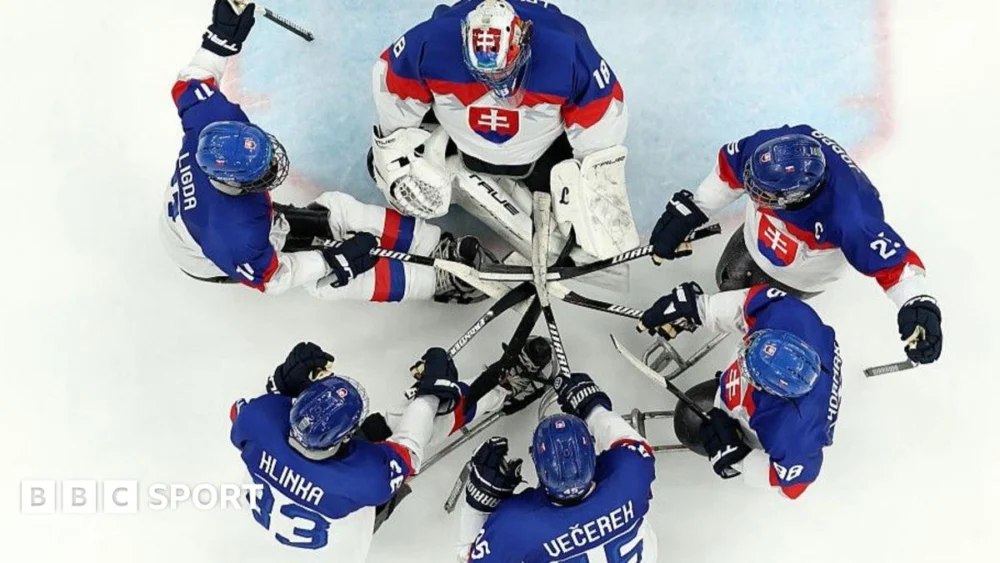
The upcoming Winter Paralympic Games in Milan-Cortina cast a stark light on persistent gender disparities within elite adaptive sport, particularly in Para-ice hockey, where the designation of a "mixed" team event often obscures the systemic underrepresentation of female athletes, leading to a singular woman competing amidst a field of 135 participants.
The narrative of gender inclusion within the Paralympic movement often presents a complex picture, marked by both progress and deeply entrenched challenges. At the heart of this ongoing debate is the experience of athletes like Kelsey DiClaudio, a world champion in women’s Para-ice hockey, whose absence from the Winter Paralympics is emblematic of broader issues. Despite her elite status, DiClaudio, like many other highly skilled female players, will not participate in the pinnacle of winter adaptive sport. The official classification of Para-ice hockey as a ‘mixed’ event at the Games has historically failed to translate into meaningful representation for women, with only four female athletes having been selected in the 32 years since the sport’s Paralympic debut in Lillehammer. This includes an optional 18th squad position that is specifically reserved for a woman, a provision rarely utilized. For the 2026 Games, only one woman is projected to compete across all Para-ice hockey teams, a figure that underscores the nominal rather than substantive nature of the ‘mixed’ designation. DiClaudio and others contend that the fundamental question is not merely about increasing individual female representation within a male-dominated structure, but rather establishing a distinct women’s event to foster genuine competitive pathways and visibility.
The International Paralympic Committee (IPC) has publicly articulated an aspiration for gender parity across the Games. While the Summer Paralympics have made considerable strides, nearing 44.7% female athlete participation in Paris 2024, the Winter Games lag significantly, with women constituting only 26.1% of competitors anticipated for Milan-Cortina. Although the overall trend for female participation in the Winter Paralympics is upward, with 160 female athletes expected compared to 136 at Beijing 2022, the gap remains substantial. For athletes like DiClaudio, the current ‘mixed’ event structure within her sport is perceived as an insufficient mechanism for accelerating this progress.
The historical genesis of the Paralympic movement, rooted in rehabilitation programs for male veterans of World War Two at Stoke Mandeville Hospital, naturally established a male-centric foundation, with a predominant focus on events catering to spinal cord injuries and limb loss. Decades later, this historical legacy continues to manifest as a pervasive underrepresentation of women across virtually all disciplines within the Winter Paralympics. Even in sports like wheelchair curling, which mandates the inclusion of at least one woman in a five-person team, female participation, while relatively higher, still presents challenges. The introduction of a new mixed doubles discipline at the upcoming Games has positively impacted female representation in the sport, raising it from 33% in Beijing to 38%. However, this incremental progress in specific disciplines does not negate the broader systemic issues.
The efficacy of mixed-gender events as a vehicle for female inclusion has been a subject of academic inquiry. Dr. Nikolaus Dean, a researcher at the University of British Columbia, explored this question across several Para-sports, including wheelchair rugby, curling, Para-ice hockey, and Para-equestrian. His 2023 report concluded that, "in practice, these sports provide little to no opportunity for women to get involved in the wider Paralympic movement." This finding resonates deeply with the experiences of athletes such as DiClaudio, who views the ‘mixed’ label in her sport cynically. "I think it’s there to deflect outrage," she stated, suggesting that many teams do not genuinely embrace the spirit of female inclusion, using the designation primarily to quell external criticism.
The pathway to national team selection further illuminates the structural impediments faced by female Para-ice hockey players. For instance, Team USA’s Para-ice hockey team selection process typically involves a residency program that predominantly features athletes from the men’s national team. While women are technically permitted to compete within these male-centric programs, the United States has never selected a woman for its national Para-ice hockey team. When queried about the critical factors in team selection, American two-time Paralympic champion Jack Wallace emphasized "chemistry and character" as "a massive factor." However, without direct and equitable access to these high-performance environments, female athletes face an insurmountable hurdle in demonstrating these very qualities.
The experience of Canadian Raphaelle Tousignant offers a rare glimpse into the challenges and potential benefits of female athletes integrating into male national programs. In 2023, she made history by becoming the first woman selected for a men’s Para-Ice Hockey World Championships squad. Tousignant highlighted the significant advantages derived from her participation: "They don’t have to worry about having the money or doing a fundraiser to get to a competition, that’s one thing. The other is they are at the Paralympic Games and they have a World Championship… they get paid to play their sport each month. I have the chance to have that because I play with the men’s side." Her testimony underscores the profound disparity in resources and opportunities available between men’s and women’s Para-ice hockey programs. Despite her pioneering efforts and the invaluable experience gained, Tousignant, who received a breast cancer diagnosis in October, was not selected for Milan-Cortina. The upcoming Games will feature only one woman in Para-ice hockey: Japan’s Akari Fukunishi. Slovakia had entered Michaela Hozakova, but she traveled separately to Milan, reportedly serving as "just a substitute" and observing from the stands, further highlighting the precarious position of female athletes in this mixed format.
IPC President Andrew Parsons has acknowledged the sluggish pace of progress toward gender parity, conceding that it is "not happening fast enough." Nevertheless, he maintains that "the direction is really clear," and expressed optimism that "once we are able to have a female tournament in Para-ice hockey, this will help a lot to fill the gap." This statement, however, highlights a significant Catch-22: the establishment of a dedicated women’s Para-ice hockey event at the Paralympics is contingent upon meeting stringent eligibility criteria, including a minimum of two World Championships, sustained participation from at least eight nations, and representation from a minimum of three regions. The current limited opportunities for women to compete internationally in organized events make it exceedingly difficult to satisfy these prerequisites, thus perpetuating the cycle of exclusion.
The disparity in medal events further illustrates the prevailing gender imbalance. In Milan-Cortina, out of a total of 79 medal events, only 35 are allocated to women, compared to 39 for men, with five designated as mixed events. This imbalance is particularly pronounced in disciplines such as Para-snowboard, where men have historically had three times as many events as women. The lack of visibility stemming from fewer competitive opportunities and limited media coverage is a well-documented factor affecting participation across all levels of sport. At the Paralympics, this issue is amplified, as the Games often represent the most significant global media exposure a Para-sport receives over a four-year cycle, making the absence of women’s events particularly damaging to recruitment and development.
Adding another layer of complexity is the classification system, which groups athletes by impairment to ensure fair competition. This system can inadvertently lead to the marginalization of certain athlete groups. For instance, at Beijing 2022, the IPC controversially cut a medal event for the most impaired female snowboarders due to perceived low participation in the preceding year. This decision sparked a legal challenge from athletes like Cecile Hernandez of France and American Brenna Huckaby. Their successful appeal, though requiring them to compete in a less-impaired classification, resulted in both becoming Paralympic champions, underscoring the vital role of athlete advocacy. Their fight extended beyond personal ambition, inspiring a new generation; Nina Sparks, set to become Great Britain’s first female snowboarder at the Winter Paralympics, explicitly cited Hernandez as one of her "biggest role models."
Despite the challenges, there are discernible efforts to increase the number of women’s medal events within the broader Paralympic framework. The Los Angeles Summer Paralympics in 2028 are projected to feature 243 medal events for female athletes, an increase of eight from Paris 2024, while the number of male medal events will be concurrently reduced by eight to 263. The number of mixed medal events is also set to increase by three, reaching 46. This strategic reallocation of events signals a commitment to rebalancing gender representation.
Qualifying for the Paralympic Games presents immense challenges for any athlete. However, women with disabilities face an additional layer of complexity, navigating not only the rigorous demands of elite sport but also persistent societal and structural inequalities that intersect to create cumulative barriers to participation. While some smaller nations continue to struggle with sending any female athletes, a positive development for Milan-Cortina is the record number of female competitors anticipated from six countries: Australia (five), Belarus (three), Brazil (three), Croatia (two), South Korea (six), and Latvia (four). Furthermore, an increase in female competitors is projected for Para-alpine skiing (57), Para-biathlon (45), Para-cross-country skiing (65), Para-snowboard (15), and wheelchair curling (25).
The potential impact of a dedicated women’s Para-ice hockey event is significant. Projections suggest that a single such event could bring more than 80 additional female athletes to the Winter Paralympics, fundamentally transforming the landscape of female participation. For Kelsey DiClaudio, the prospect is deeply personal and professionally vital: "To finally get to the Paralympic Games as a separate female division means everything to me." The burgeoning interest is evident; last year’s women’s World Championships featured six teams, including a British contingent and a multinational "Team World," drawing sell-out crowds. IPC President Parsons, while not dismissing the possibility of its appearance at the 2030 Paralympics, considers 2034 a more realistic timeline. He concluded with a forward-looking imperative, stating, "We are living in the 21st century so we need to offer as many possibilities for females as possible," a sentiment that encapsulates the ongoing journey toward true inclusivity and equity in adaptive sport.


 Aura Kasih
 Safa Marwah
 Ayu Aulia