Lisa Mariana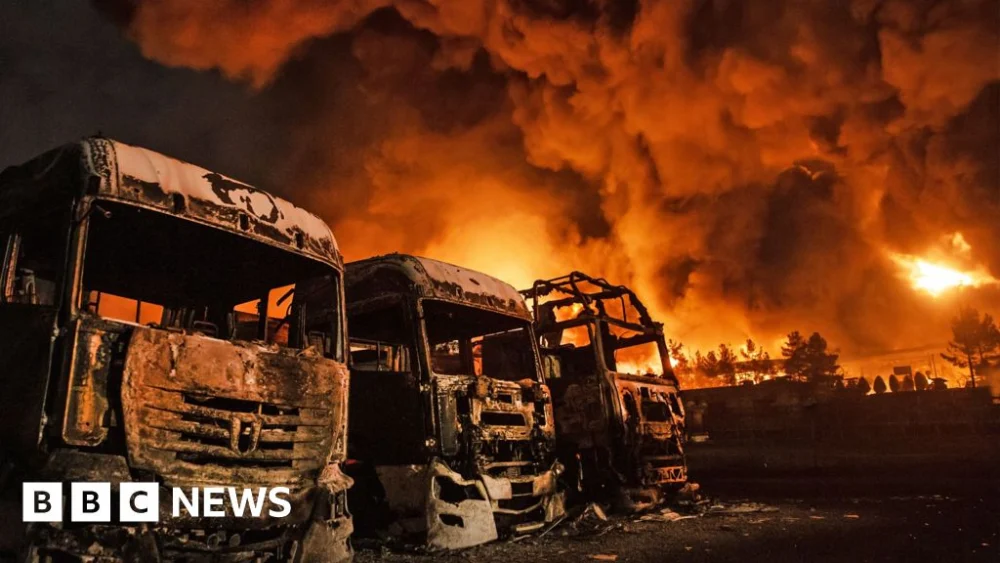
In an urgent response to escalating geopolitical tensions and their profound reverberations across global financial markets, the Group of Seven (G7) nations is poised to hold an emergency meeting today. This high-stakes assembly of finance ministers from the world’s leading industrialized economies aims to formulate a coordinated strategy to counteract the dramatic surge in crude oil prices, which have breached the $100 per barrel mark, and the subsequent widespread slump in stock markets, both direct consequences of the intensifying conflict between the United States, Israel, and Iran.
The precipitous rise in energy costs and the ensuing market volatility underscore a critical juncture for the global economy, already navigating a complex post-pandemic recovery and persistent inflationary pressures. The G7’s swift convocation signals the gravity with which these nations perceive the potential for a protracted period of economic disruption, particularly stemming from the precarious situation in the Middle East. Among the key attendees is UK Chancellor Rachel Reeves, joining her counterparts to deliberate on the multifaceted economic ramifications of the conflict, which threaten to undermine stability across continents.
Global crude benchmarks soared to nearly $120 a barrel earlier today, fueled by profound anxieties regarding sustained interruptions to vital energy supplies traversing the Strait of Hormuz. This critical maritime chokepoint, through which approximately one-fifth of the world’s oil transits, has seen traffic virtually cease since the outbreak of hostilities over a week ago, raising alarms about an impending energy crisis. Concurrently, major stock indices globally registered significant declines, with the UK’s FTSE 100 share index experiencing a 1.5% contraction, reflecting investor apprehension about the conflict’s broader economic fallout.
Reports indicate that a primary agenda item for the G7 discussion will be the potential for a joint release of strategic petroleum reserves, a measure to be orchestrated through the International Energy Agency (IEA). Such a coordinated action, if implemented, would mark the first instance since 2022, when global reserves were tapped following Russia’s full-scale invasion of Ukraine, demonstrating the parallel severity of the current energy supply concerns. The activation of these reserves is typically reserved for severe supply disruptions, highlighting the extraordinary nature of the present crisis.
The profound disruption to energy flows from the Persian Gulf region poses a significant threat of driving up costs for both consumers and businesses worldwide. This inflationary surge could, in turn, compel central banks to reconsider or delay anticipated interest rate reductions, thereby prolonging tight monetary conditions and potentially stifling economic growth. The intricate interplay between energy prices, inflation, and monetary policy forms a central concern for the G7 finance ministers, who are tasked with safeguarding economic stability amidst these external shocks.
The geopolitical landscape underpinning this economic turbulence has undergone rapid transformation. Over the weekend, the political transition in Iran saw Mojtaba Khamenei designated to succeed his father, Ali Khamenei, as Supreme Leader. This development is widely interpreted as a consolidation of power by hardline factions within the Iranian government, suggesting a potential hardening of resolve and an extended period of conflict rather than immediate de-escalation. The implications of this leadership change for regional stability and the trajectory of the ongoing conflict are being closely monitored by international observers.
The conflict itself has intensified dramatically. The United States and Israel launched successive waves of aerial assaults across Iranian territory over the weekend, targeting numerous strategic sites, including critical oil infrastructure. In a retaliatory sequence, Iran simultaneously directed attacks against energy facilities in neighboring Gulf states. Overnight, Saudi Arabia reported the successful interception and neutralization of multiple drone incursions aimed at a pivotal oilfield, underscoring the regional contagion of the hostilities and the direct threat to global energy production hubs.
Financial markets reacted sharply to these developments as trading commenced on Monday. Brent crude, the international benchmark, initially spiked by more than 25%, touching a peak of $119.50 a barrel before moderating to approximately $107. Similarly, US West Texas Intermediate (WTI) crude experienced comparable volatility, settling around $104 a barrel. Natural gas markets also registered significant gains, with UK gas prices for month-ahead delivery surging by nearly 25% to 171 pence a therm at the open, before a slight retreat to approximately 156 pence a therm. This synchronized surge across energy commodities underscores the market’s perception of broad-based supply risk.
The contagion of market apprehension extended to global equities. European stock exchanges opened significantly lower, tracking steep declines observed earlier across Asian markets. Both Germany’s Dax and France’s Cac 40 indexes each recorded drops of approximately 2.5%. In London, the FTSE 100 witnessed a broad-based decline, with the notable exception of oil majors BP and Shell, whose share prices benefited from the dramatic increase in crude values. Asian markets had already borne the brunt of the initial reaction, with Japan’s Nikkei 225 index plummeting 5.2% and South Korea’s Kospi index closing down 6%. Trading on the Kospi was momentarily halted by a "circuit breaker" mechanism, designed to mitigate panic selling during extreme market volatility, highlighting the intensity of investor flight.
According to analyses from institutions like the Peterson Institute for International Economics, the substantial jump in oil prices was largely anticipated, given the cessation of production activities in certain Gulf states and the growing indications of a prolonged regional conflict. Experts note that market participants are increasingly recognizing the unlikelihood of a swift resolution, leading to sustained upward pressure on prices. Furthermore, the credibility of assurances and objectives articulated by international actors, particularly the United States, regarding the conflict’s containment, is perceived as diminishing, contributing to heightened market uncertainty.
The political dimension of the crisis adds another layer of complexity. US President Donald Trump, whose political platform has consistently emphasized reducing the cost of living, has publicly downplayed concerns regarding the escalating oil prices. On his social media platform, he asserted that "Short term oil prices, which will drop rapidly when the destruction of the Iran nuclear threat is over, is a very small price to pay for U.S.A., and World, Safety and Peace. ONLY FOOLS WOULD THINK DIFFERENTLY!" This perspective suggests a prioritization of strategic objectives over immediate economic discomfort, a stance that diverges from the concerns voiced by many economists and consumers.
Further illustrating the administration’s position, US Energy Secretary Chris Wright stated publicly that Israel, rather than the United States, was primarily responsible for targeting Iran’s energy infrastructure. This clarification comes amidst growing domestic concerns within the US regarding the rising cost of gasoline at the pump, directly attributable to the conflict. Data from the motorists’ group AAA indicated an 11% increase in the average price for regular gasoline in the US last week, reaching $3.32 per gallon, presenting a tangible economic burden for American households.
The G7 meeting is therefore tasked with navigating a complex interplay of geopolitical risk, energy market instability, and domestic economic pressures. The efficacy of a coordinated strategic petroleum reserve release will be contingent not only on its volume but also on the perceived duration of the conflict and the ability of the G7 nations to project a unified front in stabilizing global energy markets. Beyond immediate measures, the discussions are expected to touch upon broader strategies for enhancing energy security, diversifying supply chains, and mitigating the inflationary impact on global economies. The outcome of these deliberations will be closely scrutinized by investors, policymakers, and consumers alike, as the world braces for what could be a sustained period of economic and geopolitical uncertainty. The decisions made today could set the trajectory for global economic performance for months, if not years, to come, underscoring the critical importance of this emergency summit.




 Aura Kasih
 Safa Marwah
 Ayu Aulia