Lisa Mariana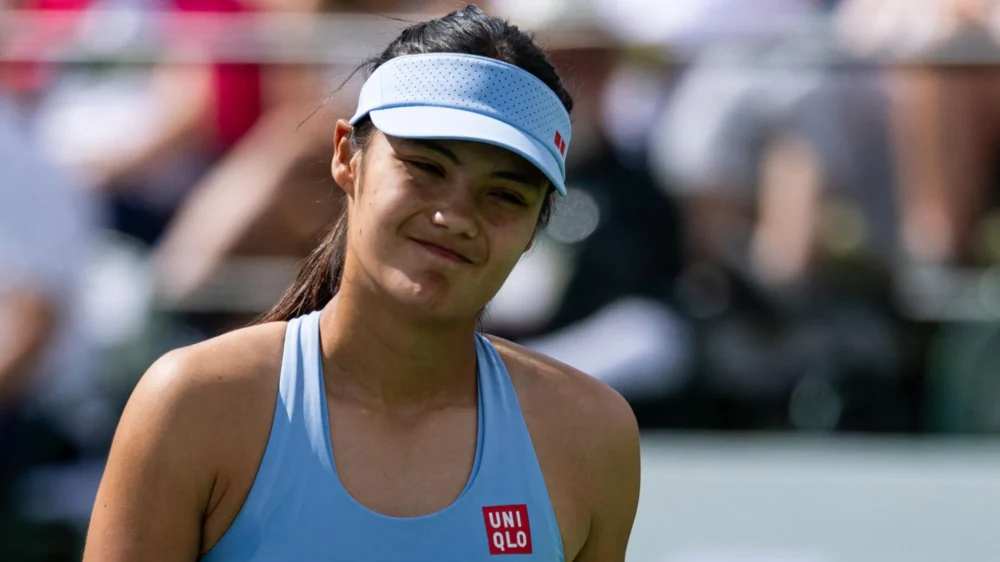
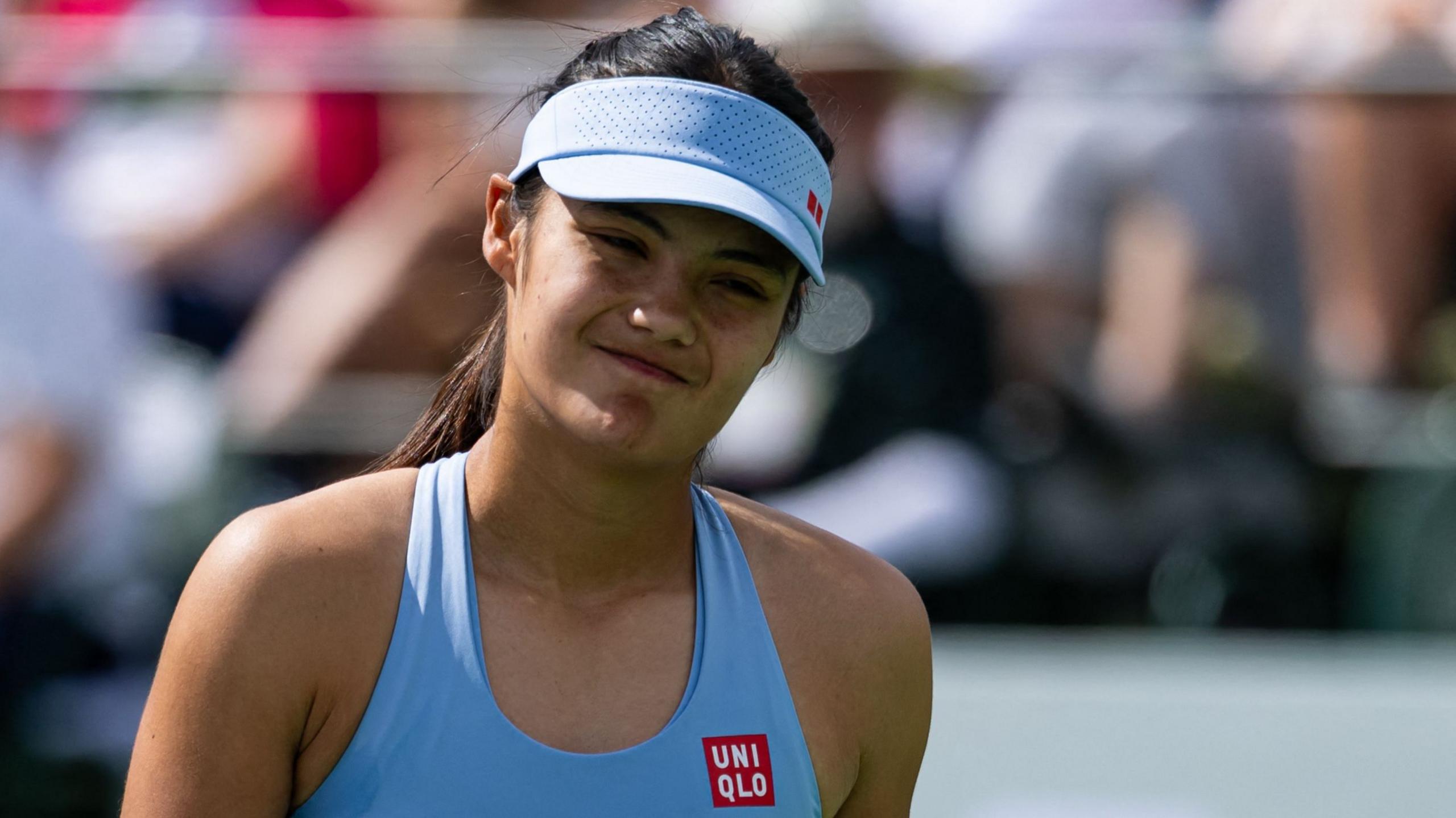
British tennis player Emma Raducanu concluded her participation in the BNP Paribas Open at Indian Wells with a rapid straight-sets defeat, a result that brings into sharp focus the demanding journey of strategic and technical refinement she continues to undertake within the highly competitive professional circuit. The encounter, lasting a mere 52 minutes, saw Raducanu succumb to a formidable opponent, underscoring her candid assessment that significant progress is still required to consistently challenge the sport’s top echelons.
The contest against American Amanda Anisimova unfolded with relentless efficiency, with Raducanu securing only two games in total, culminating in a 6-1, 6-1 scoreline. Anisimova, known for her powerful groundstrokes and aggressive approach, dictated play from the outset, demonstrating a marked advantage in ball striking and court command. The statistical disparity was stark, with Raducanu managing a minimal two winners compared to Anisimova’s twenty-one, illustrating the one-sided nature of the exchanges. Raducanu’s serve, a critical component of her offensive strategy, faltered early, conceding a break in the opening game and struggling to establish any rhythm throughout the match. By the time the second set was underway, she found herself trailing 3-0 before finally managing to hold serve, a brief respite in an otherwise challenging encounter.
Reflecting on the decisive loss, Raducanu articulated a clear understanding of the gap she faces against players of Anisimova’s caliber. "When I’m playing someone who’s at the top like that, I think they have an extra 10 miles an hour on their serve than me," she observed. This comment highlights a fundamental challenge in modern professional tennis, where raw power, particularly on serve, can create immediate pressure and limit an opponent’s opportunities. She further elaborated on the feeling of being outmatched: "If I’m not feeling it, that gap feels more evident in terms of weight of shot, in terms of power. You just feel a little bit behind and your punches aren’t landing as much as theirs are." This self-assessment points to a need for increased aggression and tactical variation in her own game to counteract such potent opposition. She acknowledged, "I need to obviously be aggressive when playing those players, but I think there’s still a long way to go to be doing that and I need to use my strengths and probably mix it up a bit more."
Raducanu’s professional journey since her unexpected triumph at the 2021 US Open has been characterized by a series of high-profile coaching changes and intermittent injuries, creating a challenging environment for consistent development. Following her split with Francisco Roig in January, she has been working with temporary coach Mark Petchey, signaling a period of strategic recalibration. Her stated objective to "rediscover her ‘natural way of playing’" is a crucial indicator of her current developmental phase. This endeavor transcends mere technical adjustments; it involves a holistic effort to integrate her innate strengths with the strategic discipline required at the elite level, while also building physical resilience to withstand the rigors of the tour. The search for a long-term coaching partnership remains a key element in establishing the stability and consistent guidance necessary to refine her game and achieve sustained success.
The Indian Wells tournament, often dubbed the "fifth Grand Slam" due to its stature and comprehensive field, presents a unique challenge with its desert conditions and slower court speeds, which can emphasize rally construction and tactical prowess. For Raducanu, navigating such an event effectively requires a robust all-court game and the mental fortitude to endure prolonged exchanges. While her opening match against Anastasia Zakharova, a comfortable 6-1, 6-3 victory, demonstrated flashes of her potential, the subsequent encounter with Anisimova offered a stark reminder of the intensity and precision required to advance deep into these prestigious events. Raducanu acknowledged the difficulty in drawing extensive conclusions from a match with few rallies but maintained a pragmatic outlook: "I have to look at what I achieved in the last nine days of practice since I arrived here, and the first match was a good one for me. Today I could let it get me down if I wanted to, but overall I think the days have been better than not." This perspective underscores a focus on incremental progress and a commitment to the developmental process rather than dwelling on individual results.
The analytical consensus surrounding Raducanu’s performance at Indian Wells echoes her own reflections. Experts noted Anisimova’s exceptional form from the very first ball, consistently seizing control of points through aggressive serves and returns. Raducanu, by contrast, struggled to generate any significant resistance, failing to initiate her game plan effectively and displaying inconsistencies in her serve. The ambition to "take the ball on" and adopt an aggressive posture against top-ranked players is strategically sound, especially given her US Open success was built on such principles. However, the execution of this strategy against the world’s most powerful players demands a level of consistency, precision, and physical conditioning that, as Raducanu herself conceded, she is still striving to achieve. The comparison to players like Simona Halep and Jessica Pegula, both known for their tenacity, tactical intelligence, and ability to "dig in" despite not possessing overwhelming power, suggests a recognition of the multifaceted nature of elite tennis, where resilience and strategic depth are as crucial as raw force.
The demanding nature of the professional circuit was further highlighted by other significant events at Indian Wells. World number four Coco Gauff, for instance, was forced to retire from her third-round match due to a "scary" arm injury, describing the sensation as a "firework going off inside of my arm." Gauff’s retirement, only the second of her career, underscores the immense physical toll that constant competition exacts, particularly during demanding back-to-back events like the "Sunshine Double" (Indian Wells and Miami Open). While Gauff hopes to recover for the Miami Open, her withdrawal serves as a powerful reminder of the fine margins that separate peak performance from debilitating setbacks for even the most established athletes.
Elsewhere in the draw, the competitive intensity remained high. Belarusian world number one Aryna Sabalenka showcased her dominant form with 23 winners in her victory over Jaqueline Cristian, setting up a highly anticipated clash with Japan’s Naomi Osaka. Osaka, a four-time Grand Slam champion, continued her return to competitive tennis, securing a win against Camila Osorio in what was her first tournament appearance since withdrawing from the Australian Open due to an abdominal injury. These narratives illustrate the dynamic landscape of women’s tennis, where top players are constantly navigating challenges ranging from injury rehabilitation to maintaining peak performance against a rising tide of talent. On the men’s side, Italian world number two Jannik Sinner advanced convincingly, defeating Canadian Denis Shapovalov, and was set to face rising Brazilian star Joao Fonseca, who marked his first appearance in a Masters 1000 fourth round. German fourth seed Alexander Zverev also secured a hard-fought victory against American Brandon Nakashima.
For Emma Raducanu, the Indian Wells experience, while brief, serves as another critical data point in her ongoing development. The path forward involves a meticulous approach to refining her technical game, enhancing her physical conditioning to withstand the relentless power of her opponents, and cultivating a robust mental framework to manage the pressures and expectations that accompany her unique status. The quest to integrate her aggressive instincts with a more versatile and defensively sound game will be paramount. Her next opportunity to compete, likely at the Miami Open, will offer immediate insights into her ability to adapt and build upon the lessons learned. Ultimately, her trajectory will be defined not by the occasional quick defeat, but by her sustained commitment to the rigorous process of growth and adaptation required to re-establish herself as a consistent contender at the sport’s highest levels. The "long way to go" she speaks of is not a statement of doubt, but an acknowledgment of the profound dedication and strategic patience required for a player of her potential to truly flourish.


 Aura Kasih
 Safa Marwah
 Ayu Aulia