Lisa Mariana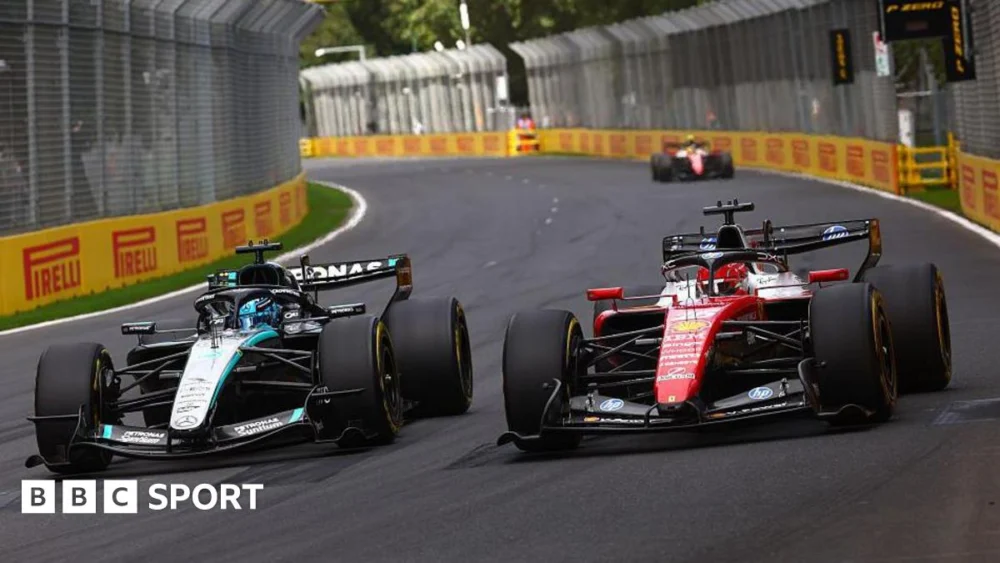
The inaugural race of the new Formula 1 technical era in Australia ignited a profound debate within the motorsport community, challenging perceptions of authentic competition against an increasingly technologically mediated spectacle. This pivotal event prompted a critical examination by drivers, team principals, and enthusiasts alike, raising questions about whether the sport’s evolution has steered it towards a more strategic, almost gamified, form of racing rather than traditional wheel-to-wheel combat.
Prior to the season’s commencement, a palpable apprehension permeated the paddock concerning the unknown dynamics of the sport’s revised regulations. Chief among these anxieties were the radical changes to the power unit architecture, which mandated a near-equal split between internal combustion and electrical energy deployment. This fundamental shift necessitated entirely new driving methodologies, prompting concerns over driver adaptation and the potential for unforeseen consequences. Specifically, unease was voiced regarding the variability in car performance during race starts, where differing electrical energy deployment strategies could lead to significant speed differentials. Similarly, the prospect of vastly divergent car speeds mid-race, as some vehicles entered energy recovery modes while others deployed maximum electrical boost, raised red flags about both competitive integrity and driver safety. The overriding question loomed: would this new iteration resonate with audiences as genuine motorsport, or would it be perceived as an artificial construct, potentially undermining the sport’s essence?
Ultimately, the on-track action in Melbourne largely presented itself as a conventional race, yet with distinctly unconventional elements. The early stages saw a captivating duel for the lead between George Russell and Charles Leclerc, who exchanged positions multiple times over the opening ten laps. This intricate dance was predominantly orchestrated through the strategic activation of "boost" and "overtake" modes, directly leveraging the new hybrid power unit capabilities. Official statistics indicated a remarkable surge in overtaking maneuvers, with 125 recorded passes compared to a mere 45 in the previous year’s equivalent race. While an increase in overtakes is often hailed as a positive development for spectator engagement, the underlying mechanics of these passes sparked intense discussion: were these genuine displays of driver skill, such as late braking or precise car placement, or were they primarily a function of temporary power advantages akin to a "nitro boost" in a video game?
The reactions from the drivers themselves offered a microcosm of the broader sentiment. George Russell, the race winner, described his early battle with Leclerc as "dicey," acknowledging the novel challenges presented by the new driving style. Charles Leclerc, who secured third place, underscored the transformative impact of constantly managing the 350kW (470bhp) electrical power, stating it would "definitely change the way we go about racing and overtaking." In contrast, Lewis Hamilton, finishing fourth, expressed an unequivocal enjoyment, finding the race "really fun to drive." However, the reigning world champion, Lando Norris, articulated grave safety concerns, predicting a major incident due to the pronounced speed differentials. He voiced a chilling sentiment that drivers were "just waiting for something to go horribly wrong." Four-time champion Max Verstappen, a vocal advocate for driving purity, conceded his love for racing but qualified it with a clear desire for improvement, stating, "I do want it to be better than this." Even seasoned figures like Ferrari team principal Frederic Vasseur were struck by the novelty of the lead battle, remarking, "I’m not sure that I saw something like this the last 10 years."
Despite the immediate spectacle, a pervasive sense of unease lingered, prompting an agreement among team principals to re-evaluate the regulations after the initial three races of the season. This period of reflection is intended to assess whether adjustments are necessary to align the sport more closely with its traditional values and address any emergent issues. The intense skirmish between Russell and Leclerc served as a prime example of the new technological paradigm in action. The deployment of "overtake" or "boost" modes, while providing a temporary advantage, simultaneously rendered the deploying car vulnerable to an immediate counter-attack as its electrical energy reserves depleted. This dynamic often created a cat-and-mouse game, making it challenging for either driver to establish a decisive lead or break away from the pursuing pack. Paradoxically, this intense, technology-driven battle for the lead ultimately compromised both drivers, allowing Hamilton and Kimi Antonelli (Russell’s Mercedes teammate) to close the gap and briefly transform it into a four-way contest before a virtual safety car period led to divergent strategies, culminating in a dominant one-two finish for Mercedes.
The race also provided substantive evidence supporting the drivers’ safety concerns. The speed differentials witnessed at the start were stark, highlighted by a near-collision involving Liam Lawson of Racing Bulls and Franco Colapinto’s Alpine. Both Norris and Russell subsequently reiterated their apprehensions regarding these disparities during on-track racing. Norris, in particular, was emphatic: "It’s chaos," he declared. "You’re going to have a big accident… You can have a 30, 40, 50 km/h speed (differential), and when someone hits someone at that speed, you’re going to fly and you’re going to go over the fence and you’re going to do a lot of damage to yourself and maybe to others." This stark warning underscores a fundamental tension between the pursuit of innovative powertrain technology and the inherent risks of high-speed motorsport.
The fundamental question of whether racing is truly "racing" when significantly reliant on button-activated electrical energy boosts also resonated through the paddock. McLaren team principal Andrea Stella candidly described it as "a little bit artificial." He further posited that once the initial strategic variations in deployment settled, overtaking could paradoxically become more difficult, suggesting that the current system’s impact on genuine racing dynamics requires ongoing scrutiny.
At the heart of these discussions lies the complex behavior of the new power units. Designed with an almost equal division between internal combustion and electrical power, these engines operate in a state of perpetual energy management. The battery is subjected to multiple charge and discharge cycles within a single lap. When cars enter recharge mode, they experience a substantial power reduction, losing as much as 470bhp, plummeting from a peak of 1,000bhp. This continuous need to optimize energy balance compels drivers to adopt unconventional techniques and results in unique car behaviors. For instance, at the conclusion of long straights, the energy often tails off, causing a noticeable speed drop well before the driver applies the brakes for a corner. While "overtake" and "boost" modes offer temporary power surges, they deplete the battery more rapidly, leaving drivers susceptible to being re-passed on subsequent straights.
Further "weirdnesses," as some have termed them, manifest even in qualifying sessions, where drivers are observed "lifting and coasting" on straights or delaying full throttle application until partway down the start-finish straight. This constant energy calculus diverges sharply from the traditional ideal of driving flat-out, braking as late as possible, and accelerating as early as possible to maximize lap time. It is this perceived erosion of pure driving instinct that fuels the criticism from purists like Max Verstappen, who argued for a return to "proper F1 on steroids." His plea for action from the FIA and F1 management highlights a broad consensus among many drivers and fans that the sport’s regulations need urgent refinement to enhance the driving experience and the spectacle.
The debate also extended to a retrospective comparison with previous generations of F1 machinery. Lando Norris’s post-qualifying assertion that F1 had transitioned "from the best cars to the worst ones" sparked counter-arguments. It was recalled that drivers had frequently voiced dissatisfaction with the preceding era’s vehicles, particularly concerning the rigidity of ground-effect cars and the prevalence of "porpoising," which led to physical discomfort. While the chassis design aspects of the new regulations have generally been lauded as a step forward, the power unit characteristics remain contentious. Russell, responding to Norris’s comments, suggested that perception might be influenced by competitive performance, implying that a winning driver might view the regulations differently. He advocated for patience, urging a more measured evaluation after several races rather than immediate condemnation.
Toto Wolff, Mercedes team principal, echoed this sentiment, cautioning against excessive nostalgia. He emphasized that all stakeholders in the sport—teams, drivers, and governing bodies—share a collective responsibility to deliver a compelling spectacle with the world’s best cars and drivers, captivating for fans. While acknowledging the importance of driver perspectives, Wolff underscored that the ultimate metric, as articulated by F1 president Stefano Domenicali, is fan engagement. He stressed F1’s inherent flexibility to adjust regulations if necessary, signaling an open-minded approach to future modifications.
The diverse fan reactions, ranging from enthusiastic praise for the "chaotic" and "non-stop action" of the early laps to strong critiques of the "artificial" and "computer game-like" nature of the racing, underscore the profound polarization within the audience. Some lauded the increased overtaking and closer battles, predicting a more exciting season. Others lamented what they perceived as a dilution of true driver skill, comparing it unfavorably to other motorsport disciplines and finding it "pathetic" or "anti-F1." This spectrum of opinion highlights the challenge facing Formula 1: how to balance technological innovation and sustainability objectives with the core values of pure, skill-based competition that have historically defined the pinnacle of motorsport.
Looking ahead, the initial three-race evaluation period will be critical. The discussions between the FIA, Formula 1, and the teams will need to carefully weigh the safety implications of speed differentials, the perceived artificiality of energy management, and the overall impact on driver satisfaction and fan engagement. The goal will be to refine the regulations to ensure that while the sport continues its trajectory towards technological advancement and environmental responsibility, it does so without compromising the visceral thrill and competitive integrity that are synonymous with Formula 1. The Australian Grand Prix, therefore, was not merely a race, but a significant opening chapter in a broader narrative about the very definition and future direction of elite motorsport.



 Aura Kasih
 Safa Marwah
 Ayu Aulia