Ridwan Kamil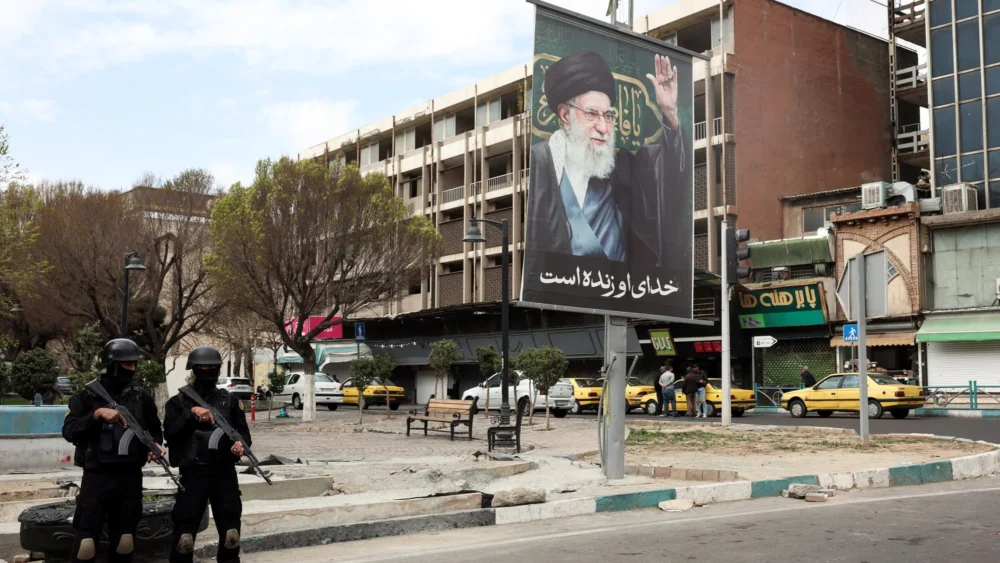
Decades after their inception, Iran’s Islamic Revolutionary Guard Corps (IRGC) remains a pivotal force, profoundly shaping the nation’s political, economic, and military landscape, its pervasive reach extending far beyond its initial mandate.
The Islamic Revolutionary Guard Corps (IRGC), established in the tumultuous aftermath of the 1979 revolution, has evolved from a revolutionary militia into a multifaceted entity with a deeply entrenched influence across all strata of Iranian society. Its omnipresence, a testament to its strategic adaptation and unwavering loyalty to the clerical establishment, continues to define the trajectory of the Islamic Republic, impacting domestic policy, regional dynamics, and international relations. Understanding the IRGC’s enduring power requires a comprehensive examination of its historical roots, its multifaceted operational domains, and the intricate web of influence it has meticulously woven.
Genesis and Ideological Foundation:
The IRGC’s origins are inextricably linked to the desire of Ayatollah Ruhollah Khomeini, the architect of the Islamic Revolution, to create a counterweight to the existing secular military, the Shah’s army. This nascent force was envisioned not merely as a defensive apparatus but as a vanguard of the revolution, tasked with safeguarding its ideals, rooting out internal dissent, and projecting its revolutionary fervor both domestically and internationally. Its initial recruitment focused on fervent revolutionaries, ideologically aligned with Khomeini’s vision, thereby embedding a deep ideological commitment into its DNA. This ideological imperative has remained a cornerstone of the IRGC’s identity, distinguishing it from conventional military organizations and infusing its actions with a distinct revolutionary zeal.
The early years were marked by consolidation and expansion. The IRGC played a crucial role in suppressing nascent counter-revolutionary movements and consolidating the clerical leadership’s authority. The protracted and brutal Iran-Iraq War (1980-1988) proved to be a pivotal period for the IRGC’s growth and professionalization. It demonstrated its battlefield prowess, absorbing valuable combat experience and forging a reputation for resilience and sacrifice. This period also saw the IRGC gain access to significant resources and develop a sense of institutional pride and self-sufficiency, laying the groundwork for its future expansion into non-military spheres.
A Multifaceted Powerhouse: Beyond the Barracks:
The IRGC’s influence today extends far beyond its military and security functions. It has strategically diversified its operations, establishing a formidable presence in key sectors of the Iranian economy. Through a complex network of affiliated companies and foundations, often operating with a degree of opacity, the IRGC exerts significant control over vital industries, including oil and gas, telecommunications, construction, and finance. This economic entanglement serves multiple purposes: it provides the IRGC with vast financial resources, independent of direct government budgetary oversight, which can be used to fund its operations, reward loyalists, and exert leverage over civilian institutions. Furthermore, it allows the IRGC to reward its members and create a patronage system that further solidifies its power base.
This economic dominion has often come at the expense of private enterprise and has been a recurring source of friction with civilian political factions advocating for greater economic liberalization. Critics argue that the IRGC’s economic activities distort markets, stifle competition, and contribute to corruption, ultimately hindering Iran’s overall economic development. However, from the IRGC’s perspective, these economic ventures are essential for national security, ensuring the state’s self-sufficiency and providing resources for its strategic objectives, particularly in the face of international sanctions.
Beyond its economic footprint, the IRGC’s security apparatus is vast and deeply integrated into the fabric of Iranian governance. It encompasses not only the IRGC’s regular forces but also its paramilitary wing, the Basij Resistance Force, a sprawling volunteer militia that acts as a potent tool for social control and ideological enforcement. The Basij, numbering in the millions, is deployed to monitor public spaces, enforce social norms, and suppress dissent. Its pervasive presence contributes to an atmosphere of surveillance and conformity, reinforcing the state’s ideological control.
The IRGC also commands Iran’s ballistic missile program and its burgeoning drone capabilities, elements that have become central to its regional projection of power and its deterrent strategy. These advanced military assets are not only deployed for defensive purposes but are also utilized to support allied proxy groups across the Middle East, a strategy that has significantly amplified Iran’s regional influence and contributed to ongoing geopolitical tensions.
Regional Ambitions and International Ramifications:
The IRGC’s strategic vision is inherently regional. Its Quds Force, a specialized unit focused on extraterritorial operations, plays a critical role in supporting and directing a network of allied militias and proxy groups throughout the Middle East, including Hezbollah in Lebanon, Houthi rebels in Yemen, and various Shia militias in Iraq and Syria. This network of "resistance axes" serves as a crucial tool for Iran to project power, counter adversaries, and exert influence in a region marked by complex sectarian and geopolitical rivalries.
This regional activism has been a major source of contention with countries like Saudi Arabia and Israel, as well as with the United States. The IRGC’s support for these groups is seen by its detractors as a destabilizing force, fueling conflicts and undermining regional security. The designation of the IRGC as a Foreign Terrorist Organization by the U.S. in 2019 underscored the deep animosity and the significant challenges it poses to Western foreign policy objectives in the region.
The IRGC’s nuclear program also falls under its strategic purview, adding another layer of complexity to its international posture. While the civilian government engages in diplomatic negotiations, the IRGC’s military scientists and engineers are widely believed to be at the forefront of any potential weaponization efforts, representing a significant factor in international concerns about proliferation.
The Internal Power Dynamic:
Within Iran, the IRGC’s power is a subject of constant internal debate and negotiation. While it operates with a degree of autonomy, it is theoretically accountable to the Supreme Leader, Ayatollah Ali Khamenei, who holds the ultimate authority. However, the IRGC’s immense economic and security resources grant it considerable leverage, often allowing it to influence political appointments, policy decisions, and even electoral outcomes.
This pervasive influence creates a complex power dynamic within the Iranian political system. Civilian politicians, even those with reformist agendas, often find themselves navigating the IRGC’s entrenched interests and its capacity to mobilize public opinion or exert pressure. The IRGC’s ability to frame national security issues and present itself as the ultimate defender of the revolution often allows it to override or significantly shape civilian policy initiatives.
The IRGC’s internal structure is hierarchical and meritocratic, rewarding loyalty and competence within its ranks. This has fostered a sense of esprit de corps and a deep commitment to its institutional goals. However, this also means that key decision-making power is concentrated within a relatively small, ideologically driven elite, leading to a degree of insularity and a potential disconnect from broader societal aspirations.
Challenges and Future Trajectory:
Despite its formidable power, the IRGC is not without its challenges. The prolonged period of international sanctions has undoubtedly strained Iran’s economy, indirectly impacting the IRGC’s financial resources, though its diversified economic base has provided some insulation. Internally, the IRGC faces the challenge of maintaining its revolutionary legitimacy in the face of economic hardship and public discontent. Periods of social unrest, often fueled by economic grievances, have tested the IRGC’s ability to maintain order and project an image of unwavering control.
Furthermore, the generational shift within Iran presents a long-term challenge. Younger generations, who did not directly experience the revolution or the war, may hold different aspirations and expectations from the state and its security apparatus. The IRGC’s ability to adapt to these evolving societal dynamics and maintain its ideological relevance will be crucial for its long-term survival.
The future trajectory of the IRGC will likely remain intertwined with the broader political and economic fortunes of the Islamic Republic. Its continued control over key economic sectors, its formidable military capabilities, and its deep ideological roots suggest that it will remain a dominant force for the foreseeable future. However, the ongoing pressures of international isolation, domestic economic challenges, and the evolving aspirations of the Iranian populace will undoubtedly shape its operational strategies and its internal evolution. The IRGC’s ability to adapt to these multifaceted pressures, while maintaining its core ideological mission, will determine the extent of its enduring influence on Iran and its role in the complex geopolitical landscape of the Middle East. Its capacity to balance its revolutionary mandate with the pragmatic demands of governance and economic development will be the ultimate test of its continued ascendancy.

 Aura Kasih
 Safa Marwah
 Ayu Aulia