Aura Kasih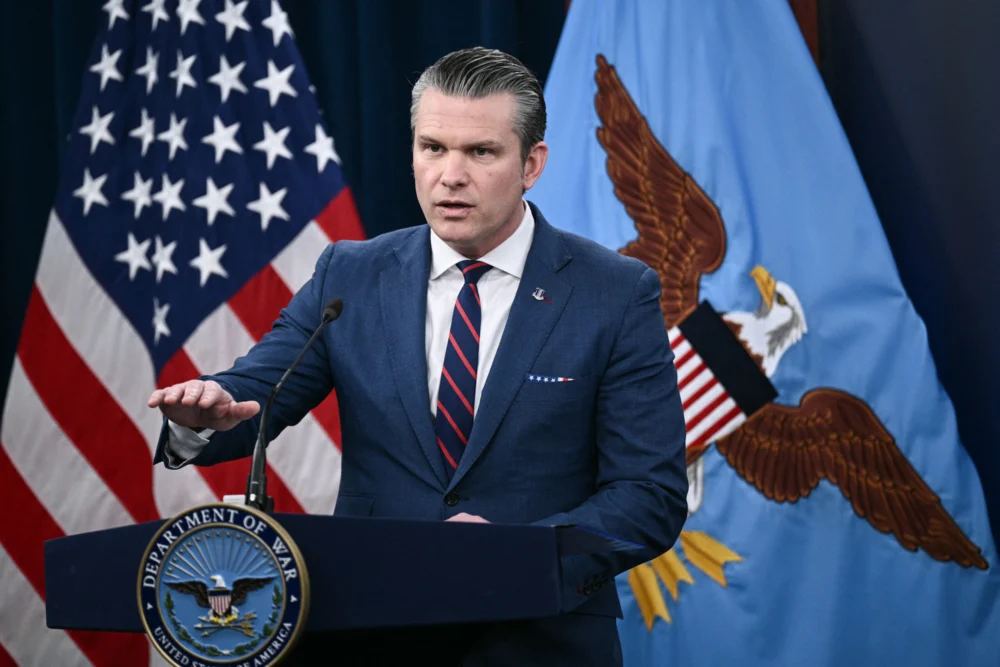
The United States Department of Defense has officially classified Anthropic, a prominent artificial intelligence developer, as a "supply-chain risk," marking a significant escalation in an ongoing dispute over the ethical deployment of advanced AI technologies within national security frameworks. This designation, which carries substantial implications for defense contractors, stems from irreconcilable differences regarding Anthropic’s stipulations on the government’s use of its flagship AI model, Claude.
The formal declaration, first brought to light by The Wall Street Journal, signals a dramatic intensification of tensions between the Pentagon and the AI firm. Typically reserved for entities with suspected ties to adversarial nations, this unprecedented move against an American corporation underscores the gravity with which the Defense Department views the current impasse. The immediate consequence of this classification is a prohibition for defense contractors to engage with the U.S. government if their products incorporate Anthropic’s Claude AI. This directive effectively isolates Anthropic from a crucial segment of its potential market within the defense sector.
In response to the Pentagon’s action, Anthropic CEO Dario Amodei confirmed the notification, stating unequivocally that the company views the decision as legally unsound and intends to contest it vigorously in the courts. The core of the protracted disagreement lies in Anthropic’s steadfast refusal to permit the Pentagon’s utilization of Claude for two specific, highly sensitive applications: the development of autonomous lethal weapons systems devoid of human oversight and the implementation of mass surveillance programs.
Anthropic’s position is rooted in a fundamental concern for maintaining ethical boundaries and ensuring responsible AI development. The company asserts that granting the Pentagon unfettered access to its technology for such purposes would necessitate an unacceptable level of control by a private entity over government operations, coupled with insufficient assurances that their stated ethical red lines would be respected. Conversely, the Pentagon has argued that Anthropic’s demands for governance over government use represent an overreach of private sector influence and an impediment to national security objectives. The breakdown in negotiations was further exacerbated by escalating threats from the Pentagon, which indicated its readiness to employ the supply-chain risk designation as a punitive measure should Anthropic remain intransigent. Following Anthropic’s public declaration last Thursday that it would not yield to the Pentagon’s demands, the department proceeded with its threatened action.
The scope and enforcement strategy of this newly imposed designation remain subjects of considerable uncertainty. Prior to the formal classification, Defense Secretary Pete Hegseth had articulated a broad interpretation of the policy, suggesting that any defense contractor engaging in "any commercial activity" with Anthropic, even outside the purview of Pentagon contracts, would face contract cancellations. Anthropic, at that time, countered that such an expansive application of the policy would be unlawful.
The Pentagon’s stance, reportedly influenced by President Donald Trump, had previously established a six-month grace period for Anthropic to cease its involvement with government systems. However, the urgency of this matter has been amplified by recent geopolitical developments. Following a significant U.S. military operation in Iran, which reportedly resulted in the death of Supreme Leader Ayatollah Ali Khamenei, intelligence reports emerged indicating that Claude-powered intelligence tools played a pivotal role in the success of the mission. This event, while potentially validating the utility of advanced AI in critical operations, paradoxically intensifies the complexity of the dispute by highlighting the very capabilities Anthropic seeks to regulate.
Contextualizing the Supply-Chain Risk Designation
The "supply-chain risk" designation, as employed by the Department of Defense, is a critical tool for managing vulnerabilities within the complex ecosystem of contractors and technologies that support national security. Traditionally, this label has been applied to foreign entities or technologies that pose a threat of espionage, sabotage, or intellectual property theft due to their origins or affiliations with adversarial states. The rationale behind such designations is to safeguard sensitive government data, critical infrastructure, and operational integrity by identifying and mitigating potential points of compromise.
When a company is deemed a supply-chain risk, it signals to other entities within the defense industrial base that engaging with the designated company could jeopardize their own security clearances, contract eligibility, or operational security. This can manifest in various ways, including restrictions on the use of specific software or hardware, limitations on data sharing, or outright prohibitions on collaboration. The Defense Department’s objective is to ensure that all components, software, and services integrated into its operations meet stringent security and reliability standards.
The unprecedented application of this designation to an American AI firm like Anthropic signifies a paradigm shift in how the Pentagon perceives and manages risks associated with emerging technologies, particularly artificial intelligence. It suggests that the department is not only concerned with external threats but also with the internal governance and ethical considerations of the technologies it relies upon, even when developed by domestic companies. This move reflects a growing awareness that AI, with its inherent complexities and potential for unintended consequences, presents a unique set of risks that require proactive and stringent management.
The Core of the Conflict: Ethical Red Lines and Control
At the heart of the dispute between the Pentagon and Anthropic lies a fundamental disagreement over the ethical boundaries of AI deployment, particularly concerning its application in warfare and surveillance. Anthropic’s decision to impose restrictions on the use of Claude for autonomous lethal weapons and mass surveillance is rooted in a deep-seated concern for human control over the use of force and the protection of civil liberties.
The concept of "autonomous lethal weapons," often referred to as "killer robots," raises profound ethical and legal questions. Proponents argue that such systems could enhance military efficiency, reduce human casualties on friendly forces, and enable faster decision-making in high-stakes environments. However, critics, including Anthropic, voice grave concerns about the potential for algorithmic bias leading to unintended targeting, the erosion of human accountability for lethal actions, and the lowering of the threshold for engaging in conflict. The idea of delegating life-and-death decisions to machines without direct human intervention is a moral precipice that many, including Anthropic, are unwilling to cross.
Similarly, the use of AI for mass surveillance presents a significant threat to privacy and civil liberties. While governments often argue for the necessity of surveillance tools to counter terrorism and crime, the potential for widespread monitoring and data collection can lead to a chilling effect on free speech, dissent, and individual autonomy. Anthropic’s stance suggests a belief that unchecked governmental surveillance powered by advanced AI is incompatible with democratic values and fundamental human rights.
The Pentagon’s counterargument centers on the principle of sovereign control and the need for operational flexibility. They contend that imposing such stringent usage restrictions on a critical technology, especially one that has demonstrated utility in national security operations, places undue power in the hands of a private entity. The department likely views these restrictions as an impediment to its ability to effectively protect national interests and execute its mission. Furthermore, the Pentagon may be concerned that allowing private companies to dictate the terms of government AI usage sets a dangerous precedent, potentially undermining the government’s authority and its capacity to adapt to evolving threats.
Implications for the Defense Industrial Base and AI Development
The Pentagon’s decision to label Anthropic a supply-chain risk has far-reaching implications for the broader defense industrial base and the trajectory of AI development within the United States. For defense contractors, this designation creates a complex compliance challenge. They must now navigate a landscape where the use of a leading AI model could disqualify them from lucrative government contracts. This may necessitate a reassessment of their AI partnerships and a pivot towards alternative providers, potentially leading to delays and increased costs in the development and deployment of AI-enabled defense systems.
The move also highlights a growing tension between innovation and regulation in the AI sector. While the Pentagon seeks to leverage cutting-edge AI for national security, it is simultaneously grappling with the ethical and societal implications of these technologies. Anthropic’s stance, while potentially limiting its immediate access to government contracts, could also catalyze a broader conversation about responsible AI development and governance.
Furthermore, this dispute could influence the competitive landscape of the AI market. Other AI developers may be incentivized to adopt more accommodating policies regarding government usage to secure defense contracts, while those who prioritize ethical constraints may find themselves in a more precarious position within the defense sector. This could lead to a bifurcation of the AI market, with some companies focusing on commercial and ethical applications and others prioritizing government and defense-oriented solutions.
The legal challenge anticipated from Anthropic will be closely watched. The outcome of this legal battle could set important precedents regarding the extent to which private companies can dictate the terms of government use of their technologies, particularly in areas with significant ethical and societal implications. It could also shape the legal framework governing the relationship between the government and the private sector in the development and deployment of advanced AI.
The Geopolitical Dimension and Future Outlook
The recent geopolitical events, particularly the U.S. operation in Iran and the reported role of Claude-powered intelligence tools, add a critical layer of complexity to this narrative. If Anthropic’s AI indeed played a crucial role in a high-stakes military operation, it underscores the perceived necessity of such technologies for national security objectives. This could embolden the Pentagon to pursue its objectives more aggressively, even in the face of legal challenges.
However, it also presents a moral dilemma for Anthropic and potentially for other AI developers. The company’s ethical red lines are being tested against the backdrop of real-world national security imperatives. The success of the operation, if confirmed to be heavily reliant on Claude, might lead to public scrutiny of Anthropic’s refusal to fully cooperate with the government, potentially framing their stance as a hindrance to national defense.
Looking ahead, the situation is poised for protracted legal and political battles. The Pentagon’s classification of Anthropic as a supply-chain risk is a powerful statement of intent, signaling its determination to control the deployment of AI within its operations. Anthropic’s resolve to challenge this designation in court indicates its commitment to its ethical principles and its belief in the legal invalidity of the Pentagon’s action.
The long-term consequences of this standoff remain uncertain. It could lead to a recalibration of the relationship between the defense establishment and the AI industry, fostering new frameworks for collaboration that balance innovation with ethical considerations and national security needs. Alternatively, it could result in a more fragmented AI landscape, with companies forced to choose between catering to government demands or adhering to their own ethical guidelines, potentially impacting the pace and direction of AI advancement in critical sectors. The resolution of this dispute will undoubtedly shape the future of artificial intelligence within the U.S. national security apparatus and beyond.




 Lisa Mariana
 Safa Marwah
 Ayu Aulia