Aura Kasih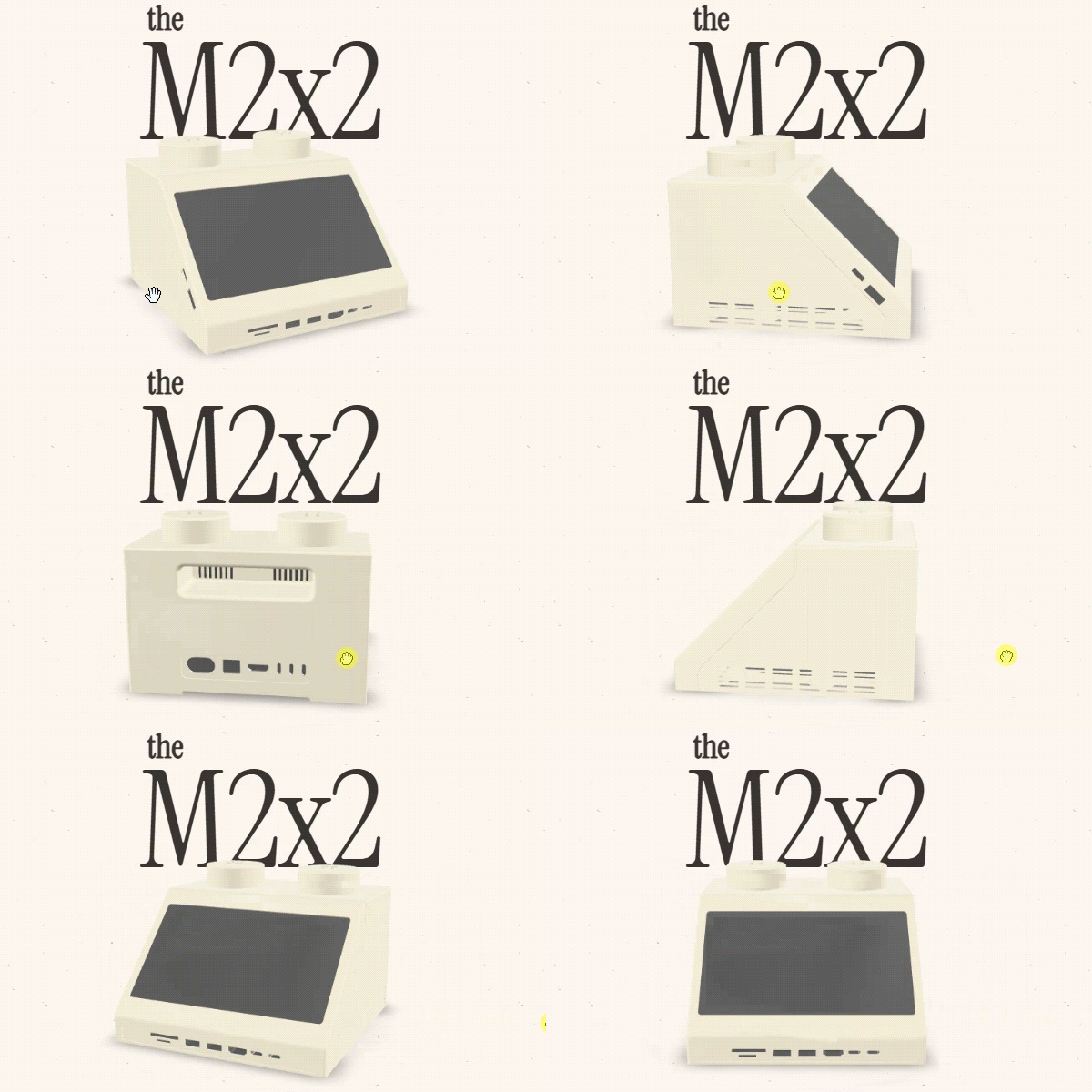
In a groundbreaking fusion of childhood nostalgia and cutting-edge technology, industrial designer Paul Staal has breathed new life into a beloved icon, transforming the humble Lego computer brick into a fully functional, super-sized desktop PC. This innovative creation, dubbed the "M2x2," pays homage to the playful aesthetics of Lego while seamlessly integrating the power and connectivity of modern computing.

The genesis of this remarkable project lies in the rich history of Lego. Nearly half a century ago, in 1979, Lego first introduced its iconic sloped computer brick, a piece of molded plastic that, in its time, symbolized the burgeoning digital age. While a notable engineering feat in 2022 saw an actual miniature computer ingeniously housed within a standard-sized Lego brick, Staal’s M2x2 takes a different, yet equally impressive, approach. He has scaled up this classic design to a remarkable 10:1 ratio, creating a tangible, interactive computing experience that evokes the tactile joy of building with Lego.
The M2x2 is not merely a cosmetic shell; it is a sophisticated desktop PC built around an Apple Mac Mini. Staal’s design philosophy prioritizes both form and function, ensuring that the M2x2 is as practical as it is visually striking. The exterior, largely constructed from 3D-printed components, meticulously replicates the dimensions and iconic stud patterns of a 2×2 Lego brick. This thoughtful design allows for a high degree of customization, with Staal generously making the 3D printing files freely available to the public. This open-source approach democratizes the creation of such unique tech, empowering hobbyists and enthusiasts worldwide to replicate or adapt the design.

Beyond its captivating Lego-inspired exterior, the M2x2 boasts a suite of integrated features that elevate it beyond a simple computer enclosure. A vibrant 7-inch IPS touchscreen display is seamlessly incorporated, offering an intuitive interface for a variety of applications. This display is not just for show; it has been purposefully integrated to serve as a central hub for smart home management, specifically utilizing it as a dashboard for Home Assistant. This allows for effortless control of connected devices, transforming the M2x2 into a command center for a modern, connected living space.
Further enhancing the M2x2’s functionality is an integrated USB-C hub. This crucial component expands the connectivity options, providing users with a comprehensive array of ports, including an SD card reader. This ensures that the M2x2 is not limited by the Mac Mini’s native ports, offering greater flexibility for peripheral connections and data transfer.

Staal’s attention to detail extends to the functional Lego studs adorning the M2x2’s surface. These are not mere decorative elements; they serve a practical purpose, cleverly concealing integrated technology. The stud on the left, for instance, houses a repurposed Ikea Symfonisk remote control, allowing for seamless operation of Sonos speakers. This thoughtful integration of existing smart home accessories underscores Staal’s commitment to creating a cohesive and user-friendly computing experience. The stud on the right features a hidden wireless charger, perfectly suited for topping up AirPods or other compatible devices. Crucially, these functional studs retain their classic Lego compatibility, meaning users can still attach traditional Lego bricks or minifigures, further blurring the lines between play and productivity.
The rear of the M2x2 is equally well-considered, featuring an integrated carry handle that enhances its portability. This, coupled with practical cord wrap hangers, makes for a tidy and easily manageable setup. These design elements highlight Staal’s understanding of real-world user needs, ensuring that the M2x2 is not only a conversation starter but also a practical addition to any workspace or living area.

Staal himself is utilizing the M2x2 as his primary computing device, a testament to its robust functionality and user-friendly design. While he uses an LG DualUp monitor for more intensive work tasks, the M2x2’s integrated touchscreen serves as his dedicated Home Assistant dashboard, demonstrating its versatility in managing a connected environment.
For those looking to replicate this unique build, Staal has provided comprehensive, step-by-step assembly instructions on his website, accompanied by high-quality photographic documentation. The estimated cost for the remaining components, assuming one already possesses a Mac Mini, is remarkably modest, falling below £100 (approximately $116). This accessibility further encourages DIY enthusiasts to embark on their own M2x2 projects.

It is worth noting that some of the integrated components, specifically the Ikea Symfonisk products like the remote control, have been discontinued. While these items may still be found on secondary markets such as eBay, Staal acknowledges this and suggests that users might consider alternative knob solutions if original parts are unavailable. This transparency demonstrates a commitment to providing realistic guidance for potential builders.
The M2x2 represents a significant advancement in the realm of personalized computing and nostalgic technology integration. It transcends the typical boundaries of a computer case, offering a blend of playful aesthetics, robust functionality, and an open-source ethos that encourages community involvement and innovation. This project serves as a compelling example of how familiar forms can be reimagined to house sophisticated modern technology, creating devices that are not only powerful but also deeply engaging and personally resonant. The M2x2 is more than just a computer; it’s a functional work of art, a bridge between past and future, and a testament to the enduring appeal of tactile, interactive design.

The implications of Staal’s M2x2 extend beyond mere novelty. In an era where technology often feels sterile and utilitarian, this project injects a much-needed element of fun and personality into our daily digital interactions. The ability to 3D print and assemble such a unique device empowers individuals to tailor their computing experience to their specific needs and aesthetic preferences. This democratizing effect of 3D printing, combined with open-source design principles, is poised to fuel a new wave of personalized technology and creative hardware solutions.
Furthermore, the integration of the M2x2 as a smart home dashboard highlights a growing trend towards dedicated, aesthetically pleasing interfaces for managing connected environments. As smart homes become more complex, the need for intuitive and visually appealing control panels will only increase. Staal’s solution, leveraging the familiar and beloved form factor of a Lego brick, offers a compelling blueprint for future smart home device design.

The future outlook for such projects is exceptionally bright. As 3D printing technology continues to advance in terms of speed, material diversity, and resolution, the possibilities for creating intricate and functional hardware enclosures are virtually limitless. We can anticipate seeing more ambitious projects that blend iconic designs from various cultural touchstones with the latest in computing and electronics. The M2x2 is not just a testament to individual ingenuity; it is a harbinger of a future where technology is not only powerful but also deeply personal, playful, and integrated seamlessly into our lives. This fusion of nostalgia, functionality, and accessible technology represents a significant step forward in how we interact with and perceive the devices that shape our modern world.




 Lisa Mariana
 Safa Marwah
 Ayu Aulia