Ridwan Kamil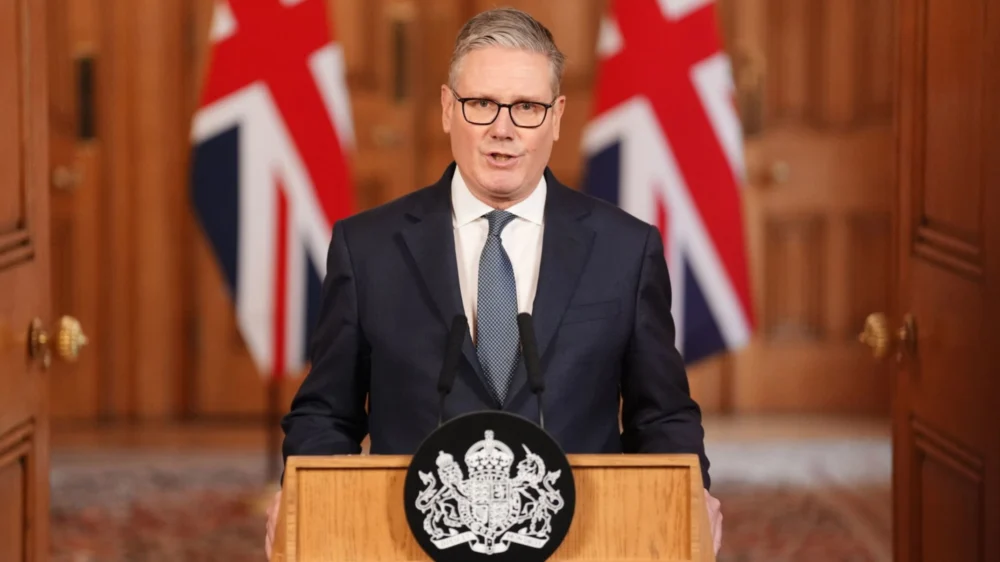
Sir Keir Starmer, the leader of the United Kingdom’s Labour Party, has indicated a willingness to permit the United States to utilize British military installations for potential operations targeting Iranian missile sites, signaling a significant shift in foreign policy positioning and a reaffirmation of the long-standing transatlantic alliance in the face of escalating regional tensions. This stance suggests a potential divergence from previous government approaches and underscores the complex geopolitical calculus surrounding Iran’s nuclear and ballistic missile programs.
The implications of such a policy shift are far-reaching, touching upon the delicate balance of power in the Middle East, the United Kingdom’s role on the global stage, and the intricate relationship with its key security partner, the United States. Starmer’s comments, made in the context of heightened concerns over Iran’s continued development of advanced missile capabilities and its alleged support for regional proxy groups, signal a pragmatic approach to national security, prioritizing the deterrence of potential threats through strategic cooperation. This perspective acknowledges the interconnectedness of global security challenges and the necessity of robust alliances to address them effectively.
For decades, the United Kingdom and the United States have maintained a close defense relationship, characterized by intelligence sharing, joint military exercises, and the reciprocal basing of forces. This symbiotic arrangement has been a cornerstone of Western security architecture, enabling coordinated responses to various global threats. The prospect of allowing US forces to operate from UK soil in operations directed at Iranian missile facilities would represent a significant endorsement of this alliance, potentially amplifying the deterrent effect of such actions.
The strategic rationale behind such a policy would likely be rooted in the perceived need to counter Iran’s ballistic missile program, which is viewed by many Western nations as a destabilizing factor in the Middle East. Iran’s development of missiles with increasing range and accuracy, coupled with its controversial nuclear ambitions, has been a persistent source of international concern. The ability to strike at missile launch sites or associated infrastructure could be seen as a crucial element in a broader strategy of containment and deterrence.
However, such a decision would not be without its significant risks and complexities. Allowing the use of UK bases for offensive operations against a sovereign nation, even one with a contentious international record, could have profound diplomatic repercussions. It could lead to a significant escalation of tensions with Iran, potentially triggering retaliatory actions against British interests or personnel, both regionally and globally. Furthermore, it could strain relations with other international actors who may hold different views on how to approach the Iranian issue, potentially creating divisions within existing alliances.
The domestic political landscape in the United Kingdom would also be a critical factor. Any such decision would undoubtedly face intense scrutiny from Parliament and the public. Concerns about the potential for the UK to be drawn into direct conflict, the implications for national security, and the ethical considerations of facilitating offensive military actions would need to be thoroughly debated and addressed. The Labour Party, historically a proponent of diplomatic solutions, would need to articulate a clear and compelling justification for such a policy, demonstrating that all other avenues have been exhausted and that this represents a necessary measure for safeguarding national and international security.
Expert analysis suggests that the effectiveness of such strikes would depend on a multitude of factors, including the intelligence available regarding the precise location and operational status of Iranian missile sites, the precision and reliability of US and UK weaponry, and the potential for collateral damage. The ability to achieve a decisive blow that significantly degrades Iran’s missile capabilities without provoking an overwhelming retaliatory response would be paramount. Moreover, the long-term impact on Iran’s strategic calculus and its willingness to engage in de-escalatory measures would need careful consideration.
The geopolitical context in which such a decision would be made is also crucial. The Middle East remains a volatile region, with multiple actors pursuing their own strategic objectives. Any intervention involving UK bases could be perceived by regional powers as a partisan move, potentially exacerbating existing conflicts and undermining efforts towards broader stability. The role of other global powers, such as Russia and China, which have different relationships with Iran, would also need to be factored into the strategic assessment.
Looking ahead, the potential for the UK to facilitate US strikes on Iranian missile sites raises fundamental questions about the future of British foreign policy and its alignment with American strategic interests. It signals a willingness to play a more active role in confronting perceived threats, even if that involves taking on greater risks. The decision would underscore a commitment to collective security and the belief that proactive measures are sometimes necessary to prevent greater instability.
The United Kingdom’s historical role as a key ally of the United States in matters of international security provides a backdrop for such a potential policy. From Cold War deterrence to counter-terrorism operations, the two nations have often acted in concert. This latest indication from Sir Keir Starmer suggests a continuity of this partnership, albeit in a new and potentially more assertive posture concerning Iran.
However, the strategic environment is constantly evolving. Iran’s capabilities, its regional influence, and the broader dynamics of international relations are subject to continuous change. Any policy decision must be agile and adaptable, capable of responding to new intelligence and shifting geopolitical realities. The potential for unintended consequences, such as the radicalization of populations or the proliferation of advanced weaponry, would need to be meticulously assessed and mitigated.
The effectiveness of deterrence, a key objective of such a policy, is a complex phenomenon. It relies not only on the credible threat of military action but also on clear communication of intentions and a willingness to engage in diplomatic channels. A purely militaristic approach, without parallel efforts to de-escalate tensions and address the root causes of conflict, may prove unsustainable in the long run.
Furthermore, the economic implications of such a policy cannot be ignored. Regional instability can have a significant impact on global energy markets and international trade. Any actions that risk exacerbating conflict could have ripple effects far beyond the immediate theatre of operations.
The Labour Party’s position on this matter, as articulated by Sir Keir Starmer, represents a significant development in the UK’s foreign policy discourse. It suggests a willingness to consider robust measures in response to perceived threats, even if those measures carry inherent risks. The coming months and years will likely reveal the extent to which this stance translates into concrete policy and how it shapes the United Kingdom’s engagement with the complex and challenging landscape of Middle Eastern security. The debate surrounding this issue will undoubtedly continue to be a focal point for discussions on national security, international relations, and the UK’s place in a rapidly changing world. The balancing act between deterrence and de-escalation, between alliance solidarity and national sovereignty, will remain at the forefront of this critical policy consideration.


 Aura Kasih
 Safa Marwah
 Ayu Aulia