Aura Kasih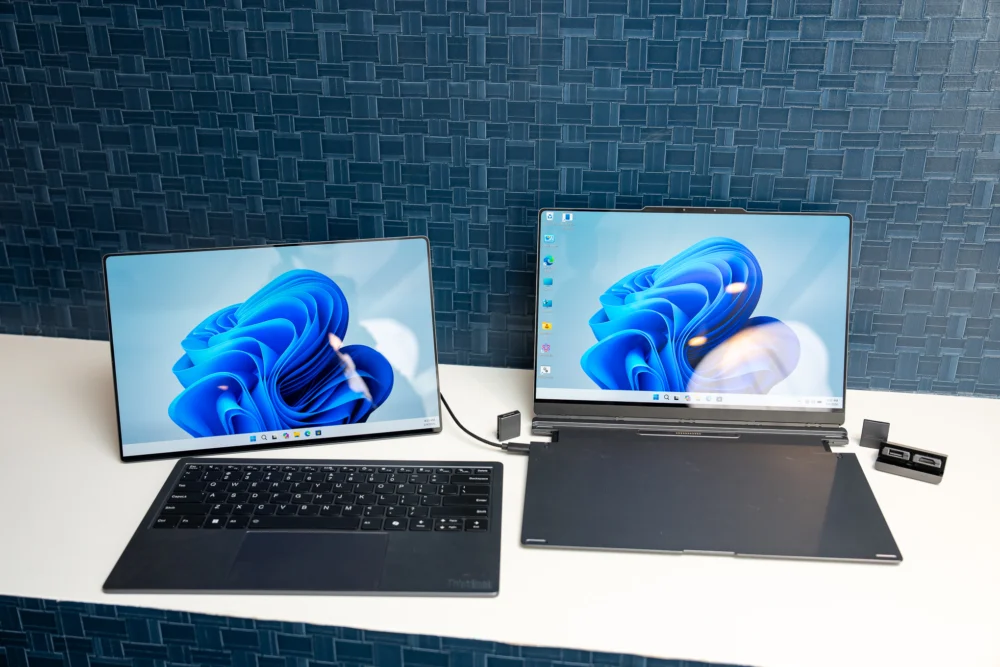
Lenovo has showcased a forward-thinking prototype, the ThinkBook Modular AI PC Concept, at MWC 2026, presenting a novel approach to laptop design that integrates user-customizable ports, a secondary display, and an AI-centric architecture. This innovative device reimagines the traditional laptop form factor, offering unparalleled flexibility and advanced functionality for the modern professional.
At its core, the ThinkBook Modular AI PC Concept is a 14-inch productivity powerhouse designed to cater to a diverse range of user needs. The most striking feature is its pioneering modular port system. Lenovo has integrated two user-swappable ports, allowing individuals to tailor the connectivity options of their device to their specific workflow. During the unveiling, Lenovo demonstrated a selection of these interchangeable modules, including USB-C, USB-A, and HDMI. While this initial offering may not yet rival the extensive ecosystem cultivated by companies like Framework, it represents a significant step towards user-defined hardware configurations. These modular ports utilize an M.2 interface for connection to the laptop, a departure from the USB-C standard employed by some competitors, yet they exhibit remarkable ease of use, allowing for swift removal and insertion. Lenovo even presented a compact carrying case designed to transport a few of these essential modules, underscoring the practical intent behind this feature. Beyond these adaptable ports, the concept includes a single, permanent USB-C port, serving dual purposes for charging the device and powering the secondary display.
Complementing the modular ports is an integrated secondary 14-inch OLED display. This innovative screen attaches magnetically to the rear of the laptop’s lid, offering an immediate expansion of the visual workspace. When detached, this secondary display can be elegantly propped up using a cleverly integrated magnetic kickstand, which is discreetly stored beneath the laptop. Connectivity for this external display is facilitated via a standard USB-C connection, further enhancing its versatility.
However, Lenovo has pushed the boundaries of the dual-screen paradigm with a particularly intriguing configuration. The design allows for the complete removal of the keyboard and trackpad deck. This deck can then be replaced by the secondary 14-inch display, effectively transforming the ThinkBook concept into a full-fledged dual-screen laptop. In this mode, the keyboard and trackpad are wirelessly connected via Bluetooth, offering a setup reminiscent of devices like the Asus Zenbook Duo. This innovative transformation provides users with a highly adaptable computing experience, capable of seamlessly transitioning between traditional laptop functionality and an immersive dual-display environment.
The technological prowess of the ThinkBook Modular AI PC Concept extends to its display specifications. Both the primary and secondary screens are high-resolution, touch-compatible OLED panels. They boast a 4K resolution (3840 x 2400 pixels) with a 16:10 aspect ratio, delivering exceptionally sharp and vibrant visuals. A fluid 120Hz refresh rate ensures smooth scrolling and responsive interaction, while a brightness level of 500 nits guarantees excellent visibility even in well-lit environments.
Under the hood, the concept is envisioned with formidable processing power. Prospective specifications include an Intel Core Ultra 7 255H Arrow Lake processor, a cutting-edge CPU designed for advanced AI tasks and efficient performance. This is complemented by a generous 32GB of RAM, ensuring robust multitasking capabilities, and a 1TB solid-state drive for rapid data access and ample storage. The integration of an AI-focused processor suggests a strategic direction for Lenovo, anticipating the growing importance of artificial intelligence in personal computing for tasks ranging from content creation and data analysis to enhanced user interfaces and personalized experiences.
The concept’s modularity and dual-screen capabilities position it as a potentially disruptive force in the productivity laptop market. The ability for users to customize their port selection addresses a common point of friction with modern laptops, which often feature a limited array of ports, necessitating the use of dongles and hubs. By offering interchangeable modules, Lenovo empowers users to curate a hardware setup that precisely matches their professional demands, whether that involves extensive peripheral connectivity for a creative professional, specialized input devices for an engineer, or straightforward access to legacy hardware for an IT manager. This level of personalization could significantly enhance user satisfaction and reduce the reliance on external adapters, streamlining workflows and reducing clutter.
The dual-screen functionality, particularly the ability to reconfigure the device into a clamshell with two distinct displays, opens up new avenues for multitasking and productivity. Imagine a scenario where a programmer can simultaneously view code on one screen and its real-time output on the other, or a designer can keep reference materials on one display while actively working in their creative application on the main screen. This can lead to increased efficiency, reduced context switching, and a more immersive and engaging user experience. The magnetic attachment and kickstand mechanism for the secondary display further enhance its usability, allowing for flexible positioning and quick detachment when not in use.
However, the ThinkBook Modular AI PC Concept, in its current iteration, presents certain challenges that will need to be addressed for successful commercialization. A primary concern is the battery life. The prototype is equipped with a relatively modest 33Wh battery. This capacity is considerably smaller than that found in many mainstream ultraportable laptops, and it must now power not only the primary display but also a secondary, high-resolution OLED panel, alongside a potent Intel Core Ultra processor. This configuration raises significant questions about the device’s endurance on a single charge. The physical dimensions of the laptop, weighing approximately 1.15kg with a single display and 1.41kg with both, suggest a commitment to a thin-and-light design. Achieving a balance between portability, power, and battery longevity in such a form factor will be a critical engineering hurdle.
Lenovo’s history with experimental concepts has demonstrated a willingness to push design boundaries, and the ThinkBook Modular AI PC Concept is a prime example of this innovative spirit. The company has a track record of introducing devices that explore new interaction paradigms and hardware configurations. While not all concepts make it to mass production, they often serve as incubators for future technologies and features that eventually find their way into more mainstream products. The modularity aspect, in particular, aligns with a growing consumer desire for repairability and upgradeability, a trend popularized by companies like Framework. If Lenovo can successfully implement a robust and user-friendly modular port system, it could carve out a unique niche in the market, appealing to a segment of users who value longevity and customization.
The dual-screen approach also holds considerable promise. While other manufacturers have explored dual-screen laptops, Lenovo’s concept of making the secondary display detachable and reconfigurable offers a unique proposition. The ability to use it as an external monitor, or to transform the entire device into a dual-screen clamshell, provides a level of versatility that could appeal to a broad range of professionals. The success of this feature will likely depend on the seamless integration of the hardware and software, ensuring that the transition between different modes is intuitive and that the dual-screen experience is genuinely productive.
Looking ahead, the ThinkBook Modular AI PC Concept represents a bold vision for the future of personal computing. The integration of modular hardware, advanced dual-screen capabilities, and AI processing power suggests a device designed for the evolving demands of work and creativity. The challenges related to battery life and the practical implementation of a comprehensive modular ecosystem will undoubtedly be areas of intense focus for Lenovo’s engineering teams. If these hurdles can be overcome, this concept could pave the way for a new generation of highly personalized, adaptable, and powerful laptops that empower users to tailor their computing experience to an unprecedented degree. The market will be watching closely to see if Lenovo can translate this ambitious vision into a tangible product that redefines expectations for productivity devices.




 Lisa Mariana
 Safa Marwah
 Ayu Aulia