Lisa Mariana
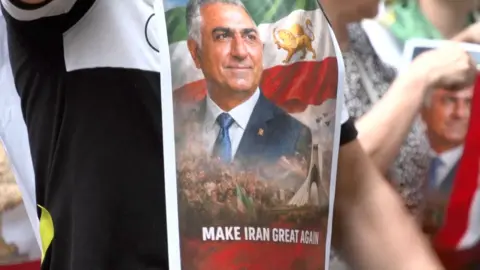
In a powerful manifestation of collective aspiration and geopolitical symbolism, the vast Iranian American community residing in Los Angeles convened for widespread public demonstrations of joy and optimism, coinciding with reports of the passing of Iran’s long-reigning Supreme Leader, Ayatollah Ali Khamenei. These spontaneous gatherings, unfolding on the second day following the announcement of the leader’s death, highlighted a profound divergence between the official narrative of mourning within Iran and the fervent hope for systemic change articulated by a significant segment of the diaspora. The city of Los Angeles, often referred to as "Tehrangeles" due to its substantial Iranian expatriate population—the largest concentration outside of Iran itself—became a focal point for these extraordinary expressions of anticipation for a new chapter in Iran’s history.
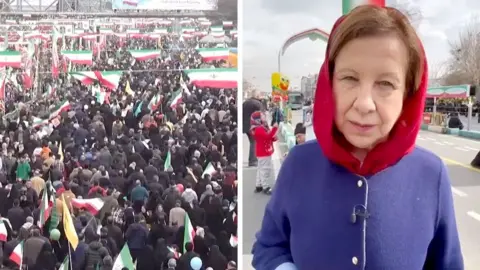
Participants in the Los Angeles celebrations engaged in vibrant displays of national pride and political sentiment. Waving the historical green, white, and red flag of Iran, often emblazoned with the lion and sun emblem, a symbol predating the 1979 Islamic Revolution, demonstrators conveyed a clear message of longing for a return to a perceived secular and democratic past. Amidst the jubilant atmosphere, numerous individuals held aloft "thank you" signs explicitly directed at figures such as then-President Donald Trump of the United States and Israeli Prime Minister Benjamin Netanyahu. This gesture underscored a complex geopolitical alignment, reflecting the diaspora’s appreciation for strong stances against the Iranian regime and a perceived shared interest in its potential weakening or overthrow. Local law enforcement authorities, recognizing the significance and scale of the impromptu festivities, took measures to manage traffic flow, closing off streets to ensure the safety and continuity of the celebratory assemblies. The overarching sentiment articulated by those present was one of profound hope for a transformed future for their ancestral homeland.
The demographic weight and historical context of the Iranian diaspora in Los Angeles are crucial to understanding the significance of these events. The mass emigration from Iran predominantly occurred in the aftermath of the 1979 revolution, as hundreds of thousands of Iranians, many from educated and affluent backgrounds, sought refuge from the new Islamic Republic. They settled in various parts of the world, with Southern California, particularly Los Angeles, becoming a prominent hub. This community largely comprises individuals and families who harbor strong grievances against the current Iranian political system, holding it responsible for the suppression of civil liberties, economic mismanagement, and regional destabilization. Their political identity is often characterized by a fervent desire for a secular, democratic Iran, and they frequently engage in advocacy and cultural preservation efforts from abroad. The visible display of gratitude towards international leaders critical of the Iranian regime is not merely symbolic; it represents a deep-seated belief within this diaspora that external pressure, alongside internal dissent, is vital for precipitating change.
Ayatollah Ali Khamenei’s passing marks the end of an era spanning over three decades, during which he wielded ultimate authority as Iran’s second Supreme Leader. Assuming the mantle after the death of Ayatollah Ruhollah Khomeini in 1989, Khamenei systematically consolidated power, steering Iran through periods of intense domestic reform attempts, international sanctions, and complex regional conflicts. His leadership was characterized by an unwavering commitment to the principles of the Islamic Revolution, including anti-Western rhetoric and the development of Iran’s nuclear program. Domestically, his tenure saw a tightening grip on dissent, with human rights organizations frequently documenting severe crackdowns on protests, restrictions on freedom of expression, and widespread political imprisonment. Economically, Iran faced crippling international sanctions, which, combined with internal corruption and mismanagement, led to persistent challenges in living standards for many Iranians. Regionally, Khamenei oversaw the expansion of Iran’s influence through a network of proxy forces, including Hezbollah in Lebanon, various Shiite militias in Iraq, and the Houthis in Yemen, often bringing Iran into direct and indirect confrontation with Saudi Arabia, Israel, and the United States. His death inevitably triggers a period of uncertainty and potential flux within the intricate power structures of the Islamic Republic, prompting intense speculation both inside and outside the country about the direction the nation will take.
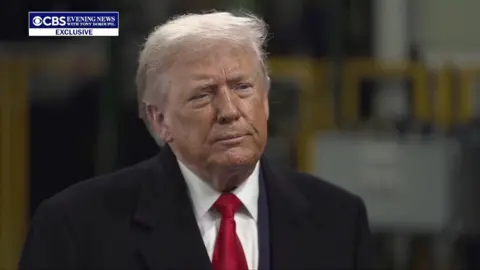
The public expressions of thanks to former President Trump and Prime Minister Netanyahu by the Los Angeles diaspora are highly charged with geopolitical implications. During his presidency, Donald Trump adopted a "maximum pressure" campaign against Iran, withdrawing the U.S. from the Joint Comprehensive Plan of Action (JCPOA), commonly known as the Iran nuclear deal, and reimposing stringent sanctions. This policy, while criticized by some allies for potentially escalating tensions, was seen by many within the Iranian diaspora as a necessary measure to weaken the regime and support the aspirations of the Iranian people for freedom. Similarly, Benjamin Netanyahu, as Israel’s leader, has been a vocal opponent of the Iranian regime, viewing its nuclear ambitions and regional activities as an existential threat to Israel. The diaspora’s alignment with these figures reflects a belief that their hardline policies offered the most viable path towards destabilizing the theocratic government, creating an opening for internal transformation. This perspective often contrasts sharply with the views of those who advocate for engagement and diplomacy, highlighting the deep schisms within global policy approaches towards Iran.
The death of a Supreme Leader in Iran initiates a highly secretive and complex succession process. The Assembly of Experts, a body of 88 clerics, is constitutionally tasked with selecting the next leader, who must possess specific qualifications, including religious scholarship and political acumen. While the process is opaque, internal power struggles and factional maneuvering are widely anticipated. Potential candidates often emerge from the ranks of powerful clerics and political figures, but the ultimate decision is heavily influenced by the intricate balance of power among various conservative factions, the Revolutionary Guard Corps (IRGC), and the broader clerical establishment. Analysts suggest several scenarios: a smooth transition to a pre-anointed successor who maintains Khamenei’s hardline policies; a more contested succession leading to internal rifts and potential shifts in power dynamics; or, less likely but hoped for by the diaspora, a significant weakening of the clerical establishment that could pave the way for broader societal changes. The choice of successor will have profound implications for Iran’s domestic trajectory, its nuclear program, and its foreign policy posture, particularly concerning its relations with regional adversaries and global powers.
The Iranian diaspora, particularly its influential segment in Los Angeles, plays a multifaceted role in the evolving narrative surrounding Iran. Beyond celebratory demonstrations, these communities serve as vital hubs for cultural preservation, human rights advocacy, and political activism. They often fund and support media outlets and non-governmental organizations dedicated to promoting democracy and accountability in Iran. Their actions, whether public protests or lobbying efforts, aim to keep international attention focused on the situation in Iran and to influence policy decisions in their host countries. Their immediate response to Khamenei’s death, marked by jubilation, not only provides a stark contrast to the state-mandated mourning within Iran but also serves as a powerful symbolic message to the international community: that a significant portion of the Iranian people, albeit from afar, views the current regime as illegitimate and yearns for fundamental change. This symbolic impact can embolden internal opposition and shape global perceptions of Iran’s political landscape.
Regionally and internationally, the implications of this leadership transition are immense. In the Middle East, the future direction of Iran’s foreign policy will directly impact the dynamics of conflicts in Syria, Yemen, Iraq, and Lebanon, where Iranian-backed groups play significant roles. Any shift in Iran’s approach could lead to a rebalancing of power or, conversely, exacerbate existing tensions. For global powers, particularly the United States and European nations, the succession presents both challenges and potential opportunities. Renewed efforts to revive or renegotiate the nuclear deal, for instance, might hinge on the policies of the new Supreme Leader. The international community will closely scrutinize the new leadership’s stance on human rights, economic reforms, and regional stability. The immediate aftermath of Khamenei’s death, therefore, inaugurates a period of intense diplomatic activity and strategic recalibration by various state and non-state actors deeply invested in the future of Iran and the broader Middle East.
Looking ahead, the path for Iran remains fraught with complexities. The incoming Supreme Leader will inherit a nation grappling with persistent economic hardship, widespread public discontent, and the geopolitical pressures of international isolation and regional rivalries. The internal dynamics of Iran, characterized by a deep divide between the ruling clerical establishment and a largely young, reform-minded populace, will be a critical factor. The ability of the new leadership to address these internal pressures, manage the nuclear program, and navigate complex international relations will define Iran’s trajectory in the coming years. While the celebrations in Los Angeles reflect a fervent hope for democratic transformation, the reality of political succession within a deeply entrenched authoritarian system suggests that fundamental change, if it comes, is likely to be a protracted and challenging process. The world watches keenly, aware that the decisions made in Tehran in the coming months will reverberate far beyond Iran’s borders, shaping the geopolitical landscape for decades to come.



 Aura Kasih
 Safa Marwah
 Ayu Aulia