Lisa Mariana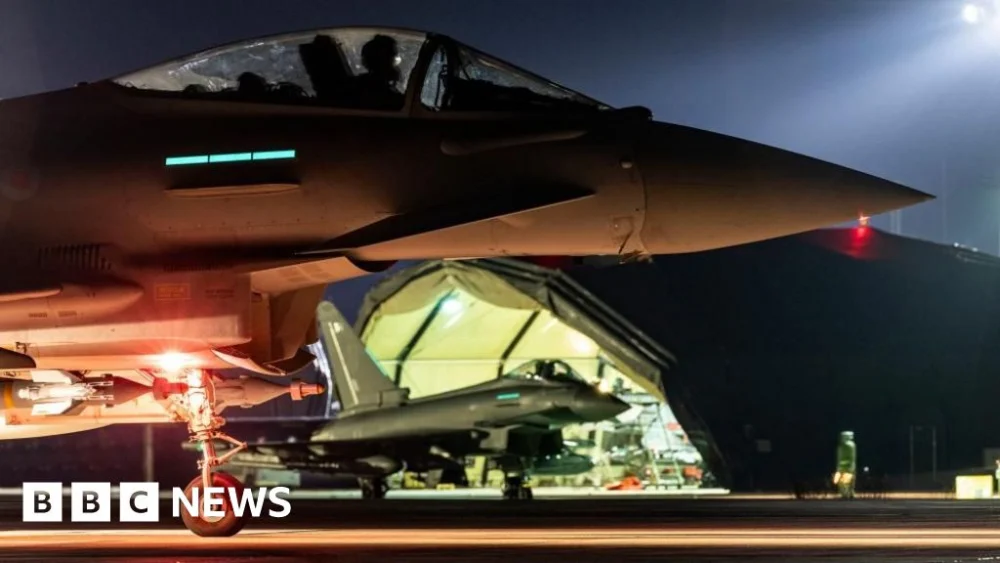
A British Royal Air Force installation in Cyprus experienced a suspected drone strike late Sunday evening, an incident that underscores the deepening volatility across the Middle East and the Eastern Mediterranean, prompting immediate defensive measures and raising concerns about the security of allied assets. The Ministry of Defence confirmed the event at RAF Akrotiri, which occurred around midnight local time, initiating a robust response from armed forces stationed at the base, though initial assessments indicate no casualties were sustained during the suspected attack. This development unfolds amidst a broader context of heightened geopolitical friction, particularly following recent escalatory actions by Iran and the United States, positioning British military facilities as potential flashpoints in an increasingly complex regional security landscape.
The incident at RAF Akrotiri, a strategically vital British sovereign base area on the southern coast of Cyprus, prompted an immediate and decisive response from the stationed forces. The Ministry of Defence (MoD) articulated that force protection protocols in the region have been elevated to their highest level, affirming that the base’s defense systems were activated to safeguard personnel and infrastructure. While specific details regarding the nature of the drone or the precise impact location remain under investigation, the characterization of the event as a "suspected drone strike" points to a sophisticated and deliberate attempt to target a key Western military asset. The absence of reported casualties, while fortunate, does not diminish the gravity of the incursion, which highlights the pervasive threat posed by unmanned aerial systems in contemporary conflict zones.
This direct targeting of a British military facility occurs against a backdrop of intensifying hostilities in the broader Middle East. Just prior to the Akrotiri incident, the United Kingdom had affirmed its commitment to allowing the United States to utilize British military bases for what Prime Minister Sir Keir Starmer described as "limited defensive purposes" against Iranian missile sites. This agreement signifies a critical alignment between Washington and London in responding to perceived threats from Tehran, particularly following a series of Iranian actions targeting various US assets and allied nations across the region. Iran’s retaliatory measures have included the launch of ballistic missiles and drones aimed at sites in Israel, Bahrain, Kuwait, Qatar, the United Arab Emirates, and Jordan, demonstrating a broad reach and a willingness to engage in a tit-for-tat escalation.
The strategic significance of RAF Akrotiri cannot be overstated. Located in the Eastern Mediterranean, it serves as a critical operational hub for British air power and intelligence gathering, supporting operations across the Middle East and North Africa. Its geographical proximity to conflict zones makes it an invaluable asset for projection of force and logistical support, but also renders it vulnerable to spillover from regional conflicts. The choice of Akrotiri as a target, if confirmed as an intentional act, suggests an effort to demonstrate capability and send a clear message to the UK and its allies regarding the consequences of their involvement in the ongoing regional power struggles.
Earlier on the same Sunday, Defence Secretary John Healey voiced profound concerns regarding the elevated risks faced by British troops and civilians deployed in the Middle East. He specifically cited "indiscriminate attacks" orchestrated by Iran, which he argued were directly imperiling British personnel. Healey also referenced a prior, separate incident where two ballistic missiles were detected heading towards Cyprus. While he expressed confidence that Cyprus itself was not the intended target in that specific instance, a sentiment later reiterated by Cypriot government officials following a conversation between Sir Keir Starmer and Cypriot President Nikos Christodoulides, these events collectively paint a picture of a region teetering on the brink of broader conflagration, with even peripheral actors facing potential collateral damage or direct targeting.
The UK’s direct engagement in countering Iranian aerial threats has also been confirmed. On Sunday, an RAF Typhoon fighter jet operating from Qatar successfully intercepted and shot down an Iranian drone during what was described as a "defensive air patrol." This incident marked a significant milestone, being the first instance of a UK fighter aircraft neutralizing an Iranian drone since the current round of US-Iran hostilities commenced. Furthermore, a UK counter-drone unit deployed in Iraq had previously intercepted another Iranian drone that was en route to a coalition base housing British service personnel. These engagements underscore the proactive posture adopted by British forces to protect their assets and allies in a highly contested operational environment.
Despite these direct engagements, Prime Minister Starmer has meticulously articulated the UK’s strategic position, emphasizing that while the UK is providing critical support to its allies, it is not involved in offensive military actions against Iran. He explicitly stated that the UK did not participate in the initial strikes on Iran and would "not join offensive action now," drawing a clear distinction and referencing "lessons learned from the mistakes of Iraq." This nuanced stance aims to balance alliance commitments with a cautious approach to direct military intervention, reflecting a desire to avoid being drawn into a wider, protracted conflict while still asserting a commitment to regional security.
Sir Keir elaborated that the decision to grant the US access to British military bases was rooted in the principle of "collective self-defense" and the paramount objective of safeguarding British lives. He unequivocally accused Iran of pursuing a "scorched-earth strategy" in the region, justifying the UK’s defensive posture and support for allied operations. The specific British facilities understood to be under consideration for US operations include RAF Fairford in Gloucestershire, England, and the remote island of Diego Garcia in the Indian Ocean. RAF Fairford, a prominent forward operating location, provides strategic access to European and Middle Eastern theaters, while Diego Garcia, a vital hub in the Indian Ocean, offers unparalleled reach into the Indo-Pacific and beyond, reinforcing the global reach of US military power.
The incident at RAF Akrotiri, therefore, serves as a stark reminder of the evolving nature of modern warfare and the expanded geographical scope of regional conflicts. The proliferation of drone technology has democratized the ability to project force, presenting significant challenges for traditional air defense systems. The strategic implications of this attack are multifaceted: it tests the resilience of British and allied defense postures, signals a potential willingness by non-state or state-backed actors to directly confront Western military assets, and further complicates the already intricate diplomatic and security calculus in the Eastern Mediterranean.
Moreover, the event highlights the delicate balance between deterrence and escalation. While the UK’s response has been defensive, the targeting of a sovereign base could provoke a more robust reaction if such incidents become a pattern. The attribution of the strike, whether to state-sponsored proxies or directly to a state actor, will be crucial in determining the future trajectory of responses and potential diplomatic repercussions. The international community will be closely watching how the UK and its allies navigate this latest challenge, particularly as the spectre of a broader regional conflict looms large. The future outlook remains uncertain, but the Akrotiri incident undeniably underscores the imperative for robust defense, astute diplomacy, and clear strategic communication to de-escalate tensions and prevent further destabilization in a region already grappling with profound geopolitical shifts.




 Aura Kasih
 Safa Marwah
 Ayu Aulia