Lisa Mariana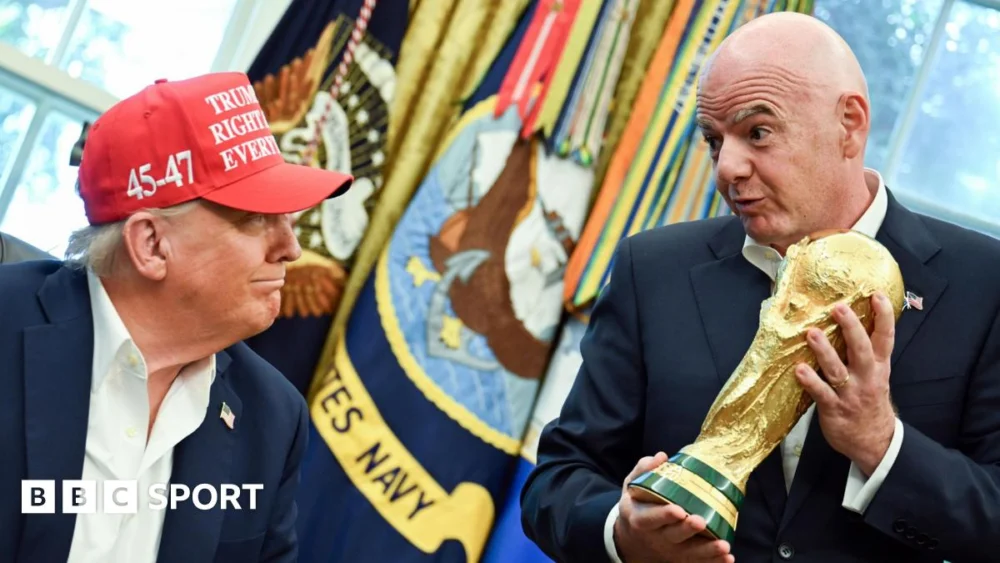
The confluence of escalating geopolitical instability in the Middle East and the upcoming FIFA World Cup 2026 presents an unprecedented challenge for international football, raising profound questions about participant nations, security protocols, and the political neutrality of global sporting governance. As the tournament draws closer, the recent intensification of conflict, particularly involving Iran, has introduced a layer of complex uncertainty that threatens to redefine the very nature of the global spectacle co-hosted by the United States, Canada, and Mexico.
At the heart of this evolving predicament lies the uncertain participation of Iran, a nation whose football team has been a consistent presence on the global stage, vying for its fourth consecutive World Cup appearance. The initial fixture schedule, placing Iran against New Zealand and Belgium in Los Angeles, followed by Egypt in Seattle, now appears contingent on a volatile geopolitical landscape. Despite the team’s continued involvement following previous US military actions, including targeted strikes on Iranian nuclear facilities, recent statements from high-ranking officials within Iran’s football federation signal a potential shift. Mehdi Taj, the head of the federation, has reportedly expressed profound doubt regarding their participation, citing the recent US offensive and the subsequent internal political upheaval following the demise of Supreme Leader Ayatollah Ali Khamenei. The resultant power vacuum and immense uncertainty surrounding Iran’s future political trajectory render any definitive decision on the team’s involvement — and even the authority to make such a decision — inherently unpredictable.
This phase of the conflict is perceived by analysts not as a fleeting escalation but as an existential struggle for the Iranian regime. Dr. Sanam Vakil, Director of the Middle East and North Africa Programme at Chatham House, emphasizes that this is not a transient, contained confrontation but an enduring conflict fundamentally tied to the survival of the current political order in Tehran. Such deep-seated geopolitical strife is unlikely to dissipate rapidly, embedding a persistent layer of complexity into the World Cup planning.
FIFA, as the global governing body for football, has publicly stated its commitment to monitoring developments while privately maintaining an expectation of Iran’s participation. General Secretary Mattias Grafstrom reiterated the organization’s focus on ensuring a safe tournament with universal participation. However, should Iran opt for a boycott, FIFA regulations stipulate a contingency plan: the vacant slot could be filled by an alternative team from the Asian Football Confederation (AFC). Potential replacements include Iraq, which holds a chance of qualifying through continental play-offs, or the United Arab Emirates, a nation that narrowly missed direct qualification. This scenario would introduce a new dynamic to the AFC’s representation and further underscore the direct impact of political events on sporting meritocracy.
Amidst this broader uncertainty, Iran’s women’s national team continues its preparations for the Asia Cup in Australia, with training sessions proceeding as planned on the Gold Coast. The AFC has issued statements affirming its close monitoring of the Middle East situation and prioritizing the safety and welfare of all participants. The organization has pledged full support to the Iranian women’s team and its officials in Australia, highlighting the delicate balance between ensuring sporting continuity and responding to global crises. The team’s coach, Marziyeh Jafari, at a recent press conference, deliberately steered discussions towards football, framing the tournament as an opportunity to showcase the "potential of Iranian women," a subtle yet powerful assertion of national identity through sport amidst external pressures.
Beyond the question of Iran’s participation, the overarching security landscape for the 2026 World Cup has been dramatically complicated. The host nation, the United States, has historically implemented stringent entry policies, including a previous executive order banning nationals from several countries, including Iran, citing security concerns. While World Cup players and coaching staff typically receive exemptions, the heightened state of conflict will undoubtedly amplify scrutiny around Iran’s matches and designated training facilities in Arizona, should they attend. The 2022 World Cup in Qatar offered a precedent for such tensions, where Iran’s matches, notably against the US, unfolded against a backdrop of widespread anti-government protests within Iran, leading to confrontations between opposing fan factions. Given the current US administration’s expressed desire for regime change in Iran, a similar, if not more intense, scenario of public protest and counter-protest is a significant possibility.
Human rights advocacy groups, such as FairSquare, have voiced grave concerns, characterizing the situation as "uncharted territory." Nick McGeehan from FairSquare suggests that an Iranian withdrawal, while plausible, might paradoxically offer FIFA a "sigh of relief" by mitigating the potential for large-scale protests and civil unrest that could overshadow the tournament. However, even in Iran’s absence, security will remain paramount. The tournament coincides with the 250th anniversary of the US Declaration of Independence, a national celebration expected to feature prominently, potentially elevating the security risk profile. Furthermore, the anticipated high-visibility presence of former US President Donald Trump, reminiscent of his appearances at the Club World Cup and Ryder Cup, could further politicize the event.
The logistical challenges for the US as a co-host are also mounting. Recent warnings from US government officials highlighted "catastrophic" security implications if frozen funding, stalled by a partial government shutdown, is not released for the 11 US host cities, many of which are already reportedly behind schedule in preparations. Concurrently, concerns persist regarding the involvement of the Immigration and Customs Enforcement (ICE) agency at the tournament and the escalating cartel violence in co-host Mexico, underscoring a multifaceted security dilemma that predates the recent Middle East conflict but is now exacerbated by it. Andrew Giuliani, head of the White House’s World Cup taskforce, publicly lauded the US strikes on Iran, stating it would "make the world a safe place" and prioritizing this geopolitical action over "soccer games," a sentiment that starkly illustrates the intersection of politics and sport at the highest levels of government.
This escalating international crisis also intensifies scrutiny on FIFA President Gianni Infantino and his notably close relationship with Donald Trump. In a controversial move in December, FIFA awarded Trump its inaugural ‘Peace Prize’ at the 2026 World Cup draw ceremony, citing his "pivotal role" in brokering a ceasefire between Israel and the Palestinians and his efforts to resolve other conflicts. This commendation has been critically re-evaluated in light of recent US military interventions in Venezuela, Nigeria, and Iran, along with hints of potential operations in Greenland, Mexico, and Colombia, all in the weeks following the award. Infantino’s subsequent defense of the prize, including his appearance at a meeting of the US President’s Board of Peace adorned in a Trump-themed ‘USA’ cap, has fueled accusations that FIFA has compromised its foundational principle of political neutrality.
The decision to bestow the ‘Peace Prize’ upon Trump, coupled with the US’s recent military engagements, has ignited a wave of condemnation. In January, 27 politicians from various UK parties signed a parliamentary motion advocating for the expulsion of the US from major international competitions, including the World Cup, arguing that such events should not legitimize violations of international law by powerful states. Simultaneously, an official from the German Football Association raised the possibility of a boycott of the 2026 World Cup, reflecting a growing international sentiment against perceived political alignments in sport. Calls for sanctioning the US could intensify, potentially mirrored by demands from Gulf states for repercussions against Iran for any retaliatory actions.
FIFA consistently asserts its statutory duty to remain politically neutral as an organizer of football events. However, its history reveals a complex and often inconsistent application of this principle. The 2018 World Cup proceeded in Russia despite its annexation of Crimea four years prior and accusations of cyber warfare and chemical attacks. Russia was eventually banned by FIFA in 2022 following its full-scale invasion of Ukraine, a decision that Infantino has recently questioned, indicating a desire for its reversal. The disparity in FIFA’s response to different geopolitical transgressions, particularly the perceived reluctance to sanction a major host like the US, highlights a profound challenge to its credibility and consistency.
In the span of mere days, the already intricate geopolitical tapestry surrounding the 2026 World Cup has become demonstrably more complex and fraught with peril. The escalating conflict in the Middle East, the uncertain status of a key participant, the heightened security concerns for the host nation, and the growing criticism of FIFA’s political alignments collectively present an unparalleled test for global football. The tournament, once envisioned as a celebration of sport and international camaraderie, now stands at a critical juncture, susceptible to the profound and unpredictable currents of global geopolitics, threatening to redefine its legacy before a single ball is even kicked.


 Aura Kasih
 Safa Marwah
 Ayu Aulia