Lisa Mariana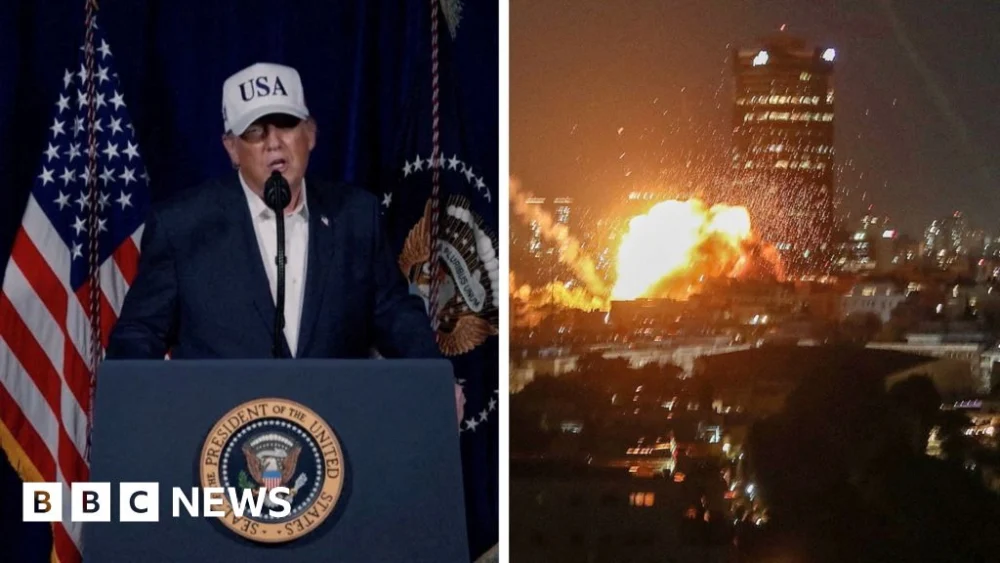
A coordinated military operation involving the United States and Israel dramatically reshaped the geopolitical landscape of the Middle East this past Saturday, culminating in the reported death of Iran’s long-standing Supreme Leader, Ayatollah Ali Khamenei, and triggering immediate, widespread Iranian retaliatory strikes across the region. The extraordinary events unfolded with precision and speed, beginning with the aerial and missile assaults targeting various locations within Iran, including the highly fortified compound of the nation’s spiritual and political head in Tehran.
The initial reports of the audacious strikes were corroborated by high-level confirmations from Washington and Tel Aviv. United States President Donald Trump issued a statement asserting the demise of Ayatollah Ali Khamenei, a claim swiftly echoed by Israeli Prime Minister Benjamin Netanyahu, who further elaborated that the Supreme Leader’s residence in Tehran had been decimated by a "powerful, surprise strike." This sequence of announcements, originating from the highest echelons of two opposing nations, underscored the gravity and deliberate nature of the operation. Shortly thereafter, official Iranian state media channels confirmed the unprecedented news of Khamenei’s death, sending shockwaves through domestic and international political spheres.
The strategic implications of targeting and neutralizing a figure of Khamenei’s stature cannot be overstated. As the second Supreme Leader of the Islamic Republic since its founding in 1979, he held ultimate authority over all major state policies, including foreign policy, military strategy, and the nuclear program. His death creates an immediate power vacuum at the apex of Iran’s theocratic system, raising profound questions about the future trajectory of the nation and its regional posture. The swift confirmation by Iranian media, despite the inherent shame and vulnerability such an admission would typically entail, suggests the undeniable impact and effectiveness of the coalition’s strike.
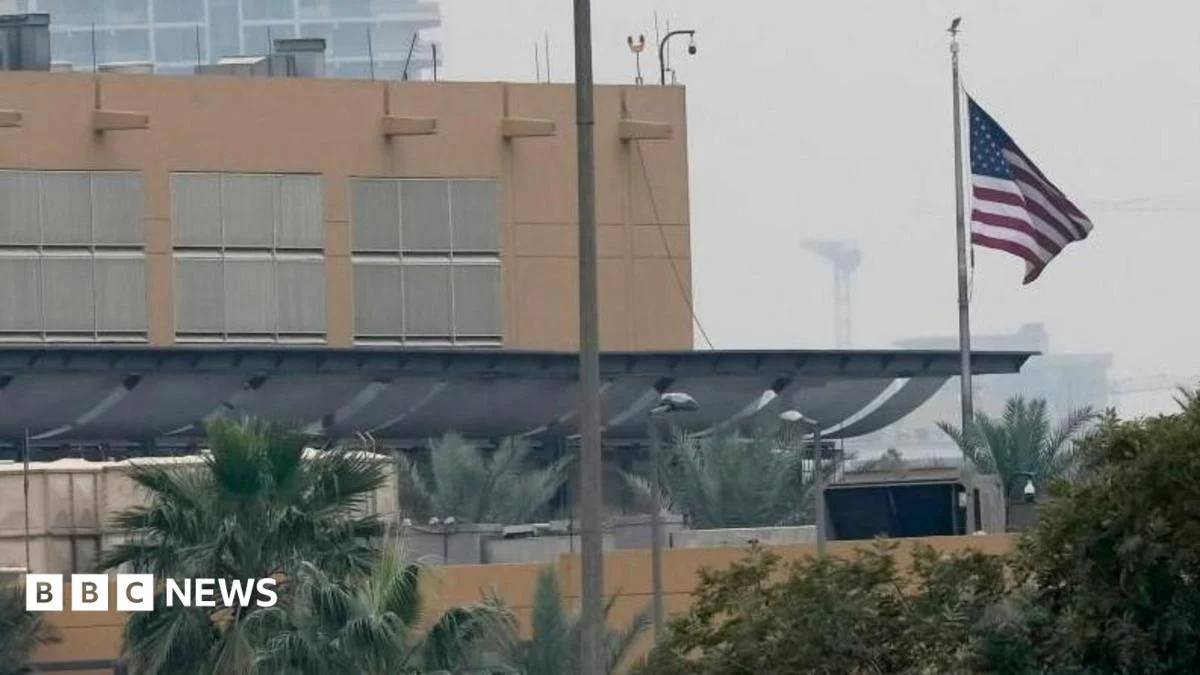
In a rapid and forceful response to what it deemed an act of state terrorism, Iran launched a barrage of missiles and drones. These retaliatory measures were not confined to Israel but extended across a significant swathe of the Arabian Gulf, targeting four key Arab nations that host substantial American military installations: Bahrain, Kuwait, Qatar, and the United Arab Emirates. This multi-pronged counter-attack signaled Tehran’s intent to broaden the conflict, directly challenging not only its principal adversaries but also those regional states perceived as collaborating with US strategic interests. The selection of targets underscored Iran’s capability to project power across maritime and aerial domains, threatening vital global energy arteries and American assets simultaneously.
The weekend’s events represent a culmination of decades of deep-seated animosity and escalating tensions between Iran and both the United States and Israel. For over forty years, the Islamic Republic has been viewed by Washington and Tel Aviv as a primary destabilizing force in the Middle East, primarily due to its pursuit of a nuclear program, its development of ballistic missile capabilities, and its extensive network of proxy militias across Lebanon, Syria, Iraq, and Yemen. The US, under successive administrations, has pursued a policy ranging from containment to "maximum pressure," imposing stringent sanctions aimed at crippling Iran’s economy and curtailing its regional influence. Israel, sharing a profound existential security concern, has consistently advocated for a more aggressive stance, often engaging in covert operations and limited strikes against Iranian assets and proxies. This latest operation, however, marks an unparalleled escalation, moving beyond proxy conflicts and cyber warfare to direct, kinetic action against the very leadership of the Islamic Republic.
The institutional framework of the Islamic Republic of Iran vests immense, almost unchallenged, power in the Supreme Leader. He is the commander-in-chief of the armed forces, controls the judiciary, and has the final say on all critical state matters. The demise of Ayatollah Khamenei thus precipitates an unprecedented leadership crisis. The process of succession, governed by the Assembly of Experts, an 88-member body of high-ranking clerics, is traditionally a deliberative and often lengthy one, designed to ensure ideological continuity and stability. However, the circumstances of Khamenei’s death—killed by external forces—are likely to imbue the succession with a fierce sense of urgency and potentially ignite internal power struggles. The choice of a successor will profoundly shape Iran’s domestic and foreign policy, determining whether the nation adopts a more pragmatic approach or entrenches itself further in revolutionary fervor and anti-Western confrontation. Analysts are closely watching for signs of who might emerge, with figures from the judiciary or the Revolutionary Guard Corps being prominent contenders, each representing distinct ideological factions.
Regionally, the strikes and subsequent retaliation have plunged an already volatile Middle East into an even deeper state of uncertainty. The Gulf Arab states, historically wary of Iranian expansionism and increasingly aligned with US security guarantees, now find themselves on the front lines of a direct confrontation. Their decision to host US military bases, a cornerstone of regional security architecture for decades, has evidently made them targets. This development could compel these nations to reassess their strategic alignments, potentially leading to either a stronger embrace of US protection or a cautious effort to de-escalate independently. Oil markets reacted immediately, with crude prices soaring amid fears of disruptions to shipping lanes in the Strait of Hormuz, a critical chokepoint for global energy supplies. The potential for a cascading series of retaliations and counter-retaliations looms large, threatening to engulf the entire region in a devastating conflict that could have global economic and humanitarian consequences.
On the international stage, the events demand urgent attention from major global powers and international bodies. The United Nations Security Council is likely to be seized with the crisis, though consensus on a path forward among its permanent members remains elusive. Russia and China, both wary of Western military interventions and possessing significant economic and strategic interests in Iran, will likely condemn the strikes while advocating for de-escalation and a return to diplomacy. European nations, already grappling with the implications of a weakened nuclear deal (JCPOA) and regional instability, face immense pressure to mediate and prevent a full-blown war. The US-Israel alliance, strengthened by the execution of this high-stakes operation, will likely face scrutiny over the legality and long-term wisdom of such a decisive strike, particularly concerning the doctrine of pre-emptive action and regime change.
The economic ramifications extend beyond immediate oil price spikes. The disruption of global supply chains, increased shipping insurance costs, and a general climate of geopolitical instability are likely to deter foreign investment in the region and potentially trigger a broader slowdown in global trade. The human cost, should the conflict escalate, would be catastrophic, with immense displacement and humanitarian crises on a scale unseen in recent memory.
Looking ahead, expert analyses suggest several potential scenarios. One path involves a managed de-escalation, where both sides, having demonstrated their capabilities, step back from the brink through back-channel negotiations, possibly brokered by neutral third parties. However, the deeply personal nature of Khamenei’s death and the ideological fervor of the Islamic Republic make such an outcome challenging. Another scenario points towards a protracted period of low-intensity conflict, characterized by continued proxy skirmishes, cyber warfare, and intermittent direct exchanges, keeping the region in a perpetual state of tension. The most dire outlook involves a full-scale regional war, drawing in multiple actors and potentially leading to direct confrontations between major powers. The unprecedented nature of the initial strike, targeting the spiritual leader of a sovereign nation, has undeniably altered the calculus for future engagements in the Middle East, signaling a paradigm shift in the willingness to employ decisive force against core national leadership. The world now watches with bated breath as Iran grapples with succession and the region braces for the unfolding consequences of this new, perilous chapter.



 Aura Kasih
 Safa Marwah
 Ayu Aulia