Lisa Mariana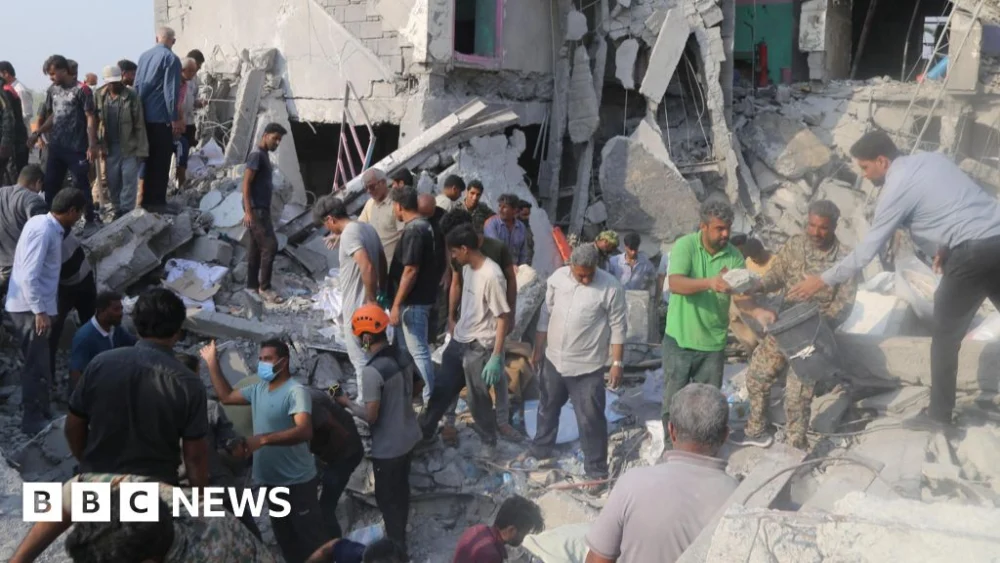
A devastating incident has unfolded in southern Iran, where a reported military strike impacted a school, leading to the confirmed deaths of at least 148 individuals, according to statements from Iranian authorities. The Islamic Republic has swiftly attributed responsibility for the assault to the United States and Israel, setting off a new wave of diplomatic accusations amidst an already highly volatile regional environment. While the U.S. military’s Central Command (Centcom) has indicated it is reviewing the allegations, the Israeli military has stated it possesses no knowledge of any operations conducted by the Israel Defense Forces (IDF) in the vicinity.
The targeted educational facility is situated in Minab, a town within Iran’s Hormozgan province, notably proximate to a base operated by the Islamic Revolutionary Guard Corps (IRGC). This strategic proximity is significant, as the IRGC installation has reportedly been a target in prior escalations, raising questions about the intended objective of the recent strike and the tragic collateral damage incurred. The Iranian Red Crescent has reported a broader humanitarian crisis, indicating that a total of 201 individuals have been killed and 747 injured in various airstrikes across Iran since Saturday, underscoring the widespread impact of the ongoing hostilities.
President Masoud Pezeshkian of Iran vehemently condemned the event, characterizing it as a "barbaric act" and "another black page in the record of countless crimes committed by the aggressors." Such strong rhetoric from the highest levels of Iranian leadership signals the profound gravity with which Tehran views the incident and its potential to further inflame regional tensions. The U.S. Central Command, through its spokesman Tim Hawkins, acknowledged the severity of the situation, stating, "We take these reports seriously. The protection of civilians is of utmost importance, and we will continue to take all precautions available to minimise the risk of unintended harm." This response, while cautious, reflects the U.S. military’s commitment to adhering to international humanitarian law, even as it navigates complex accusations from an adversary.
Following the initial reports on Saturday, humanitarian organizations rapidly mobilized. Officials from the Red Cross and Red Crescent societies in Geneva confirmed the deployment of emergency response teams to the affected school in Minab. The strike, according to an official statement, involved "three missile attacks" directly targeting the school building. Its location, approximately 600 meters (1,970 feet) from the IRGC base, inevitably draws attention to the complexities of target identification and the inherent risks to civilian infrastructure in conflict zones.
Visual evidence circulating in the aftermath, including verified video clips, depicts plumes of smoke ascending from the devastated building, accompanied by scenes of panic and anguish among gathering crowds. However, independent verification of the precise casualty figures remains challenging. International news organizations frequently face significant obstacles in obtaining visas and access to Iran, severely limiting their capacity to conduct on-the-ground investigations and confirm official reports. This information vacuum often contributes to a landscape ripe for misinformation and competing narratives.
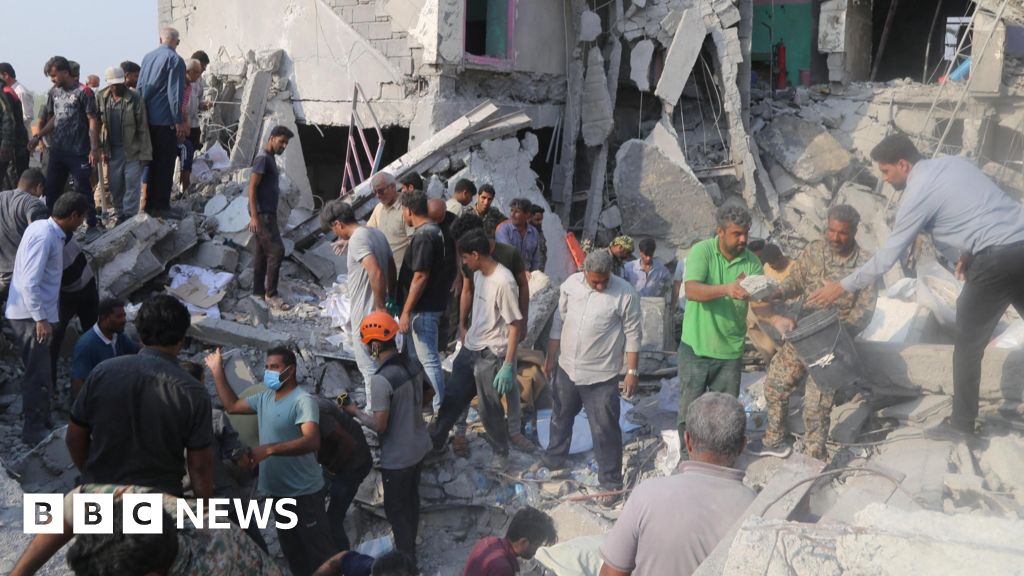
The incident has ignited a firestorm of anger and grief across Iranian social media platforms. The reactions highlight a deeply divided public sentiment. An Iranian expatriate, expressing opposition to military intervention in Iran, lamented the loss of life: "The first victims of this war are 40 girls in Minab, hit by a missile attack. Is this the war you cheer for?" This sentiment reflects a profound human cost often overlooked in geopolitical strategies. Conversely, a significant segment of the Iranian population harbors deep mistrust towards the ruling regime. This skepticism leads many to question official government accounts and, in some cases, directly assign culpability to Tehran for the tragedy. One user articulated this perspective: "Even if the regime did not directly target schools, the deaths of children in Minab remain the responsibility of the Islamic Republic. People have no shelters, the internet is cut, phone lines are down, and there has been no warning to keep children out of school. In these conditions, the minimum requirement should be to stay at home." Such comments underscore the internal criticism directed at the regime’s perceived failures in protecting its citizens and maintaining essential infrastructure during periods of heightened conflict.
This school tragedy unfolded against a backdrop of intense military activity. The United States and Israel had reportedly unleashed a succession of air strikes against various targets across multiple Iranian cities throughout Saturday. These coordinated assaults continued into Sunday, occurring in the wake of an earlier strike that resulted in the demise of Iran’s Supreme Leader Ali Khamenei and numerous senior military commanders. The killing of such a high-ranking figure represents a monumental shift in the regional power dynamics and signifies a dramatic escalation in the long-standing covert conflict between Iran and its adversaries.
The direct targeting of a school, even if accidental or due to proximity to a military target, carries profound implications under international humanitarian law (IHL). Principles of distinction, proportionality, and precaution are paramount in armed conflict. The principle of distinction mandates that parties to a conflict must always distinguish between civilians and combatants, and between civilian objects and military objectives. Attacks must not be directed against civilians or civilian objects. Proportionality requires that the anticipated military advantage from an attack must not be excessive in relation to the incidental harm to civilians or civilian objects. Precaution demands that all feasible precautions must be taken to avoid, and in any event to minimize, incidental loss of civilian life, injury to civilians, and damage to civilian objects. Any failure to adhere to these principles could constitute a war crime and would invite robust international condemnation and scrutiny. The alleged targeting of a school, particularly one near a sensitive military installation, will undoubtedly be a focal point of future investigations and international discourse.
The geopolitical ramifications of this incident are far-reaching. The immediate accusations hurled by Iran against the US and Israel are not merely rhetorical; they serve to reinforce Tehran’s narrative of external aggression and to rally domestic support. For the US and Israel, the challenge lies in managing the optics and legal implications of a strike that resulted in significant civilian casualties, especially if their involvement is definitively proven. The denial from Israel’s military is consistent with its typical posture regarding operations in hostile territories, often maintaining a policy of ambiguity. Centcom’s measured response, emphasizing civilian protection, seeks to uphold international norms while not confirming or denying operational specifics.
This event must be contextualized within the broader regional power struggle that has been simmering for decades. The "shadow war" between Iran and Israel, characterized by cyberattacks, assassinations, and proxy conflicts across the Middle East, appears to have burst into open, albeit undeclared, conventional warfare. The elimination of Supreme Leader Khamenei, an architect of Iran’s regional strategy, represents an unprecedented decapitation strike that will undoubtedly provoke a significant, if not immediate, retaliatory response from Tehran. The school strike, whether intentional or not, will likely be absorbed into Iran’s narrative of victimhood and aggression, potentially justifying future actions.
Analysts are now grappling with the likely trajectory of this escalation. Will Iran respond directly, or through its network of proxies in Lebanon, Syria, Iraq, and Yemen? The potential for miscalculation is extremely high, as each side attempts to assert dominance without triggering an all-out regional war that would have catastrophic global implications, particularly for energy markets and international trade routes. International bodies and diplomatic channels are likely to intensify calls for de-escalation, but the current climate of distrust and open hostilities suggests that such appeals may fall on deaf ears in the short term. The protection of civilian lives, particularly children in educational institutions, must remain at the forefront of any international response, highlighting the urgent need for a cessation of hostilities and a return to diplomatic solutions. The tragic loss of life in Minab serves as a grim reminder of the profound human cost of uncontained conflict.



 Aura Kasih
 Safa Marwah
 Ayu Aulia