
 Ridwan Kamil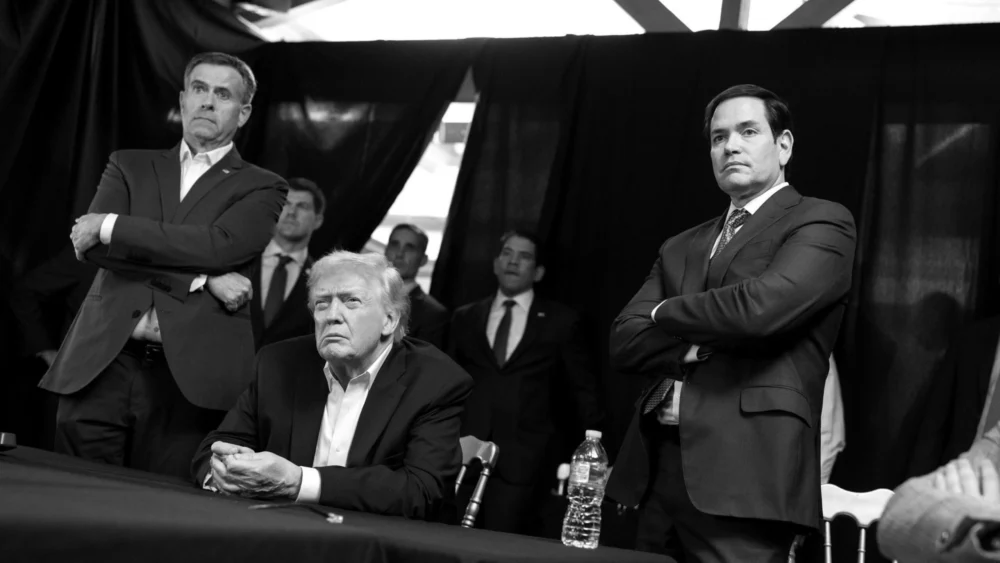
A discernible shift has occurred in the foreign policy pronouncements of former President Donald Trump regarding Iran, transitioning from a stated preference for avoiding new conflicts to a more assertive stance advocating for regime change in Tehran. This evolution suggests a recalibration of his approach, potentially influenced by evolving geopolitical dynamics, domestic political considerations, or a reassessment of the efficacy of prior strategies.
The former President’s initial approach to Iran was often characterized by a rhetoric of de-escalation and a commitment to prioritizing domestic concerns over protracted foreign entanglements. During his tenure, Trump frequently voiced a desire to extricate the United States from what he termed "endless wars" and to reduce American military presence in the Middle East. This stance resonated with a segment of the electorate weary of costly and protracted conflicts. His administration’s withdrawal from the Joint Comprehensive Plan of Action (JCPOA), the Iran nuclear deal, while a significant action, was framed by some as an attempt to renegotiate a more favorable agreement rather than an immediate prelude to military intervention. The imposition of "maximum pressure" sanctions was presented as a tool to compel Iran to alter its behavior, specifically its nuclear program and regional activities, without resorting to armed conflict.
However, recent statements and policy analyses indicate a departure from this more restrained posture. The articulation of regime change as a potential objective represents a significant escalation in rhetorical ambition. This shift could be interpreted in several ways. Firstly, it may reflect a growing frustration with the perceived intransigence of the current Iranian leadership and a belief that incremental policy adjustments are insufficient to achieve U.S. objectives. The failure of sanctions to fundamentally alter Iran’s strategic calculus, coupled with continued regional proxy activity and ongoing nuclear advancements, might have led to a conclusion that a more transformative approach is necessary.
Secondly, the recalibration could be strategically timed for domestic political consumption. As Trump considers future political endeavors, his foreign policy positions often serve as a means of galvanizing his base and differentiating himself from opponents. A more hawkish stance on Iran, a country often viewed with suspicion across the American political spectrum, could be perceived as a demonstration of strength and decisiveness. It allows him to project an image of unwavering resolve against a perceived adversary, potentially appealing to voters who prioritize a robust national security posture.
Thirdly, this evolution might be an opportunistic reaction to specific regional developments or shifts in the international landscape. The ongoing internal dissent within Iran, coupled with heightened tensions in the broader Middle East, could create an environment where the idea of regime change appears more attainable or strategically advantageous. External actors and internal dynamics within Iran can significantly influence the perceived viability of such a policy objective.
The implications of a potential shift towards advocating for regime change are profound and far-reaching. Historically, U.S. policy aimed at orchestrating regime change in foreign nations has been fraught with complexity and often unintended consequences. Such a policy can destabilize entire regions, create power vacuums that are filled by extremist groups, and lead to prolonged periods of conflict and humanitarian crises. For Iran, a nation with a complex geopolitical position, a significant population, and a long history, any move towards overt support for internal upheaval carries immense risks.
From an analytical perspective, the effectiveness of a regime change strategy is contingent on a multitude of factors. It requires a deep understanding of Iran’s internal political dynamics, the strength and cohesion of opposition movements, and the potential reactions of regional and global powers. A poorly executed strategy could inadvertently bolster the existing regime by fostering a sense of national unity against external interference, or it could lead to internal fragmentation and prolonged instability, benefiting neither the Iranian people nor international security.
Furthermore, the economic and diplomatic ramifications of such a policy would be substantial. A sustained campaign for regime change would likely involve heightened sanctions, increased diplomatic isolation, and potentially covert operations. This could lead to further economic hardship for the Iranian populace, exacerbating existing grievances, and could also provoke retaliatory measures from Iran, impacting global energy markets and international shipping routes.
The international community’s reaction to a U.S. policy of regime change in Iran would also be a critical consideration. While many nations share concerns about Iran’s nuclear program and regional activities, there is significant divergence on the most effective course of action. A unilateral U.S. pursuit of regime change could alienate allies, undermine multilateral diplomatic efforts, and create a more fractured global approach to managing relations with Iran.
Expert analysis suggests that achieving regime change through external pressure alone is an exceedingly difficult and often counterproductive endeavor. Sustainable political transformation typically arises from internal dynamics, driven by the aspirations and agency of the people within a nation. External actors can influence these dynamics, but direct intervention or overt calls for overthrow often serve to complicate, rather than catalyze, genuine change.
The current Iranian leadership, while facing internal dissent and economic pressures, has demonstrated a capacity for resilience and adaptation. The specter of foreign intervention has historically served to rally segments of the Iranian population around the existing political structure, particularly among nationalist elements. Therefore, a policy focused solely on regime change might overlook the importance of supporting internal reformist movements and fostering conditions for organic political evolution.
Looking ahead, the trajectory of U.S. policy towards Iran, particularly under the influence of figures like former President Trump, will likely remain a subject of intense scrutiny. The tension between a desire for de-escalation and the pursuit of more transformative objectives presents a significant foreign policy challenge. The effectiveness of any strategy will depend on its coherence, its grounding in a realistic assessment of Iranian domestic realities, and its ability to navigate the complex geopolitical landscape of the Middle East.
The rhetorical shift towards advocating for regime change in Iran by former President Trump signals a potentially more confrontational approach compared to his earlier emphasis on avoiding new wars. This evolution necessitates a thorough examination of the underlying motivations, the potential consequences, and the strategic viability of such a policy. The implications for regional stability, international relations, and the welfare of the Iranian people are profound, demanding a nuanced and carefully considered approach from all stakeholders involved. The future of U.S.-Iran relations hinges on a delicate balance between assertive diplomacy, economic pressure, and a recognition of the complex internal dynamics that shape Iran’s political landscape.


 Aura Kasih
 Safa Marwah
 Ayu Aulia


