Aura Kasih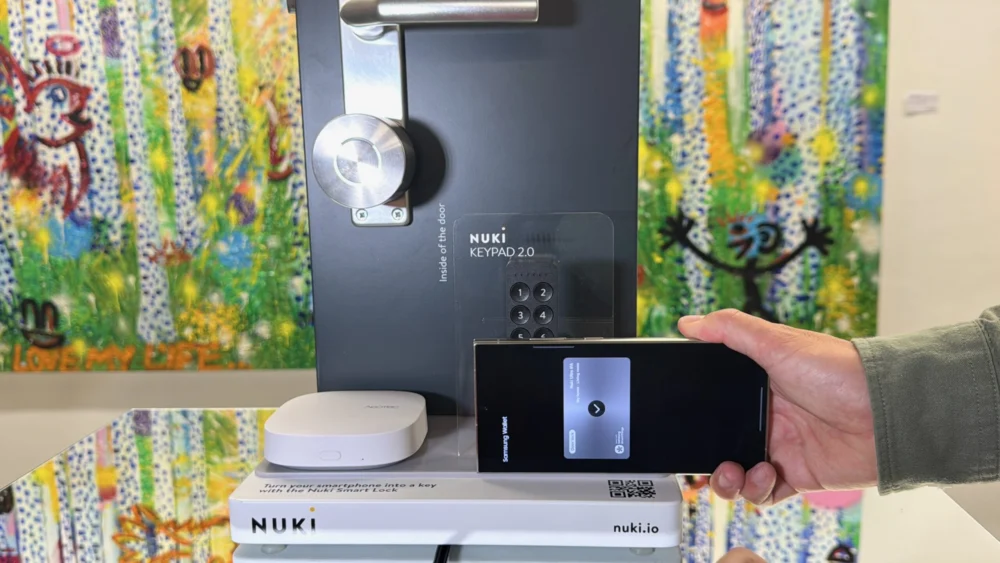
A groundbreaking development in smart home technology has arrived with the official release of Aliro 1.0, a new open standard poised to revolutionize how we interact with our physical spaces by finally offering a unified solution for digital key access across all major smartphone platforms. This advancement promises to eliminate the fragmentation that has plagued the smart lock market, enabling any compatible smartphone to unlock virtually any smart lock, irrespective of the manufacturer.
For years, the concept of a digital key stored on a smartphone has been a tantalizing prospect, hinted at by proprietary solutions like Apple’s Home Key. However, these systems often locked users into specific ecosystems, creating compatibility barriers. Aliro breaks down these walls, envisioning a future where a digital key residing in your phone’s secure wallet can be effortlessly tapped to unlock not just your front door, but also office entrances, apartment building access points, and hotel rooms. This "tap-to-unlock" functionality, akin to contactless payments, is now poised to become a reality for consumers across both Android and iOS devices, and integrated with the dominant mobile wallet ecosystems: Apple, Google, and Samsung.
The significance of Aliro lies in its ambition to create a truly interoperable access control ecosystem. Developed under the stewardship of the Connectivity Standards Alliance (CSA), the same organization behind the popular Matter smart home standard, Aliro is designed to foster widespread adoption by ensuring that digital keys are not tied to a single brand or operating system. This cross-platform compatibility is a critical step towards realizing the full potential of smart locks, moving beyond niche applications to become a mainstream convenience.

At its core, Aliro defines the secure exchange of credentials between a digital device, such as a smartphone or smartwatch, and a smart lock. The standard mandates support for Near-Field Communication (NFC) and Bluetooth Low Energy (BLE), ubiquitous technologies already present in most modern mobile devices. Furthermore, Aliro embraces Ultra-Wideband (UWB) technology, which opens the door to more advanced features like hands-free unlocking. This layered approach ensures both broad compatibility and the integration of cutting-edge capabilities.
The security architecture of Aliro is built on robust cryptographic principles, ensuring that the communication between the digital key and the lock is encrypted and authenticated. Crucially, Aliro operates as a local protocol, meaning it does not inherently require a continuous cloud connection or proprietary third-party applications to function. This direct, peer-to-peer communication enhances both security and reliability, as it bypasses potential vulnerabilities associated with centralized cloud services and ensures functionality even in areas with limited or no internet connectivity, such as parking garages or basements.
The broad industry backing for Aliro is a testament to its potential. Major technology players like Apple, Google, and Samsung have been actively involved in its development and have publicly committed to integrating Aliro support into their platforms. This collaboration extends to leading lock manufacturers, including Assa Abloy (which owns Kwikset and Yale), Allegion (Schlage), and Fortune Brands (including Yale US and August), as well as key chip manufacturers. This extensive consortium of industry leaders suggests that Aliro has a strong foundation for widespread implementation.
Nelson Henry, chair of the Aliro Working Group and a representative from Last Lock, emphasized the collaborative nature of the initiative. "The goal of Aliro is to finally unify the smart lock experience," Henry stated. "For too long, consumers have been forced to navigate a fragmented landscape where their phone could only unlock specific brands of locks. Aliro changes that paradigm entirely." He anticipates that platform support for Aliro will become widely available within the coming months, marking a significant acceleration in the rollout of compatible hardware and software.

The implications of Aliro extend beyond individual homes. The standard is particularly well-suited for multi-unit residential buildings, commercial spaces, and hospitality environments. In these settings, managing access for residents, employees, or guests can be complex and costly, often involving the distribution and management of physical keys or fobs. Aliro offers a streamlined, secure, and scalable solution, allowing property managers to issue and revoke digital access credentials remotely and efficiently, while providing users with a convenient and modern access experience.
While the promise of Aliro is compelling, its widespread adoption will likely necessitate a refresh of existing smart lock hardware. Although some newer locks with NFC capabilities might be theoretically upgradeable via firmware, manufacturers generally indicate that full Aliro support will be integrated into future product generations. This is due to the specific hardware requirements for both NFC and UWB communication protocols, as well as the processing power needed for secure credential management.
For consumers, this means that while existing smart locks may not be directly compatible, the next wave of smart lock purchases will increasingly feature Aliro support. Manufacturers are already signaling their intentions to incorporate the standard into upcoming product lines. For instance, brands like Kwikset and Yale, which have previously supported proprietary digital key solutions, are now pivoting to embrace Aliro as the universal standard. Their commitment suggests a strategic shift towards interoperability, recognizing that consumer demand for seamless integration outweighs the benefits of closed ecosystems.
The integration of Aliro is also closely linked with the ongoing development of the Matter standard. While Aliro focuses on the secure authentication and communication between a digital credential and a lock, Matter handles the integration of that lock into a broader smart home ecosystem. This means that a Matter-compliant smart home platform, such as Apple Home, Google Home, or Amazon Alexa, will act as the bridge, managing Aliro credentials and enabling them to be controlled through familiar smart home interfaces. The CSA has confirmed that Matter’s 1.4 specification includes support for Aliro, solidifying this symbiotic relationship.

The distinct functionalities of NFC and UWB within the Aliro framework offer different user experiences. NFC provides the familiar tap-to-unlock convenience, akin to contactless payments, which is straightforward and widely supported. UWB, on the other hand, enables more advanced features such as precise location awareness and hands-free unlocking. This capability allows a door to unlock automatically as an authorized user approaches, offering a glimpse into the seamless, "Jetsons-esque" future of home access that industry leaders have long envisioned. The precision of UWB is such that it can differentiate between approaching the door from the outside versus other orientations, enhancing security.
However, the implementation of UWB technology presents a higher hardware barrier for manufacturers, requiring dedicated UWB antennas within the locks. Consequently, UWB-enabled Aliro locks are likely to be positioned at a higher price point initially. Furthermore, UWB functionality is dependent on compatible smartphones, which currently include newer iPhone models, Google Pixel devices, and Samsung Galaxy smartphones. As UWB technology becomes more prevalent in mobile devices, the accessibility of these advanced features will undoubtedly increase.
The path to full Aliro integration will likely involve a phased rollout. Initially, NFC-based tap-to-unlock functionality is expected to see the quickest adoption due to its lower hardware complexity and broad smartphone compatibility. As UWB technology matures and becomes more cost-effective, its integration into smart locks will gain momentum, unlocking the potential for truly effortless, hands-free access.
The overarching promise of Aliro is to democratize access control. By establishing an open, interoperable standard, it aims to eliminate the confusion and frustration consumers have experienced with proprietary systems. This move towards universal compatibility is not just about convenience; it’s about building a more secure, accessible, and integrated digital future for our physical environments. While the transition may take time and require hardware upgrades for some, the launch of Aliro 1.0 marks a pivotal moment, signaling the end of the key-card era and the dawn of a new, unified digital access standard.


 Safa Marwah
 Lisa Mariana