Lisa Mariana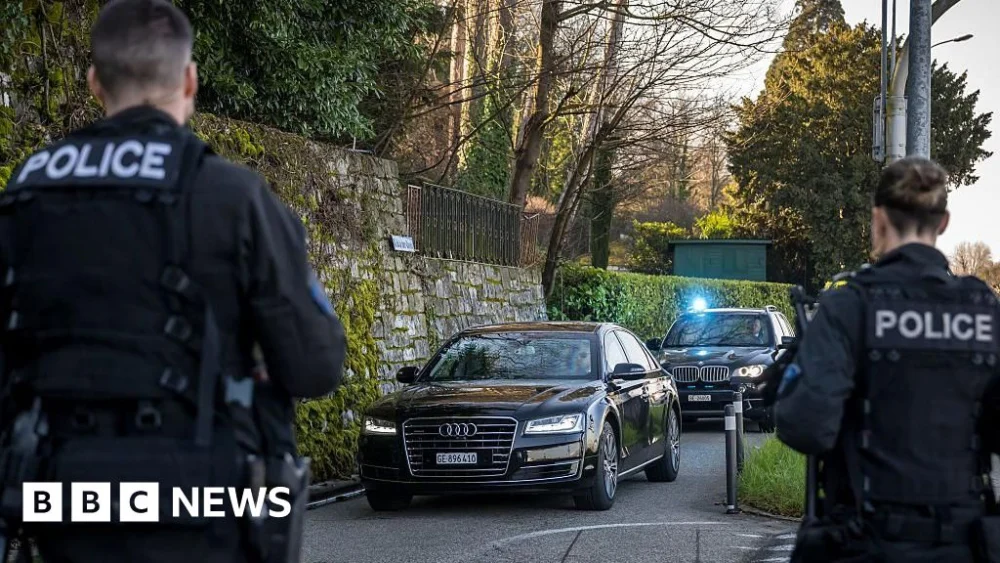
Geneva, Switzerland – In a critical juncture for Middle East stability, representatives from the United States and Iran have convened for a third round of indirect talks, an engagement widely regarded as pivotal for preventing a broader military confrontation. These delicate negotiations, facilitated by Oman, are unfolding against a backdrop of heightened military posturing by Washington and Tehran’s defiant vows of retaliation, underscoring the immense pressures on both sides to find a diplomatic off-ramp from escalating tensions.
The latest discussions are taking place at the Omani ambassador’s residence in Geneva, a neutral venue chosen to bridge the profound chasm of distrust that precludes direct engagement between the two adversaries. The very format of these "proximity talks," where mediators shuttle between delegations, highlights the deep-seated animosity that has long characterized US-Iranian relations, making any breakthrough inherently challenging. The stakes could not be higher, with the specter of conflict looming large over a region already grappling with multifaceted crises.
The diplomatic overture follows an unprecedented surge in American military presence across the Middle East, representing the most substantial US force deployment since the 2003 invasion of Iraq. This formidable "armada," as characterized by President Donald Trump, includes two aircraft carrier strike groups, numerous warships, squadrons of advanced fighter jets, and crucial aerial refueling capabilities, along with thousands of additional troops. This military buildup is perceived by many as a coercive tactic, designed to exert maximum pressure on Tehran to accede to Washington’s demands regarding its nuclear program and regional activities. Simultaneously, Iranian leadership has unequivocally declared its intent to respond forcefully to any act of aggression, threatening to target American military assets and interests throughout the Middle East, as well as those of its allies, particularly Israel.
Despite President Trump’s stated preference for a diplomatic resolution, his administration has simultaneously signaled a readiness to consider military options, including "limited strikes" against Iran, should the talks falter. This dual-track approach, combining overt threats with a call for negotiations, reflects a strategy aimed at compelling Tehran to the bargaining table while retaining the option of force. However, the precise nature of the US demands and the specific triggers for potential military action remain largely opaque. This ambiguity has fueled uncertainty and complicated efforts to decipher Washington’s ultimate objectives, especially in light of the US having reportedly bombed Iranian nuclear facilities just eight months prior, during a period described as a "war between Israel and Iran." The rationale for renewed military action now, after such a significant previous intervention, has not been clearly articulated by the White House.
A central point of contention remains Iran’s insistence on its right to enrich uranium on its own soil, a capability it asserts is solely for peaceful energy and medical purposes. This position directly clashes with US and international concerns regarding the potential for diversion to a weapons program. Nevertheless, there have been subtle indications from Tehran that it might be prepared to offer certain concessions regarding the scope and nature of its nuclear activities. These potential compromises could range from limits on enrichment levels and the quantity of enriched uranium stockpile to enhanced transparency and inspection regimes by the International Atomic Energy Agency (IAEA).
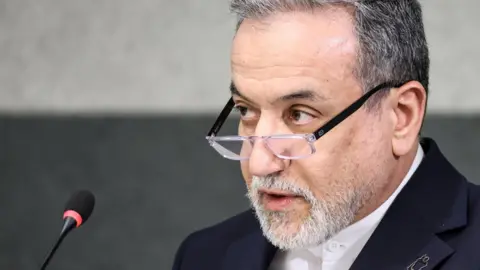
Leading the Iranian delegation in Geneva is Foreign Minister Abbas Araghchi, a seasoned diplomat with extensive experience in nuclear negotiations. His presence signals the gravity with which Tehran views these discussions. On the American side, the team is spearheaded by Special Envoy Steve Witkoff and President Trump’s son-in-law, Jared Kushner. The inclusion of Kushner, a close confidant of the President, underscores the high-level political backing for the US negotiating position and suggests a direct channel to the Oval Office, bypassing traditional diplomatic hierarchies. The Omani mediation, which also facilitated the previous two rounds of talks earlier this month, highlights the Sultanate’s long-standing role as a discreet and trusted intermediary in regional diplomacy, leveraging its unique relationships with both Washington and Tehran.
The current crisis has roots in events that preceded the recent military buildup. Last month, President Trump initially threatened military action against Iran amidst a brutal crackdown on widespread anti-government protests within the country, which resulted in thousands of fatalities. While that immediate focus has since shifted, the underlying tensions quickly pivoted back to Iran’s nuclear program, a contentious issue that has defined the Islamic Republic’s relationship with the West for decades. For generations, the United States and Israel have vehemently accused Iran of secretly pursuing nuclear weapons capabilities, a charge Tehran consistently denies, maintaining its program is exclusively for civilian applications. However, Iran stands as the only non-nuclear-armed state known to have enriched uranium to levels approaching weapons-grade purity, a fact that significantly exacerbates international proliferation concerns and fuels suspicions about its true intentions.
In his recent State of the Union address to Congress, President Trump briefly touched upon the Iranian situation, employing strong rhetoric without providing detailed justifications for potential military action. He alleged that Iran was rapidly developing missiles capable of reaching the US, though he offered no corroborating evidence or specific timelines. Furthermore, he accused Iran of attempting to "start all over again" with a nuclear weapons program following the previous year’s strikes, reiterating his unwavering stance that the "world’s number one sponsor of terror" must never acquire nuclear weapons. This was a direct reference to the US strikes on three Iranian nuclear sites last June, conducted in conjunction with Israel’s own bombing campaign, which Trump claimed had "obliterated" the facilities. While Iran claims to have halted enrichment activities post-attacks, it has controversially denied IAEA inspectors access to the damaged sites, preventing independent verification of its assertions. Trump, in his address, articulated a specific demand: "They want to make a deal," he stated, "but we haven’t heard those secret words: ‘We will never have a nuclear weapon’."
Hours prior to the President’s address, Iranian Foreign Minister Araghchi utilized social media to issue a counter-statement, affirming unequivocally that Iran "will under no circumstances ever develop a nuclear weapon." He also underscored the current moment as an "historic opportunity to strike an unprecedented agreement that addresses mutual concerns and achieves mutual interests," signaling a diplomatic opening despite the prevailing tensions. However, reacting to Trump’s State of the Union, an Iranian foreign ministry spokesman sharply criticized the US, accusing it of disseminating "big lies" concerning its nuclear ambitions, ballistic missile capabilities, and the actual death toll from the recent anti-government protests.
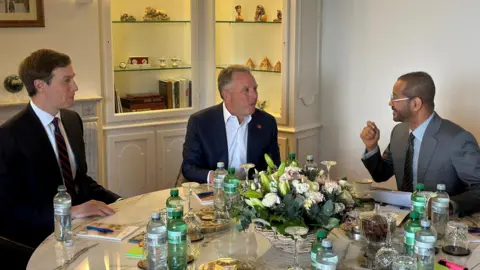
While specific details of Iran’s proposals have not been publicly disclosed, discussions in Geneva are anticipated to explore several potential pathways. These include the long-debated concept of establishing a regional consortium for uranium enrichment, which would involve international oversight and potentially alleviate proliferation anxieties while allowing Iran access to nuclear fuel. The fate of Iran’s substantial stockpile of highly enriched uranium, estimated at approximately 400kg (880lb), is also a critical agenda item, with options ranging from its dilution to shipment abroad. In return for any concessions on its nuclear program, Iran’s primary demand remains the comprehensive lifting of the debilitating international sanctions that have crippled its economy, impacting oil exports, banking, and trade. Critics of the Iranian regime, however, warn that any significant sanctions relief would provide a crucial economic "lifeline" to the clerical rulers, potentially consolidating their power rather than fostering internal reform.
The path to a mutually acceptable deal remains fraught with obstacles, as President Trump’s precise conditions for an agreement are not fully transparent. Furthermore, Iran has firmly rejected any negotiations concerning its ballistic missile program, which it views as a non-negotiable cornerstone of its national defense and deterrence strategy. Similarly, Tehran has rebuffed calls to end its support for various regional proxy groups – an alliance it terms the "Axis of Resistance," comprising entities such as Hamas in Gaza, Hezbollah in Lebanon, various militias in Iraq, and the Houthi movement in Yemen. These proxies are instrumental to Iran’s regional influence and are seen by the US and its allies, particularly Israel, as destabilizing forces.
Reports in US media, citing unnamed administration officials, have indicated that President Trump has considered launching initial military strikes against Iran’s Revolutionary Guards Corps (IRGC) or critical nuclear facilities. The stated objective of such strikes would be to exert maximum pressure on Iran’s leadership to compel them into accepting a deal. These reports further suggest that, in the event of negotiation failures, the administration might even contemplate a broader military campaign aimed at ultimately toppling Iran’s Supreme Leader, Ayatollah Ali Khamenei. Such a radical objective would represent a significant escalation of US policy in the region.
However, these aggressive considerations have reportedly met with caution from within the US military establishment. The Chairman of the Joint Chiefs of Staff, General Dan Caine, is said to have warned against the inherent risks of strikes against Iran, emphasizing the potential for drawing the United States into a prolonged and costly conflict. Despite these warnings, President Trump has publicly dismissed such concerns, insisting that General Caine believes any conflict would be "easily won." This divergence underscores a fundamental tension between military assessments of risk and political calculations of leverage. Meanwhile, Iran has unequivocally reiterated its threat to respond to any attack by targeting American military installations and personnel across the Middle East, as well as unleashing its full arsenal against Israel, promising a devastating regional conflagration.
The prospect of a direct military confrontation has generated profound anxiety among US-allied countries in the region, many of whom fear a wider, destabilizing conflict. These allies have cautioned that air power alone would be insufficient to effect a change in Iran’s leadership, and that any military action would carry enormous risks for regional stability and their own security. Israeli Prime Minister Benjamin Netanyahu, a staunch opponent of the Iranian regime, has consistently warned against any deal that does not explicitly include limitations on Iran’s ballistic missile program and its network of regional proxies. Netanyahu views Iran as an existential threat to Israel and a primary source of instability throughout the Middle East. Analysts widely believe that the Prime Minister, who recently visited the White House, is actively advocating for a comprehensive campaign aimed at regime change in Tehran. The complex regional security dynamic is further complicated by the fact that the US possesses the world’s second-largest nuclear arsenal, while Israel is widely believed to possess its own undeclared nuclear weapons, adding another layer of strategic ambiguity to the volatile standoff.
On the domestic front in the United States, concerns about potential military action against Iran have prompted increased scrutiny from Congress. Secretary of State Marco Rubio recently delivered a classified briefing to the "gang of eight," a bipartisan group composed of the leadership of both parties in the Senate and House of Representatives, along with the chairs and ranking members of the intelligence committees. Following this high-level briefing, Senate Minority Leader Chuck Schumer issued a concise but pointed statement: "This is serious, and the administration has to make its case to the American people." Schumer’s remarks underscore the growing demand for transparency and a clear articulation of strategic objectives, particularly if the US were to contemplate military action that could lead to a protracted and costly conflict, reminiscent of past interventions in the region. As the indirect talks proceed in Geneva, the world watches with bated breath, recognizing that the outcome will profoundly shape the geopolitical landscape for years to come.


 Aura Kasih
 Safa Marwah
 Ayu Aulia