Ridwan Kamil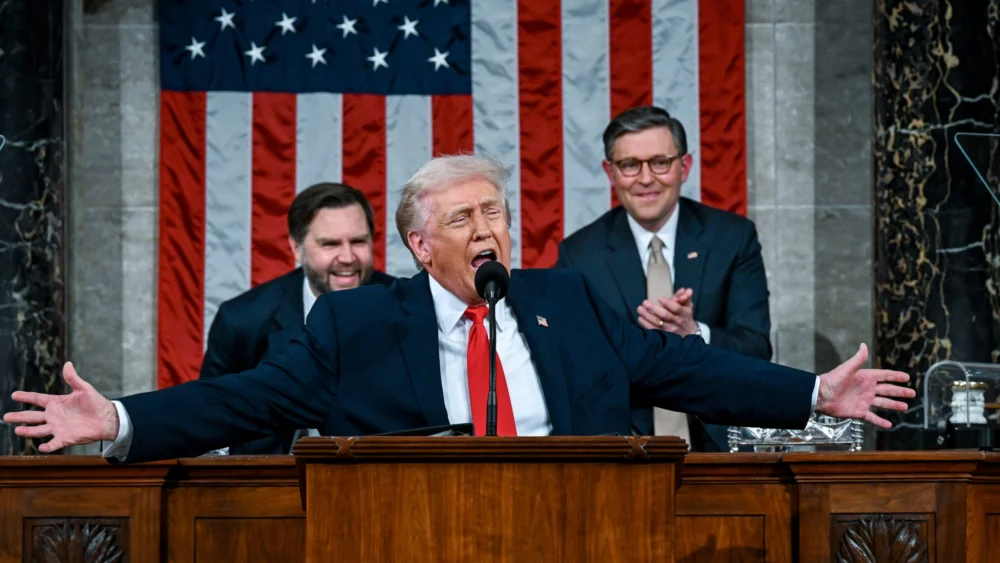
In a forceful address to a joint session of Congress, President Donald Trump vehemently denounced Iran’s nuclear program, characterizing it as a "sinister" threat to global security and vowing to counter its advancement with unwavering resolve. The President’s remarks, delivered during his annual State of the Union address, marked a significant escalation in his administration’s rhetorical stance against Tehran, signaling a continued commitment to a policy of maximum pressure.
President Trump’s condemnation of Iran’s nuclear ambitions was a central theme of his address, delivered before a backdrop of heightened geopolitical tensions in the Middle East. The President painted a stark picture of the perceived threat posed by Iran’s pursuit of nuclear capabilities, framing it as an existential danger not only to regional stability but also to the international order. His pronouncements underscored a strategic objective to prevent Iran from acquiring a nuclear weapon, a long-standing concern for the United States and its allies. The administration’s approach, as articulated in the address, centers on a combination of diplomatic isolation, economic sanctions, and a clear signaling of military preparedness, designed to compel Iran to abandon its nuclear trajectory.
The State of the Union address, a customary platform for the President to outline his administration’s priorities and policy objectives, provided an opportune moment for Trump to reiterate and amplify his administration’s policy towards Iran. His choice to highlight this issue so prominently signals its enduring importance within his foreign policy agenda. The "sinister" label, employed by the President, conveys a sense of moral outrage and a perception of Iran’s nuclear program as inherently malevolent and a deliberate attempt to destabilize the region and undermine international non-proliferation efforts. This framing aims to galvanize domestic support and rally international allies around a common cause, presenting Iran’s nuclear aspirations as a clear and present danger that demands a unified and robust response.
The administration’s strategy towards Iran’s nuclear program is rooted in a broader geopolitical recalibration that began with the United States’ withdrawal from the Joint Comprehensive Plan of Action (JCPOA) in 2018. The JCPOA, an international agreement designed to limit Iran’s nuclear program in exchange for sanctions relief, was deemed by the Trump administration to be insufficient in curbing Tehran’s ambitions and problematic in its sunset clauses, which would eventually allow Iran to enrich uranium without significant restrictions. Trump’s subsequent reimposition of stringent sanctions, often referred to as "maximum pressure," has aimed to cripple Iran’s economy and force it to negotiate a new, more comprehensive agreement that would address not only its nuclear activities but also its ballistic missile program and regional proxy activities.
The President’s rhetoric in the State of the Union address suggests that the administration views Iran’s nuclear ambitions not merely as a technical or diplomatic challenge, but as a fundamental threat to the established international security architecture. The implication is that a nuclear-armed Iran would not only possess the capability to threaten its neighbors but would also embolden other states to pursue similar weapons programs, leading to a dangerous proliferation cascade. This perspective underscores the administration’s belief that a firm and uncompromising stance is necessary to deter Iran and maintain global stability. The President’s language, therefore, serves a dual purpose: to signal to Iran the seriousness of U.S. intentions and to reassure allies of America’s commitment to regional security.
The "sinister" nature of Iran’s nuclear ambitions, as described by President Trump, can be interpreted through several lenses. Firstly, it points to the potential for the weaponization of nuclear material, a scenario that would drastically alter the strategic balance in the Middle East. The proliferation of nuclear weapons in such a volatile region could trigger an arms race, increase the risk of accidental or intentional use, and empower extremist elements. Secondly, the term "sinister" may allude to the broader implications of Iran’s regional policies, which the administration often characterizes as destabilizing and inimical to U.S. interests and those of its allies. These policies include support for proxy groups, interference in the internal affairs of other nations, and the development of advanced missile technologies.
From an analytical perspective, President Trump’s strong condemnation of Iran’s nuclear program can be seen as a continuation of his administration’s broader "America First" foreign policy, which prioritizes perceived national interests and often employs a transactional and assertive diplomatic style. The focus on Iran’s nuclear ambitions is consistent with this approach, as it frames the issue as a direct threat to U.S. security and global order, necessitating a robust and decisive response. The President’s rhetoric is also designed to resonate with domestic audiences, many of whom harbor concerns about Iran’s regional influence and its potential to acquire nuclear weapons.
The implications of President Trump’s pronouncements are far-reaching. For Iran, it signals a continuation of the hardline stance and the expectation of sustained economic pressure. It may also serve as a warning against any attempts to accelerate its nuclear program, with the implicit threat of military action if red lines are crossed. For U.S. allies in the Middle East, particularly Israel and Saudi Arabia, the President’s strong words offer reassurance of American commitment to their security and a shared resolve to counter Iranian influence. However, it also raises questions about the potential for escalation and the long-term strategy for managing regional tensions.
For the international community, the President’s remarks reinforce the ongoing debate about the efficacy of sanctions as a tool of foreign policy and the challenges of non-proliferation in a complex geopolitical landscape. The effectiveness of the "maximum pressure" campaign has been a subject of considerable debate, with critics arguing that it has not achieved its stated objectives and may have inadvertently hardened Iran’s stance. Proponents, on the other hand, contend that sanctions have significantly curtailed Iran’s resources and its ability to fund its regional activities, including its nuclear program.
The future outlook regarding Iran’s nuclear program remains uncertain and is contingent on a multitude of factors. The trajectory of the U.S.-Iran relationship, the internal political dynamics within Iran, the willingness of international partners to cooperate on non-proliferation efforts, and the broader geopolitical context of the Middle East will all play a significant role in shaping future developments. President Trump’s forceful condemnation in his State of the Union address suggests that his administration will continue to prioritize preventing Iran from acquiring nuclear weapons, employing a strategy that combines economic coercion with diplomatic engagement and the potential for military deterrence.
The administration’s approach is predicated on the belief that Iran, when faced with sufficient pressure, will be compelled to alter its strategic calculations and abandon its pursuit of nuclear weapons. However, the historical record suggests that such outcomes are often complex and multifaceted, influenced by a range of domestic and international factors. The "sinister" nature of Iran’s nuclear ambitions, as framed by the President, serves as a potent rhetorical tool to underscore the gravity of the situation and to mobilize support for his administration’s policies. The ultimate success of these policies will be measured by their ability to demonstrably and verifiably prevent Iran from obtaining a nuclear weapon, thereby enhancing regional and global security.
The geopolitical landscape surrounding Iran’s nuclear program is one of intricate alliances, historical grievances, and competing strategic interests. The United States, under President Trump, has adopted a confrontational stance, aiming to dismantle what it perceives as a dangerous regional hegemony orchestrated by Tehran. This approach is characterized by a deep skepticism towards multilateral agreements that do not align with perceived American interests, and a preference for unilateral or bilateral actions. The condemnation of Iran’s nuclear ambitions is not an isolated policy but rather a central pillar of a broader strategy to reshape the Middle East’s security architecture.
The effectiveness of the "maximum pressure" campaign hinges on its ability to impose significant economic costs on Iran, thereby limiting its capacity to fund its nuclear research and development, its ballistic missile program, and its network of regional proxies. However, critics argue that these sanctions have also had a detrimental impact on the Iranian population, potentially fueling anti-American sentiment and consolidating the power of hardline elements within the regime. The delicate balance between applying sufficient pressure to compel change and avoiding actions that could provoke unintended consequences remains a significant challenge for U.S. policymakers.
Furthermore, the international community remains divided on the optimal approach to Iran’s nuclear program. While many nations share the U.S. concern about Iran acquiring nuclear weapons, they may not endorse the "maximum pressure" strategy, preferring a return to diplomatic engagement and multilateral frameworks like the JCPOA. This divergence in approaches can complicate efforts to forge a unified international front against Iran’s nuclear ambitions, potentially creating opportunities for Iran to exploit these divisions.
The President’s framing of Iran’s nuclear ambitions as "sinister" also reflects a deeper concern about the nature of the Iranian regime itself. The administration often characterizes Iran as a state sponsor of terrorism, whose regional activities are inherently destabilizing and inimical to international peace and security. From this perspective, a nuclear-armed Iran would represent an unacceptable amplification of these existing threats, posing an existential danger to U.S. allies and American interests in the region. This narrative aims to create a clear moral and strategic imperative for decisive action.
Looking ahead, the future of Iran’s nuclear program will likely be shaped by a complex interplay of internal Iranian politics, regional dynamics, and the strategic decisions of global powers. The administration’s commitment to preventing a nuclear-armed Iran, as articulated in the State of the Union address, suggests a continued emphasis on deterrence and containment. However, the efficacy of these strategies in the long term remains a subject of ongoing debate and analysis. The challenge for policymakers will be to navigate this complex landscape with a clear understanding of the potential risks and rewards associated with various policy choices, with the ultimate goal of ensuring a stable and secure future for the region and the world. The repeated emphasis on the "sinister" nature of Iran’s nuclear pursuits underscores a perception of the threat that transcends mere technical capabilities, encompassing a broader assessment of the regime’s intentions and its role in the global order.

 Aura Kasih
 Safa Marwah
 Ayu Aulia