Lisa Mariana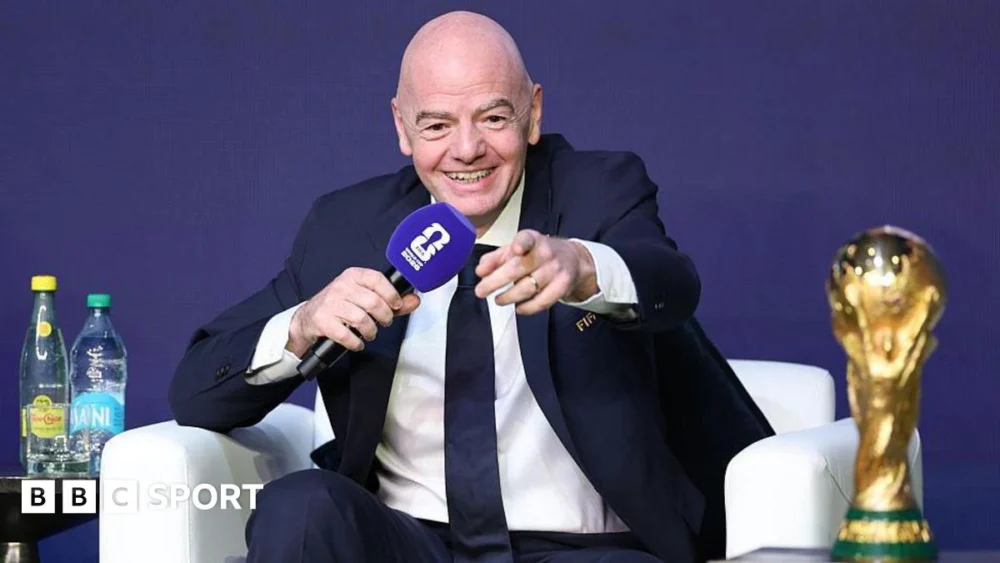
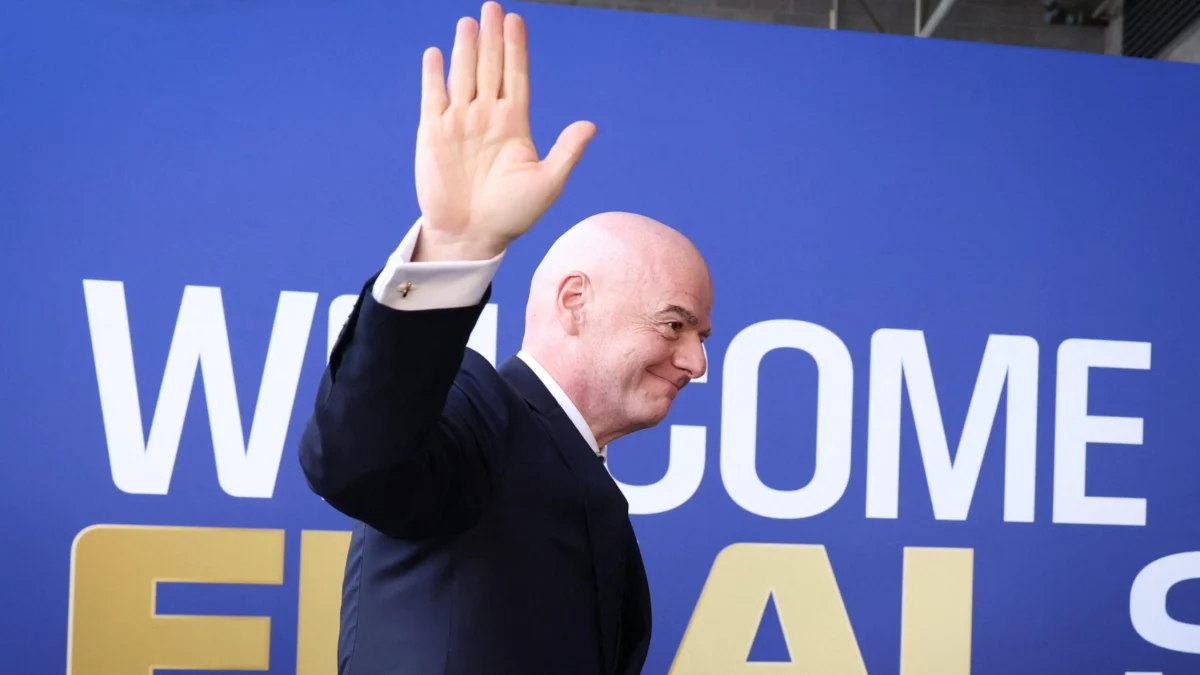
The tenure of Gianni Infantino as president of football’s global governing body, FIFA, has now spanned ten years, a period marked by a dramatic financial resurgence for the organization, alongside a persistent undercurrent of controversy and strategic decisions that have reshaped the international football landscape. Installed at a moment of profound institutional crisis, Infantino inherited a federation reeling from corruption scandals, financial disarray, and a tarnished reputation, tasked with navigating its rehabilitation while simultaneously charting a new course for the sport’s global governance.
From Crisis to Command: The Genesis of a Presidency
Infantino’s ascent to the FIFA presidency in 2016 was not predestined. He emerged as a candidate from the crucible of an unprecedented crisis that had engulfed the organization, leading to widespread arrests by the US Department of Justice and the ignominious downfall of his predecessor, Sepp Blatter. The financial state of FIFA at the time was dire, with reports indicating a significant deficit – approximately $550 million – as major sponsors withdrew their support, signaling a profound lack of confidence in the institution’s integrity. The widespread perception was that FIFA desperately required a leader capable of restoring trust and fiscal stability.
Initially, the consensus candidate to succeed Blatter was Michel Platini, then president of UEFA. However, Platini’s own involvement in the unfolding scandal, from which he and Blatter were later fully exonerated, effectively derailed his presidential aspirations. This void created an opportunity for Infantino, who had served as UEFA’s general secretary and Platini’s chief aide for seven years. Despite his integral role within European football’s administration, Infantino remained a largely unknown figure to the average football enthusiast, primarily recognized for his ceremonial role in Champions League draws. His unexpected candidacy positioned him as an unlikely, yet ultimately successful, figure for FIFA’s redemption.
His campaign centered on a pledge to fundamentally reform FIFA, encapsulated in his promise to "bring football back to FIFA, and FIFA back to football." Key proposals included a significant increase in development funding for member associations – aiming to more than double the existing allocations – intended for infrastructure projects, new competitions, and travel subsidies for smaller national teams. Another cornerstone of his platform was the expansion of the FIFA World Cup, initially proposed for 40 teams, which would subsequently be formalized as a 48-team tournament within a year of his election. The election itself was closely contested, with Infantino securing victory in the second round of voting, overcoming Sheikh Salman bin Ebrahim al-Khalifa of the Asian confederation. His triumph was widely hailed as a "new day" for FIFA, with initial hopes that he would embody a non-political, ego-free leadership.
The Architect of Financial Recovery
Upon assuming office, Infantino was resolute in his commitment to revitalize FIFA’s finances, asserting that the organization’s funds belonged to its members for the development of football. This commitment has demonstrably yielded results. Ten years later, FIFA’s financial health is robust, with the organization projecting record revenues of $13 billion for the current three-year cycle ending this year. This remarkable turnaround is attributable to a blend of strategic commercialization, expanded tournaments, and aggressive pursuit of new revenue streams.
The expanded FIFA World Cup, with its increased number of matches and participant nations, has naturally led to higher broadcasting rights, sponsorship deals, and ticket revenues. Similarly, the controversial new format of the Club World Cup, expanded to include a greater number of teams and hosted in lucrative markets, has become a significant financial engine. Infantino’s vision for these mega-events is clear: they are not merely sporting spectacles but critical vehicles for generating the capital necessary to fund his global development initiatives.
The FIFA Forward program stands as a tangible manifestation of this financial strategy. Launched under Infantino, it represents a substantial increase in direct financial support to member associations and confederations. The initial phase guaranteed an additional $5 million for every national association over four years, with a further $40 million allocated to each confederation. By the end of the second cycle in 2022, over $2.8 billion had been disbursed across the 211 member associations, supporting more than 1,600 projects ranging from pitch construction to administrative capacity building. The latest iteration, FIFA Forward 3.0 (2023-2026), has further amplified this commitment, increasing funding by 30%, providing an additional $5 million per member association and $60 million to each confederation. This strategic distribution of wealth has been instrumental in cultivating a loyal support base, particularly among the smaller and less affluent footballing nations across Africa and Asia.
Navigating the Waters of Controversy and Criticism
Despite the undeniable financial successes and development initiatives, Infantino’s presidency has been frequently punctuated by significant controversy, eliciting criticism from various quarters, most notably European football bodies and players’ unions. A recurring theme has been the perceived lack of consultation and unilateral decision-making regarding major calendar changes.
The expanded Club World Cup, a long-held ambition of Infantino’s, faced strong opposition from players’ unions like FIFPro and the World Leagues’ Association, who argued that its scheduling in a summer typically reserved for player recuperation threatened athlete welfare. Claims of insufficient consultation were vehemently rejected by FIFA, yet the tension highlighted a growing chasm between FIFA’s global ambitions and the concerns of established football powers and player representatives. The unveiling of the tournament’s new trophy, notably engraved with a personal tribute stating "Inspired by the Fifa president Gianni Infantino," further fueled perceptions of an increasing personalization of the organization.
The allocation of future World Cup finals has also generated considerable debate. The decision to stage the 2030 World Cup across three continents – Africa, Europe, and South America – effectively constrained the 2034 bidding process to Asia or Oceania. This strategic maneuver led to Saudi Arabia emerging as the sole realistic contender, sparking concerns about human rights records and governance issues in the host nation. The close relationship between FIFA under Infantino and Saudi Arabia has been a point of scrutiny, with the Norwegian football federation notably abstaining from the voting process, citing concerns about undermining "Fifa’s reforms for good governance" and challenging "trust in Fifa."
Infantino’s interactions with global political figures, particularly his public alignment with former US President Donald Trump, also drew ire. A notable incident in May 2025 saw UEFA officials stage a walk-out from a FIFA Congress after Infantino, having been on a diplomatic tour with Trump in the Middle East, arrived significantly late. UEFA accused him of prioritizing "private political interests" over the collective interests of the football community, highlighting a growing tension between FIFA’s global reach and European football’s traditional influence.
Further controversies have included the 2025 Club World Cup, which despite Infantino’s declaration of it being "already the most successful club competition in the world," was characterized by sparsely filled stadiums. The elaborate and unconventional draw for the upcoming World Cup, which included the awarding of a controversial FIFA Peace Prize to Donald Trump, also raised eyebrows regarding FIFA’s evolving public image and priorities. The subsequent announcement of significantly increased ticket prices for the World Cup finals, with the cheapest final ticket exceeding £3,000, sparked widespread criticism, though Infantino defended the prices by citing "absolutely crazy" public demand and reiterating that all revenues would be reinvested into the sport globally. Even a minor climbdown on pricing did little to quell the narrative of a commercialized focus. More recently, Infantino faced criticism and issued an apology for remarks suggesting that the absence of arrests of British nationals during the 2022 World Cup was "really special," underscoring his occasional communication missteps.
An Unassailable Position and Future Trajectory
Despite the persistent criticisms and controversies, Gianni Infantino’s position at the helm of FIFA remains remarkably secure. He was re-elected unopposed in both 2019 and 2023, signaling a lack of meaningful opposition within the organization’s electoral college. His strength derives primarily from the profound financial impact his policies have had on a significant portion of FIFA’s 211 member associations. For many of the world’s smaller and financially constrained footballing nations, the substantial increases in development funding under the FIFA Forward program represent an unprecedented level of support, directly contributing to the growth and sustainability of football within their territories.
This strategic distribution of resources has cultivated a powerful electoral bloc. Almost half of the total votes in FIFA elections are held by federations in Asia and Africa, two regions that have been major beneficiaries of the enhanced financial provisions. This financial dependency ensures a robust base of support for Infantino, making any challenge to his leadership in upcoming elections exceedingly difficult.
Looking ahead to the 2027 election, Infantino is poised to stand for re-election again. A crucial ruling by FIFA’s governance, audit and compliance committee in 2022 determined that his initial three-year term (following his election in 2016 to complete Blatter’s term) does not count towards the statutory three-term limit for the FIFA presidency. This interpretation effectively grants him eligibility for a further full term beyond what might have been initially understood, solidifying his long-term prospects.
Infantino’s legacy is therefore complex and multifaceted. He has undeniably overseen a remarkable financial resuscitation of FIFA, transforming it from a scandal-plagued entity on the brink of insolvency into a highly profitable global enterprise. He has also championed a vision of global football development, channeling unprecedented financial resources to member associations worldwide, thereby fulfilling his promise to spread football’s wealth. However, this progress has been achieved through aggressive commercialization, expanded tournament formats, and strategic alliances that have frequently alienated traditional European football powers, raised concerns about player welfare, and drawn criticism regarding human rights considerations in host nations. His critics view him as a figure who has centralized power and prioritized commercial growth over ethical considerations, while his supporters laud him as the architect of a more equitable and financially stable global football ecosystem. As he approaches his second decade in power, Infantino remains a formidable and deeply influential figure, his policies shaping the future trajectory of the world’s most popular sport.


 Aura Kasih
 Safa Marwah
 Ayu Aulia