Lisa Mariana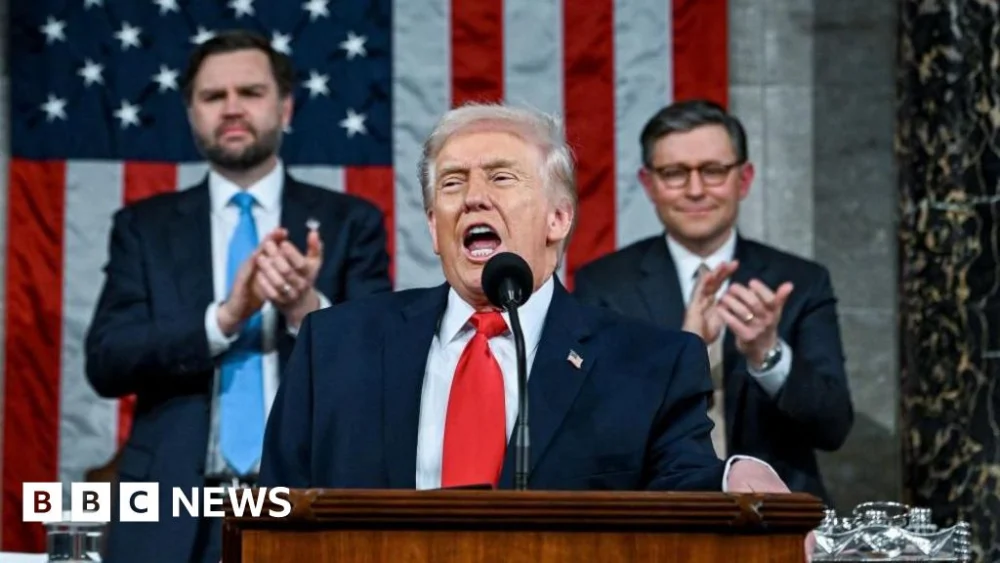
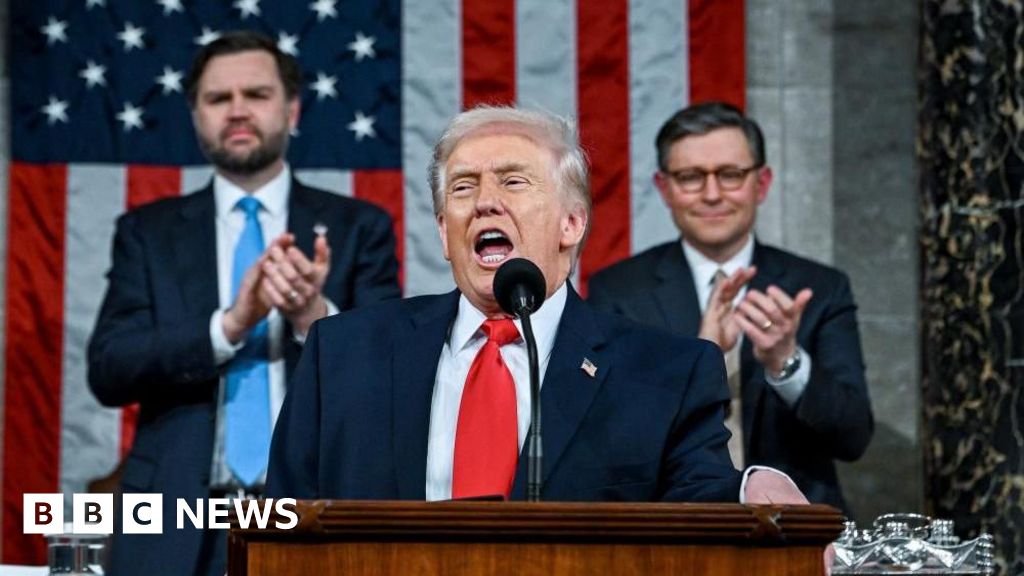
President Donald Trump recently delivered a resolute State of the Union address, asserting a profound national resurgence even as his administration confronts significant political headwinds. The lengthy exposition served as a potent strategic communication, designed not merely to inform but to galvanize his core supporters and project an image of unwavering leadership in the run-up to critical midterm elections. Far from signaling a recalibration of approach, the address underscored a determination to press forward with established policies and rhetoric, betting on a shift in public sentiment to align with his narrative of American triumph.
The State of the Union address, a constitutional obligation, has long evolved into a pivotal platform for presidents to articulate their vision, report on the nation’s condition, and outline legislative priorities. For an administration grappling with persistently low approval ratings—hovering around 40 percent—and a populace expressing widespread dissatisfaction with the country’s direction, this particular address carried amplified significance. It was less a traditional policy outline and more a carefully orchestrated performance, leveraging the grand stage of the House chamber to reinforce a specific ideological framework and electoral strategy.
Observers noted the inherently theatrical nature of the presentation, a characteristic hallmark of President Trump’s public appearances. These deliberate "made-for-the-cameras" moments, reminiscent of his television persona, punctuated the discourse, serving to quicken the pace and inject emotional resonance. Early in the evening, the presence of the U.S. Olympic men’s hockey team in the gallery, proudly displaying their gold medals, elicited bipartisan applause and chants of "USA!" from the Republican benches. Later, the President spotlighted figures embodying national heroism: a centenarian World War II veteran and a Coast Guard swimmer who had executed 165 rescues during last year’s Texas floods, bestowing upon them a Legion of Merit and a Congressional Medal of Honor, respectively. Such gestures were integral to the broader thematic architecture of the speech, which consistently invoked American patriotism and celebrated national accomplishment as a counter-narrative to prevailing public anxieties.
The core message, reiterated throughout the nearly two-hour address, revolved around a narrative of unparalleled national restoration. "Our nation is back," the President declared, asserting America’s position as the "hottest" country globally. He posited that the country was "doing really well," even as he attributed an "affordability crisis" to Democratic policies. This overarching declaration of "Our country is winning again" was buttressed by a selective presentation of economic data points. These included claims of rising incomes, a flourishing stock market, diminished petrol prices, a substantial reduction in undocumented migrant crossings along the southern border, and stabilized inflation rates. The administration’s hope was evidently that a larger audience, estimated to be in the tens of millions, would absorb these assertions and perceive a palpable improvement in their economic realities, thereby moving the needle on public opinion more effectively than previous, smaller-scale addresses.
However, the chasm between the administration’s optimistic economic pronouncements and the public’s perception remains a significant challenge. Despite the cited statistical improvements, a substantial segment of the American populace continues to express unease about their financial futures and the overall trajectory of the economy. This disconnect underscores a broader phenomenon in contemporary politics where raw economic indicators do not always translate directly into political capital, particularly for a leader who polarizes public opinion. Factors such as persistent cost-of-living concerns, the erosion of trust in institutions, and the influence of partisan media narratives often mediate how economic realities are perceived and attributed. The administration’s strategy, therefore, appeared to be a high-stakes gamble: that repeated exposure to a positive economic narrative, delivered from the authoritative perch of the State of the Union, would eventually override existing skepticism and consolidate a more favorable public assessment.
Notably, the address offered a comparatively sparse outline of new policy initiatives. The President introduced a handful of novel concepts, such as the establishment of new retirement savings accounts tailored for working-class Americans and a proposed accord with artificial intelligence companies to ensure sufficient electricity supply, thereby mitigating potential consumer price hikes. More predominantly, the speech recycled and re-emphasized several existing policy proposals that have previously encountered legislative or public resistance. These included a healthcare plan advocating for direct payments to citizens to offset insurance premiums, a national mandate requiring all voters to furnish proof of citizenship, and a prohibition on issuing commercial driver’s licenses to undocumented migrants. This reliance on familiar planks suggested either a pragmatic acknowledgment of legislative gridlock or a deliberate strategy to reinforce long-standing campaign promises to his base rather than forge new bipartisan consensus.
One area where policy and political strategy demonstrably clashed was the discussion surrounding tariffs. President Trump reaffirmed his commitment to a broad tariff regime, a stance that directly defied a recent Supreme Court ruling that invalidated many of the duties previously imposed by his administration. The presence of three justices who had sided against the President in the front row, maintaining expressionless visages, underscored the tension. While a brief, unsmiling handshake was exchanged between President Trump and Chief Justice John Roberts, the architect of the Court’s opinion, the political theater in the chamber was palpable. The President’s continued advocacy for tariffs, particularly in the face of the Supreme Court’s decision, elicited audible murmurs from Democratic legislators and noticeable discomfort from Republicans. Many within the President’s own party harbor deep reservations about the economic costs of such duties and the potential electoral repercussions of their unpopularity among various business sectors and consumers. The discussion on tariffs effectively dampened the earlier celebratory atmosphere, highlighting deep ideological divisions even within the governing party regarding economic policy.
The discourse on immigration, however, proved to be the most contentious segment of the evening, igniting fervent reactions across the political spectrum. President Trump’s portrayal of "illegal aliens" as a significant threat, accompanied by detailed accounts of crimes—including murders, accidents, and corruption—allegedly committed by undocumented migrants, elicited thunderous applause from Republicans and visible anger and icy stares from their Democratic counterparts. This strong emphasis on border security and the perceived dangers of uncontrolled immigration represents a long-standing cornerstone of the President’s political platform. The address notably omitted any mention of a recent enforcement surge in Minneapolis, which had resulted in the tragic shooting deaths of two American citizens by federal agents, an incident that had previously prompted the President to suggest a "softer approach" to enforcement. Instead, the speech was a determined effort to reassert control over the immigration narrative, reframing it as a critical national security issue that only his administration and "great Republican patriots in Congress" were prepared to confront effectively. This positioning served as a clear signal of the issue’s centrality to the upcoming midterm elections, explicitly acknowledging that voters would soon determine the legislative balance of power.
Foreign policy, a domain often dominating presidential addresses, occupied a comparatively minor role in this State of the Union. Despite a significant military buildup of American forces near Iran, President Trump offered little detailed justification for sustained U.S. military action to the American public. His statement was concise: "My preference is to solve this problem through diplomacy, but one thing is certain: I will never allow the world’s number one sponsor of terror to have a nuclear weapon." This brief declaration, while firm on the ultimate objective, sidestepped the complexities of regional diplomacy and military escalation, quickly transitioning to domestic issues. This approach aligns with the administration’s broader "America First" doctrine, which typically prioritizes internal affairs and economic nationalism, presenting international engagements through the lens of direct benefit or perceived threat to American interests, rather than elaborate geopolitical strategy.
In summation, the political currents currently appear to be flowing against the President. Yet, the State of the Union address revealed a deep-seated conviction within the administration that the public mood is ripe for a shift. This belief may be predicated on the expectation that the economic benefits touted in the speech will eventually become more widely felt and acknowledged by the populace. Alternatively, it could be a strategic bet on a wave of renewed national patriotism, perhaps amplified by the nation’s upcoming 250th birthday celebrations. The deliberate inclusion of military heroes and celebrated athletes in the address served not merely as feel-good moments but as integral components of this larger political wager—a calculated effort to infuse the national discourse with a sense of collective achievement and pride, hoping this emotional resonance will ultimately translate into increased public approval and electoral success in the challenging months ahead. The address was, therefore, less about immediate legislative victories and more about shaping a long-term narrative designed to redefine public perception and consolidate political support.

 Aura Kasih
 Safa Marwah
 Ayu Aulia