Ridwan Kamil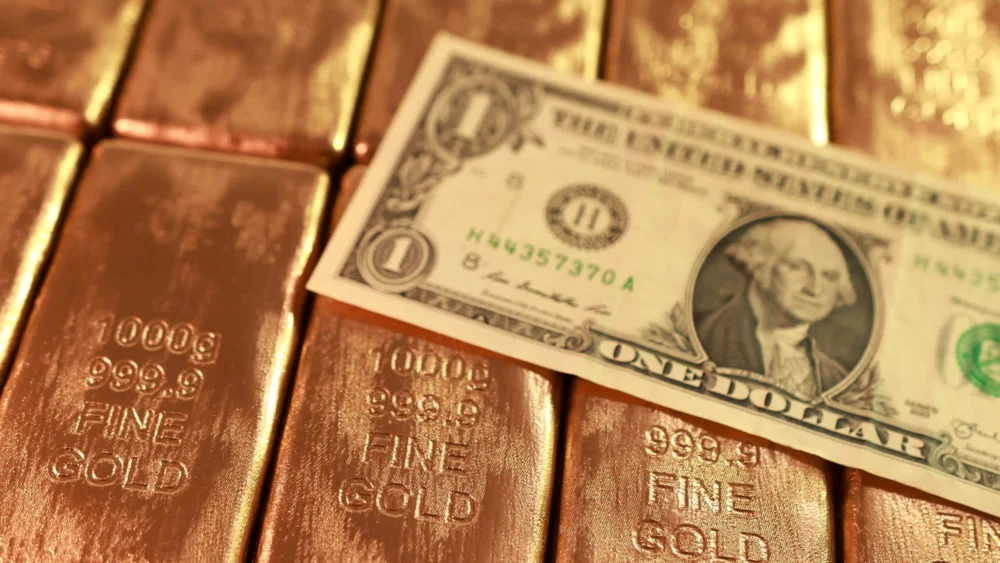
The specter of renewed trade friction, specifically the potential for the United States to implement further tariffs under a Trump presidency, has sent ripples through global financial markets, prompting a noticeable surge in the price of gold and a concurrent decline in the value of the US dollar. This heightened geopolitical risk is signaling a significant shift in investor sentiment, moving capital away from riskier assets and towards traditional safe havens.
The international economic landscape has been irrevocably altered by the ongoing trade disputes that have characterized recent years, and the prospect of a resurgence of these tensions under a potential second Trump administration is now a dominant concern for investors and policymakers worldwide. While the specific targets and scale of any new tariff measures remain speculative, the mere possibility has amplified existing anxieties about global economic growth and stability. This uncertainty is a powerful catalyst for market movements, particularly as it intersects with existing inflationary pressures and the complex geopolitical recalibration currently underway.
Gold’s Resurgence as a Traditional Safe Haven
The precious metal, long revered as a store of value during times of economic and political turmoil, has seen a significant price appreciation in recent trading sessions. This surge is not merely a reaction to immediate news but reflects a deeper, more fundamental shift in investor strategy. As the likelihood of escalating trade disputes increases, the inherent appeal of gold as a hedge against currency devaluation and systemic risk becomes more pronounced.
Historically, gold has performed well during periods of geopolitical instability and economic uncertainty. Its tangible nature and limited supply provide a perceived security that abstract financial instruments often lack. In the current environment, where the potential for unpredictable trade policies could disrupt supply chains, devalue currencies, and dampen global economic activity, investors are increasingly turning to gold as a means of preserving capital. The yellow metal acts as an insurance policy against the downside risks inherent in an increasingly volatile global economic order.
The mechanism behind gold’s price rise in this context is multifaceted. Firstly, increased demand from institutional investors, central banks, and individual traders seeking to diversify their portfolios away from assets perceived as vulnerable to trade wars. Secondly, the devaluation of currencies, particularly the US dollar, makes gold, which is priced in dollars, relatively cheaper for holders of other currencies, thus stimulating demand. The anticipation of further US tariff imposition fuels expectations of currency depreciation, creating a self-reinforcing cycle of demand for gold.
Furthermore, the broader narrative of de-globalization and regionalization, which is being accelerated by trade tensions, also benefits gold. As nations seek to bolster their domestic economies and reduce reliance on international trade, gold’s status as a universally recognized store of value becomes even more critical. It transcends national borders and political affiliations, offering a consistent hedge regardless of the prevailing geopolitical climate.
The US Dollar’s Decline Amidst Tariff Threats
Concurrently with gold’s ascent, the US dollar has experienced a noticeable depreciation. This weakening is intrinsically linked to the renewed threat of US-imposed tariffs and the broader implications for global trade and economic policy. The dollar’s status as the world’s primary reserve currency means that any perceived threat to its stability or the economic policies underpinning it can have far-reaching consequences.
The imposition of tariffs, particularly if they are perceived as protectionist or destabilizing to international trade relationships, can erode confidence in the US economy and, by extension, its currency. Investors may anticipate retaliatory measures from other nations, leading to a slowdown in global trade, reduced demand for US exports, and potentially a less favorable trade balance for the United States. This can lead to capital outflows as investors seek opportunities in economies perceived as more stable or less exposed to trade disputes.
Moreover, a second Trump administration has historically signaled a willingness to intervene in currency markets or engage in policies that could devalue the dollar to gain a competitive trade advantage. While such actions are often controversial and can have unintended consequences, the mere prospect can lead to a sell-off in the dollar as investors preemptively adjust their portfolios. The dollar’s decline also makes US exports cheaper for foreign buyers, which could be a desired outcome for a protectionist administration, but it also increases the cost of imports for US consumers and businesses, contributing to inflationary pressures.
The interconnectedness of global finance means that a weakening dollar has a ripple effect. It can make dollar-denominated debt more expensive for foreign borrowers, potentially leading to financial stress in emerging markets. Conversely, it can make other currencies appear more attractive, leading to increased demand for them. This dynamic further fuels the shift away from the dollar and towards alternative assets like gold.
Geopolitical Context and Economic Implications
The current market reaction is deeply rooted in the historical precedent set during the previous Trump administration, which saw a significant escalation of trade disputes, particularly with China. The imposition of tariffs on billions of dollars worth of goods led to retaliatory measures, disrupted global supply chains, and created widespread economic uncertainty. The prospect of a repeat of this scenario, or even an intensification, is a significant driver of current market sentiment.
The implications of renewed trade protectionism are far-reaching. Economically, it can lead to:
- Reduced Global Trade Volume: Tariffs act as barriers to trade, increasing the cost of goods and discouraging cross-border commerce. This can lead to a contraction in global trade, impacting economies that are heavily reliant on exports.
- Disrupted Supply Chains: Businesses have invested heavily in optimizing global supply chains for efficiency and cost-effectiveness. New tariffs can necessitate costly restructuring, leading to production delays, increased costs, and potential shortages.
- Lowered Economic Growth: The combination of reduced trade, supply chain disruptions, and increased uncertainty can dampen business investment and consumer spending, ultimately leading to slower global economic growth.
- Increased Inflationary Pressures: Tariffs directly increase the cost of imported goods. If these costs are passed on to consumers, it can contribute to higher inflation. Furthermore, supply chain disruptions can lead to shortages, which also drive up prices.
- Currency Volatility: As seen with the dollar’s slide, trade tensions can lead to significant fluctuations in currency values, creating challenges for international businesses and investors.
- Geopolitical Realignment: Trade disputes often spill over into broader geopolitical tensions, potentially reshaping international alliances and economic blocs.
From an investor’s perspective, the current environment demands a cautious and strategic approach. The traditional playbook of seeking growth in equities and other riskier assets may need to be re-evaluated in light of heightened geopolitical risks. Diversification across asset classes, with a particular emphasis on safe havens, becomes paramount.
Expert Analysis and Future Outlook
Analysts suggest that the current market reaction is a prudent hedging strategy against a range of potential outcomes. The uncertainty surrounding future trade policy under a potential Trump presidency creates a "wait and see" attitude, but one that is heavily weighted towards downside protection.
"The market is pricing in a significant probability of renewed trade protectionism," commented [Hypothetical Analyst Name], Chief Global Strategist at [Hypothetical Financial Institution]. "This isn’t just about the US; it’s about the potential for a domino effect where other nations respond with their own protective measures, leading to a more fragmented and less efficient global economy. Gold offers a tangible hedge against this systemic risk."
The outlook for gold remains robust as long as trade tensions persist and inflation remains a concern. Central banks, which have been significant buyers of gold in recent years, are likely to continue their accumulation strategies, further supporting the metal’s price.
The US dollar’s trajectory will be closely watched. Any concrete policy announcements regarding tariffs or trade negotiations could lead to significant shifts in its value. However, the underlying trend of diversification away from dollar-centric assets, driven by geopolitical concerns and the search for higher yields in other markets, may continue to exert downward pressure.
Looking ahead, the global economic landscape is likely to remain characterized by elevated volatility. The interplay between inflationary pressures, geopolitical risks, and evolving trade policies will continue to shape market sentiment. Investors will need to remain agile, adapting their strategies to navigate an environment where traditional assumptions about economic stability and growth may be challenged. The current market movements serve as a stark reminder that in an increasingly interconnected world, trade policy remains a potent lever for influencing global financial markets and economic outcomes. The decisions made in the coming months regarding international trade will have a profound and lasting impact on investment portfolios and the broader economic trajectory.


 Lisa Mariana
 Aura Kasih
 Safa Marwah
 Ayu Aulia