Ridwan Kamil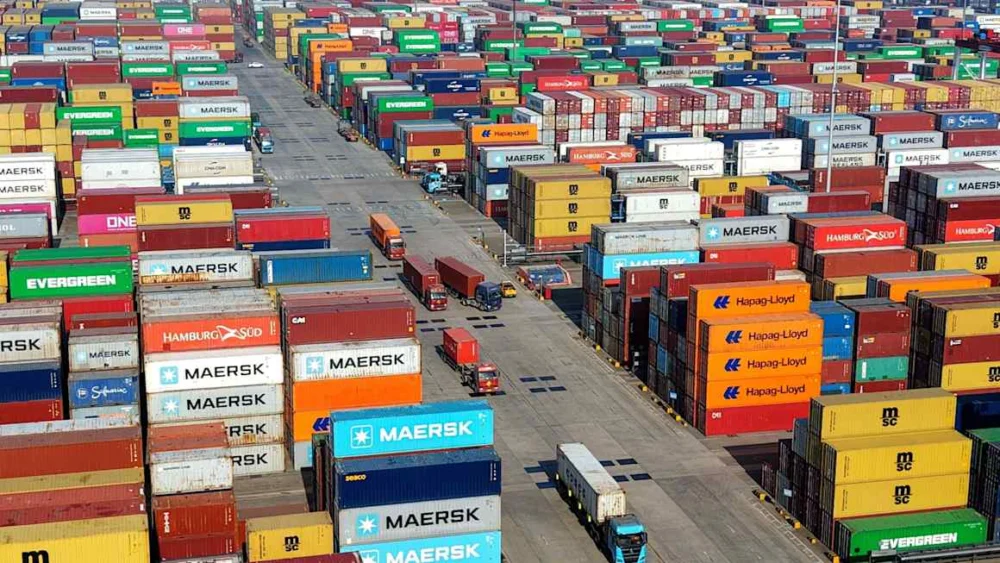
A significant shift in international trade policy may be on the horizon, with a proposed universal flat-rate tariff under consideration, potentially reshaping global economic landscapes and offering a discernible advantage to key exporting nations like China and Brazil.
The proposed policy, which contemplates a uniform tariff rate applied across a broad spectrum of imported goods, represents a departure from the more intricate and often differentiated tariff structures that have characterized global commerce for decades. While proponents argue for its potential to simplify trade agreements and create a more level playing field, the immediate implications suggest a significant benefit for countries with substantial manufacturing or resource-based export sectors, particularly China and Brazil. Their established export capabilities and competitive pricing could be further amplified under such a universal system, potentially leading to increased market share and economic gains. Conversely, nations heavily reliant on specialized or high-value manufactured goods, or those with less competitive domestic industries, may face considerable challenges in adapting to this new tariff regime.
Background and Rationale for a Flat-Rate Tariff
The concept of a flat-rate tariff, while seemingly straightforward, carries with it a complex set of economic and geopolitical underpinnings. Historically, tariffs have been employed by nations for a variety of reasons, including revenue generation, protection of nascent domestic industries, and as a tool for negotiating trade advantages. However, the evolution of global trade has seen the proliferation of intricate tariff schedules, often with specific rates for thousands of product categories. This complexity can lead to administrative burdens, opportunities for trade diversion, and can be manipulated to favor certain trading partners over others.
A universal flat-rate tariff proposes to cut through this complexity by applying a single, predetermined percentage to all imported goods, irrespective of their origin or category. The stated rationale behind such a policy often centers on principles of economic efficiency and fairness. By removing the nuances of differentiated tariffs, it is argued that the policy could:
- Simplify Trade Negotiations: Complex tariff schedules can be a significant hurdle in trade agreement discussions. A single rate could streamline these processes, potentially leading to faster and more comprehensive agreements.
- Reduce Administrative Costs: For both governments and businesses, managing and complying with a multitude of tariff rates is a costly endeavor. A uniform rate would significantly reduce these overheads.
- Enhance Predictability: A predictable tariff environment can foster greater business confidence and investment, as companies can more accurately forecast the cost of imported components and finished goods.
- Level the Playing Field (in theory): Proponents often suggest that a flat rate would eliminate perceived advantages gained through strategically low tariffs on certain goods or protectionist measures on others.
However, the application of a flat rate is not without its inherent challenges and potential unintended consequences. The optimal tariff rate itself becomes a critical point of contention, and a rate that is too high could stifle trade and increase consumer prices, while a rate that is too low might offer insufficient protection for domestic industries.
The Strategic Advantage for China and Brazil
The immediate beneficiaries of a universal flat-rate tariff are likely to be countries with robust, cost-competitive export sectors. China, as the world’s manufacturing powerhouse, possesses an unparalleled capacity to produce a vast array of goods at competitive prices. A uniform tariff, particularly if set at a moderate level, would mean that its exports, from electronics and textiles to machinery and consumer goods, would face a consistent cost addition in foreign markets. This predictability, combined with its existing cost advantages, could solidify and expand China’s dominance in global supply chains.
Similarly, Brazil, a major global supplier of agricultural commodities and raw materials, stands to benefit significantly. The demand for its exports, such as soybeans, iron ore, and beef, is often driven by price. A flat-rate tariff would apply uniformly to these bulk commodities, and given Brazil’s scale of production and established export infrastructure, it is well-positioned to absorb and pass on such a cost, maintaining its competitive edge. For both nations, this policy could translate into increased export volumes, improved trade balances, and a further strengthening of their economic influence on the global stage.
The advantage for these countries can be further elaborated:
- Economies of Scale: China’s vast manufacturing base allows it to benefit immensely from economies of scale. A flat tariff doesn’t disrupt this, but rather standardizes the cost barrier for its competitively priced goods.
- Dominance in Specific Sectors: China’s near-monopoly in certain manufacturing sectors, coupled with its logistical efficiency, means that any new tariff structure would likely see its goods remain the most attractive option for many importers.
- Commodity Price Sensitivity: Brazil’s primary exports are often subject to global price fluctuations. A predictable tariff structure removes one layer of uncertainty and allows for more straightforward pricing strategies.
- Resource Endowment: Brazil’s rich natural resources provide a foundational competitive advantage that a flat tariff would not diminish, but rather standardize the cost of accessing international markets.
Implications for Other Nations and Global Trade Dynamics
The ramifications of such a policy would extend far beyond China and Brazil, creating a complex web of winners and losers. Nations that heavily rely on importing finished goods or components from these powerhouse economies might experience increased costs for consumers and businesses. For example, developed economies with significant domestic manufacturing sectors that struggle to compete with Chinese production costs could face further pressure, potentially leading to calls for protectionist measures or adjustments in industrial policy.
Countries with highly specialized or niche manufacturing sectors, often characterized by higher unit costs but superior quality or innovation, might find their products less competitive against the backdrop of a uniform tariff. The rationale for paying a premium for these specialized goods could be eroded if a broad, flat tariff significantly increases their landed cost.
Furthermore, the impact on global supply chains, already undergoing significant restructuring, could be profound. Businesses might re-evaluate sourcing strategies, potentially leading to reshoring efforts or a diversification away from countries perceived to be gaining an undue advantage. The intricate interdependence of global manufacturing would be tested, forcing companies to adapt to a new cost landscape.
The potential for increased protectionism from other nations seeking to counterbalance the advantages gained by China and Brazil is also a significant concern. A domino effect of retaliatory tariffs or trade barriers could emerge, leading to a more fragmented and less open global trading system.
Expert Analysis and Future Outlook
Economists and trade policy analysts are actively dissecting the potential consequences of such a universal flat-rate tariff. The key variables influencing the outcome include:
- The Specific Tariff Rate: The percentage chosen for the flat rate would be the most critical determinant of its impact. A rate that is too high could significantly disrupt global trade flows and lead to inflationary pressures. A rate that is too low might fail to achieve its intended objectives, whatever they may be.
- The Scope of Application: Whether the tariff applies to all goods, or if certain categories are exempted, will also shape its impact. Exemptions could be sought by various industries to mitigate negative consequences.
- The Response of Trading Partners: The reaction of other nations, particularly major trading blocs like the European Union and North America, will be crucial. Their responses could range from accepting the new paradigm to implementing counter-measures.
- Domestic Industrial Policy: Countries may need to recalibrate their domestic industrial policies to enhance competitiveness, invest in innovation, or support strategic sectors in response to the new tariff environment.
The future outlook suggests a period of significant recalibration in global trade. If implemented, a universal flat-rate tariff would represent a paradigm shift, moving away from a system characterized by nuanced and often negotiated tariff structures towards a more standardized approach. This could usher in an era of increased predictability in some respects, but also heightened competition and potential trade friction.
The ability of nations to adapt to these changes will be paramount. Those with flexible economies, strong domestic industries, and the capacity for innovation will likely fare better. Conversely, economies that are heavily reliant on protectionist measures or that possess less competitive export sectors may face considerable headwinds. The long-term success of such a policy will ultimately depend on its ability to foster sustainable global economic growth without triggering widespread trade disputes or significantly hindering consumer welfare. The move towards a flat-rate tariff, while seemingly simple in concept, carries the potential to fundamentally alter the fabric of international commerce.


 Aura Kasih
 Safa Marwah
 Ayu Aulia