Lisa Mariana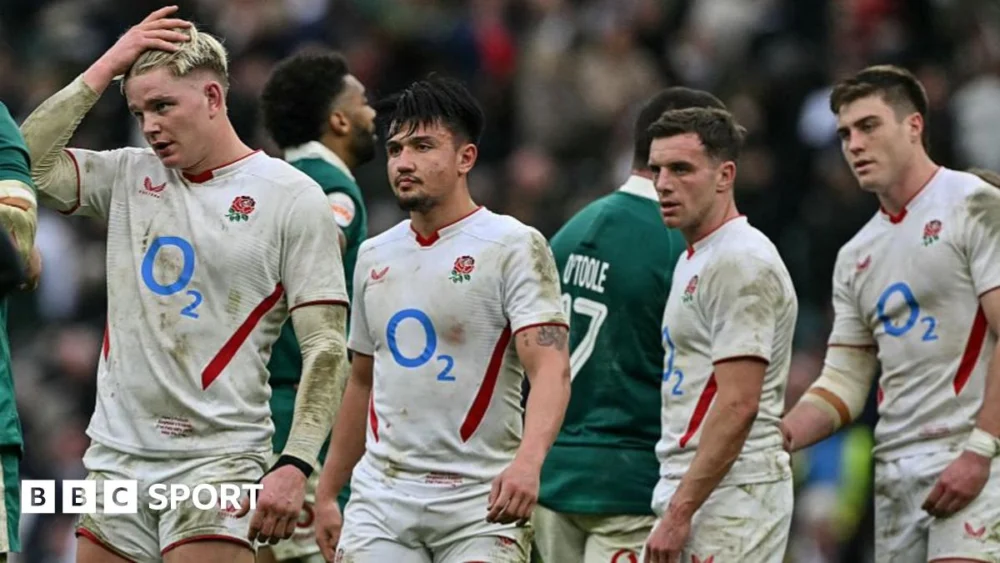
England’s aspirations for a 2026 Six Nations title have been decisively extinguished, following a comprehensive and disconcerting defeat by Ireland that exposed significant vulnerabilities across their game. This analysis delves into the multifaceted issues plaguing the squad, from strategic execution and defensive integrity to psychological resilience and the broader implications for head coach Steve Borthwick’s tenure and the trajectory of English rugby.
A Swift Deceleration from Momentum
Just a fortnight prior, a hard-fought victory over Wales had been lauded as a potential springboard, hinting at a revitalized England capable of contending for Championship honours. Head coach Steve Borthwick himself had projected the final-day clash against France as a potential Grand Slam decider, envisioning a tide of English supporters descending upon Paris. However, this optimistic outlook has been brutally curtailed by consecutive, heavy defeats: a 31-20 loss to Scotland at Murrayfield, which snapped a 12-game winning streak, followed by a resounding 42-21 home defeat to Ireland, ending a nine-match unbeaten run at Allianz Stadium. These results have not only shattered title ambitions, relegating England to fourth place, but have also ignited intense scrutiny regarding the team’s tactical framework, its on-field leadership, and the fundamental mentality of the squad. The abruptness of this downturn, from perceived world-beaters to a side grappling with fundamental deficiencies, demands a thorough examination of the underlying causes.
The Peril of the Opening Quarter: A Recurring Systemic Flaw
A particularly alarming pattern emerging from England’s recent performances is their propensity for disastrous starts. Against Ireland, the team conceded 22 points within the opening 30 minutes, marking one of the highest first-half tallies ever given up by England on home soil. This followed a similarly debilitating 17-0 deficit established by Scotland within the first 15 minutes a week earlier. This consistent inability to initiate matches with intensity and tactical precision is a profound concern. Former England scrum-half Matt Dawson articulated this perfectly on BBC Rugby Union Weekly, asserting that "fast starts are not about being physical and smashing them, that is a given, you are running out for your country. It’s the tactics. It’s about how you are going to play, where you will play and how they will play." This highlights a critical disconnect: a lack of pre-game tactical clarity or an inability to execute those plans under pressure. The psychological impact of such early setbacks is immense, forcing the team into a reactive, uphill battle rather than allowing them to dictate terms. The absence of a "methodology or a way out of it" when momentum shifts negatively suggests a deeper systemic issue in the team’s preparation and in-game adaptability.
Defensive Structure: A Foundation Undermined
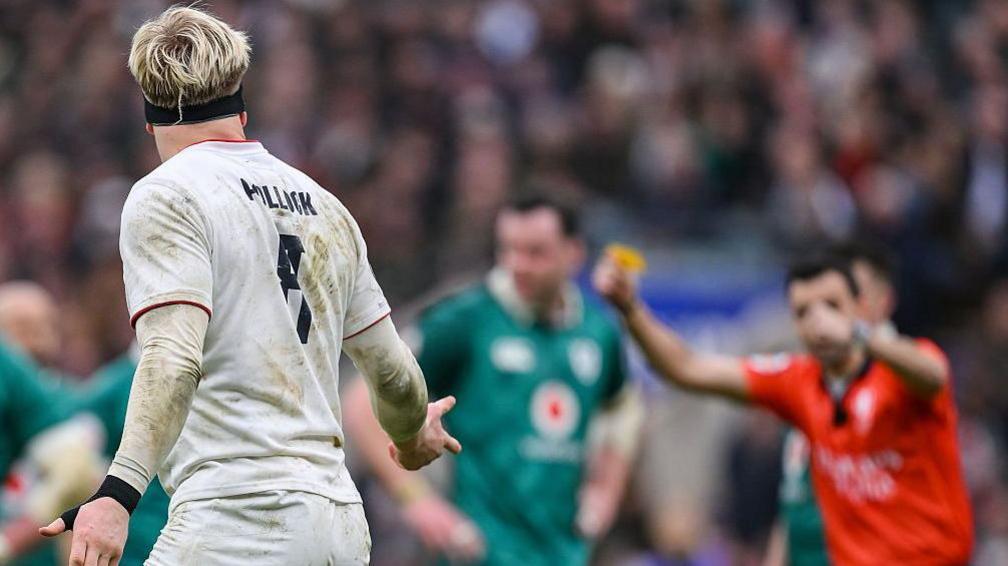
The defensive display against Ireland was, by many accounts, alarmingly porous. Ireland exploited England’s poor one-on-one tackling with alarming regularity, orchestrating 12 line breaks throughout the match. Specific instances underscore these vulnerabilities: Stuart McCloskey’s clean break for Ireland’s second try arose from a misread by replacement Jack van Poortvliet and a fend-off on Ollie Lawrence. Fraser Dingwall was notably beaten on the outside by Robert Baloucoune, who then evaded Tommy Freeman and Lawrence for the third score. Even more concerning was Ireland captain Caelan Doris’s ability to burst through Ellis Genge, initiating the move that led to Dan Sheehan’s bonus-point try early in the second half. Paul Grayson’s stark assessment that "England were utterly dreadful in defence" is difficult to refute. The lack of robust contact in collisions, coupled with organizational lapses, allowed Ireland to consistently gain significant yardage through the middle of the field. Furthermore, the defensive scrambling that led to yellow cards for Freddie Steward and Henry Pollock not only reduced England to 14 men at crucial junctures but also compounded their structural problems, enabling Ireland to further extend their advantage. Elite international rugby demands an unyielding defensive line, and England’s current vulnerabilities in this area represent a fundamental flaw that must be addressed with urgency.
Offensive Anemicness: Clinical Edge Absent
While defensive frailties were glaring, England’s attacking game was equally hampered by a lack of precision and clinical execution. Despite venturing deep into Ireland’s 22 on numerous occasions, the team struggled to convert pressure into points, tallying 14 handling errors over the course of the match. Such inaccuracies are anathema to any potent attacking strategy, disrupting flow and squandering valuable possession. Compounding these issues was a notable lack of composure in critical moments, exemplified by George Ford’s missed touch with a penalty that could have provided a crucial attacking platform. Maro Itoje, a senior player, acknowledged this deficiency, stating, "It was just our inaccuracy. We turned the ball over too much, and when we did get into positions to hurt Ireland we were not accurate and then gave ourselves a mountain to climb." The inability to consistently penetrate and finish against a top-tier defense suggests that England’s attacking playbook may lack the variety, deception, or sheer power required at this level, or that the players are simply not executing it effectively under duress.
The Aerial Contest: A Former Strength Turned Weakness
England’s kick-heavy tactical approach had been a hallmark of their earlier 12-game winning streak, relying heavily on dominance in the aerial battle to gain territory and pressure opponents. However, this once-formidable weapon has become blunted. The Scotland game saw England struggle in this department, and against Ireland, despite Tommy Freeman’s repositioning from outside centre to right wing with the aim of bolstering aerial performance, the results were mixed. While Freeman competed, Ireland consistently outmanoeuvred England in the air. The strategic oversight of not more aggressively targeting O’Brien, a relatively untested winger following James Lowe’s early injury, was particularly evident when O’Brien regathered a kick that ultimately led to Baloucoune’s try. Ireland expertly leveraged height discrepancies, notably between the 6ft 4in Baloucoune and the 6ft Henry Arundell, to secure possession. Arundell himself, selected despite a red card against Scotland, failed to assert himself effectively. The championship-ending injury to Immanuel Feyi-Waboso has further exacerbated this issue, depriving England of a dynamic aerial threat and further highlighting a critical area that has transitioned from a key strength to a significant vulnerability.
Borthwick’s Leadership Under the Microscope: A Journey of Development or a Stalled Progression?
The immediate aftermath of such a comprehensive defeat invariably places the head coach squarely in the spotlight. Steve Borthwick’s post-match comments, "Two weeks ago after 12 wins on the bounce people were saying we were the best team in the world, and now we are all sorts of things. Neither of these are true. We are on a journey of development that has a lot of growth in it," reflect a defiant stance against overreaction, but they also underscore the fluctuating perceptions of his project. While "development" is a legitimate aspect of any coaching tenure, the manner of these defeats—particularly the recurrent early capitulations and systemic defensive failures—raises pointed questions about the pace and direction of this development. Critics will inevitably draw parallels with the 2023 campaign, where England suffered a 53-point thrashing at home to France before miraculously reaching the World Cup semi-finals. This historical context offers Borthwick some defence, demonstrating his capacity to rally a squad. However, the current challenges appear more deeply rooted in tactical implementation and player buy-in, rather than simply a one-off poor performance. The frustration articulated by former England fly-half Paul Grayson regarding the lack of "accuracy, energy and emotion" suggests a deeper malaise than mere technical errors. The "emotional" criticism from Matt Dawson further points to a psychological fragility within the squad, a factor that falls under the purview of the coaching staff to address.
Player Accountability and the Weight of Expectations
The sentiments expressed by senior players like Ellis Genge and Maro Itoje reveal a degree of introspection and self-awareness within the squad. Genge’s candid admission, "Everyone has to take a look at themselves. No-one knows what the answer is right now or we would have sorted it out," underscores the collective struggle to diagnose and rectify the immediate problems. His observation, "It opened up scar tissue from last week – we have to be better at managing that period and stop turning the ball over," speaks to a psychological vulnerability, where past failures compound present difficulties. The notion that the team "probably believed the hype from the first week too much" is a powerful indictment of the squad’s mental fortitude and ability to manage external pressures. Itoje’s focus on "inaccuracy" and "turning the ball over too much" points to fundamental execution issues. While these statements indicate a willingness to take responsibility, the challenge lies in translating this acknowledgement into tangible improvements on the field. The leadership group’s capacity to drive this transformation will be pivotal in the coming weeks.
A Chastening Campaign and the Road Ahead
BBC rugby union correspondent Chris Jones accurately characterized the current situation as "another chastening Six Nations campaign," noting that England has not been in title contention for six Championships. This broader historical context amplifies the disappointment of the current downturn. The vociferous and "angry" reaction from England’s supporters at Allianz Stadium signals a growing disillusionment that the Rugby Football Union (RFU) cannot ignore.
Looking ahead, England faces two formidable challenges: an away fixture against Italy, a team that has shown significant improvement and cannot be underestimated, and the ultimate test against France on the final day, a match that was once envisioned as a title decider but now represents a desperate bid for pride and a mid-table finish. These matches are no longer about championship glory but about demonstrating resilience, tactical evolution, and a clearer vision for the future.
The ramifications of these recent defeats extend beyond the immediate tournament. They invite critical reflection on the long-term strategic direction of English rugby, player development pathways, and the efficacy of Borthwick’s project. Is this a temporary blip in a longer, positive trajectory, or does it signal deeper, more systemic issues that require a fundamental re-evaluation? Rectifying the current deficiencies—particularly the recurring slow starts, defensive lapses, and attacking imprecision—is not merely a short-term fix but a strategic imperative if England is to re-establish itself as a consistent force on the international stage. The coming weeks will be a significant test of character, not just for the players, but for the entire coaching and management team to "rectify things" and provide a clearer, more convincing answer to what went wrong.



 Aura Kasih
 Safa Marwah
 Ayu Aulia