
 Ridwan Kamil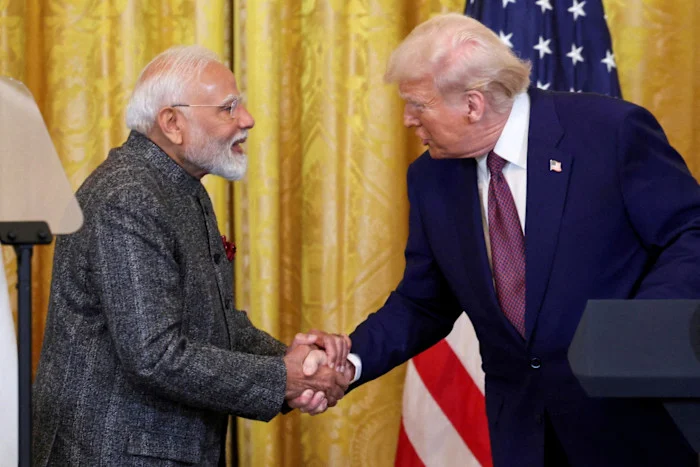
The recent pronouncements from former President Donald Trump regarding potential new tariffs have cast a long shadow over existing trade pacts, prompting global governments and industry leaders to reassess the stability and enforceability of agreements forged under his previous administration. Despite a landmark Supreme Court decision that deemed many of his earlier tariff impositions unlawful, the international community appears hesitant to dismantle these pacts, primarily due to the lingering threat of retaliatory measures and the significant leverage the United States wields in other strategic domains.
The Supreme Court’s ruling, which invalidated tariffs enacted under the International Emergency Economic Powers Act (IEEPA), has undoubtedly introduced a significant degree of legal uncertainty. However, it is crucial to note that tariffs imposed on key sectors such as automobiles and steel, which were based on different legislative foundations, remain largely unaffected. This distinction is pivotal, as it leaves intact significant avenues for the U.S. to exert economic pressure. Experts suggest that this continued ability to impose tariffs, even if through different legal mechanisms, acts as a potent deterrent against any immediate attempts by partner nations to unilaterally abrogate their commitments. The specter of swift and potentially disproportionate retaliation from a White House known for its unpredictable trade posture is a formidable disincentive.
Andrew Wilson, deputy secretary-general of the International Chamber of Commerce, articulated this sentiment, emphasizing that while the judicial verdict raises profound questions about the long-term viability of Trump-era trade deals, an immediate unraveling is not anticipated. His organization’s recent consultations with various governments indicate a prevailing cautiousness, with no immediate indications of countries seeking to withdraw from recently concluded agreements. This stance underscores a strategic calculus: the potential disruption and economic fallout from challenging established trade relationships, even those perceived as disadvantageous, often outweigh the immediate benefits of reneging on agreements, especially when faced with the prospect of escalating trade disputes.
Since his return to the White House, Trump has been instrumental in establishing a series of "reciprocal tariff" agreements. These arrangements typically involve the imposition of blanket levies, often ranging from 15% to 20%, on nations that export a greater volume of goods to the U.S. than they import. This approach, characterized by its direct and often aggressive nature, has become a hallmark of his trade policy. The recent Supreme Court decision, while striking down IEEPA-based tariffs, has not fundamentally altered the administration’s capacity to pursue its trade agenda.
In a swift response to the Supreme Court’s ruling, Trump leveraged Section 122 of the Trade Act of 1974, a different legislative provision, to implement a broad 10% tariff. While this measure is temporary, valid for 150 days without congressional approval, Trump has since indicated an intention to raise this rate to 15%. This demonstrates a persistent commitment to utilizing tariffs as a primary tool of trade policy, even in the face of legal challenges. The immediate imposition of new tariffs, albeit under a different legal framework, signals a strategic adaptation rather than a retreat from his core trade objectives.
Despite the evolving legal landscape and the potential for some countries to benefit from a reduction in tariffs, analysts largely agree that the existing trade pacts are unlikely to collapse. However, the pace of finalizing some agreements may be subject to delays as nations navigate the newly established legal parameters. Simon Evenett, a professor of geopolitics and strategy at IMD Business School, posits that the Supreme Court ruling has not diminished the U.S. administration’s leverage. Instead, it has merely shifted the nature of the threats, replacing one set of instruments with another.
For countries currently engaged in trade negotiations with the United States or operating under interim agreements, the prospect of higher tariffs after the initial 150-day period continues to exert significant pressure to make concessions. Evenett’s analysis suggests that this dynamic is likely to maintain, and perhaps even intensify, the demand for concessions, leading to little overall change in the negotiating posture of the U.S. The inherent unpredictability of Trump’s "napkin deals"—agreements that are often conceived and agreed upon in principle with details to be fleshed out later—further contributes to this climate of uncertainty.
The recent U.S.-India trade agreement, announced earlier this month, serves as a pertinent example. In this deal, tariffs on Indian goods were reportedly reduced from 50% to 18%. However, the legal ambiguities surrounding the U.S. tariff regime could lead to a slower pace in the formalization of such agreements. Governments may seek to capitalize on the current legal complexities to press for more favorable terms or to delay commitments until the trade policy landscape stabilizes.

India’s Ministry of Trade issued a measured response, stating that it was "studying all these developments." President Trump, when questioned about the India deal following the Supreme Court ruling, offered a terse "Nothing changes," underscoring his administration’s intent to maintain the agreed-upon terms. Pratik Dattani, founder of the Bridge India think-tank, suggests that this ruling could provide India with an opportunity to moderate its approach to ongoing talks. This might involve waiting for potential legal challenges to the new tariffs or anticipating a shift in the U.S. political balance following the upcoming midterm elections.
Dattani’s assessment highlights the potential for trade partners to leverage the U.S. administration’s perceived vulnerabilities. The narrative of Trump "chickening out" or being susceptible to external pressures could embolden trade partners to adopt a more assertive negotiating stance. This strategic maneuvering is not confined to India; similar considerations are likely influencing other nations involved in trade discussions.
During a recent visit to New Delhi, Brazilian President Luiz Inácio Lula da Silva expressed relief at having not "rushed into doing things hastily" regarding a trade deal with the U.S. He indicated a desire for direct dialogue with President Trump, suggesting that the latest tariff pronouncements have provided a degree of respite for countries previously subjected to significantly higher duties. Lula noted that what were once 50% or 40% tariffs would now be reduced to 15%, a substantial alleviation that could ease diplomatic tensions. Brazil had previously faced a 40% tariff on its exports to the U.S., a measure that, combined with a reciprocal tariff, brought the effective rate to 50%. This had precipitated a severe diplomatic crisis between the two largest economies in the Americas.
The prevailing sentiment among analysts is that the fear of retaliatory action will continue to constrain significant repercussions for concluded deals, particularly those with established economic partners such as the European Union, Japan, and South Korea. These nations are acutely aware of the potential for further tariffs on key export sectors, such as automobiles and semiconductors, which were imposed under legislative instruments like Sections 232 and 301 of U.S. trade law. These provisions remain available to the administration and can be deployed to penalize countries that attempt to backtrack on their commitments.
The European Parliament is scheduled to convene to discuss the potential postponement of the ratification of the so-called Turnberry agreement, a trade pact between Brussels and Washington that established a 15% tariff on most European goods entering the U.S. Despite internal opposition to the deal, Nicolas Kœhler-Suzuki, an advisor for trade and economic security at the Jacques Delors Institute, anticipates that the EU-U.S. agreement will likely endure. He attributes this resilience to the concept of "substitute deterrence," wherein the threat of alternative statutory sanctions, specifically automotive tariffs, serves as a powerful disincentive against outright challenges. The economic ramifications of reinstating automotive tariffs are significant enough to neutralize any incentive for a direct confrontation, even with the emboldening effect of the Supreme Court ruling.
Furthermore, the broader geopolitical context, including the U.S. role in mediating the conflict between Russia and Ukraine, adds another layer of complexity. Europe’s decision to proceed with the Turnberry deal, despite domestic political opposition, was partly influenced by the potential risk of President Trump withdrawing security support for Ukraine. This strategic consideration remains a significant factor in Brussels’ calculus.
Across Asia, the muted reactions from countries like South Korea and Japan reflect similar realities. Their automotive sectors, which are deeply integrated into global supply chains and heavily reliant on access to the U.S. market, are particularly vulnerable to retaliatory tariffs. The U.S. administration’s continued ability to impose tariffs on these critical sectors provides a strong incentive for these nations to maintain the status quo.
Allie Renison, a former UK trade department official now with the consultancy SEC Newgate, cautions that while the U.S. retains considerable leverage in ongoing trade negotiations, its approach will need to be more nuanced. The White House may hope that President Trump’s characteristic unpredictability in foreign relations will deter renegotiation attempts. However, Renison suggests that the success of this strategy will also hinge on Washington’s ability to revitalize its diplomatic engagement and foster a more predictable and trust-based environment for international trade discussions. The delicate balance between leveraging economic power and maintaining stable diplomatic relations will be crucial in shaping the future of global trade agreements under the current U.S. administration.

 Aura Kasih
 Safa Marwah
 Lisa Mariana


 Ayu Aulia