Ridwan Kamil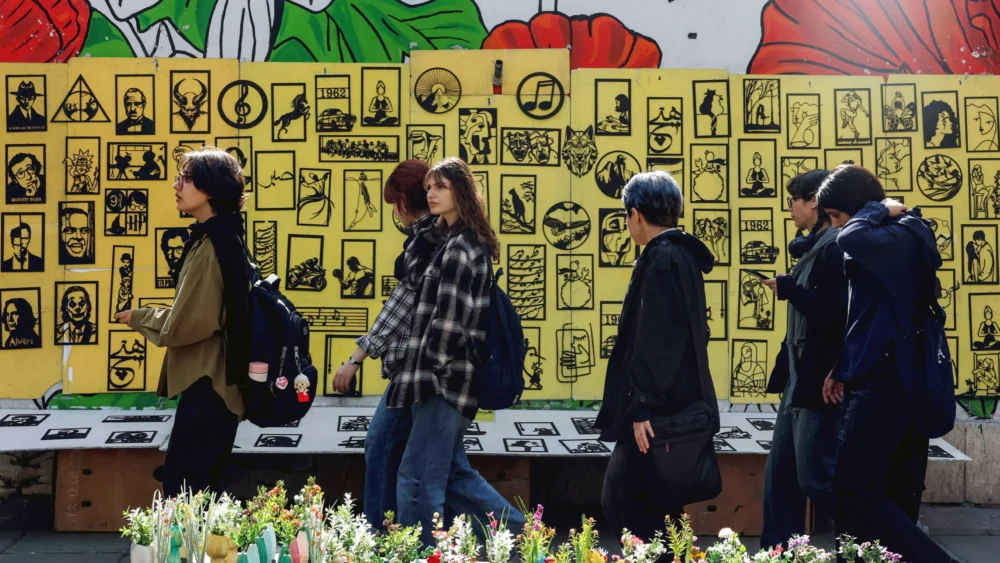
Across Iran’s academic institutions, a powerful undercurrent of defiance has intensified, with students mounting sustained anti-regime demonstrations that signal a deepening societal rift and a growing challenge to the established order.
The unfolding student-led protests across Iran represent a significant and escalating wave of dissent, demonstrating a persistent and widespread rejection of the current governance by a segment of the nation’s youth, particularly within its educational institutions. These demonstrations, which have seen a notable surge in frequency and intensity, are not isolated incidents but rather indicative of a broader societal discontent that is increasingly finding voice on university campuses. The resilience and continued mobilization of students, despite considerable risks, underscore a deep-seated frustration with the socio-political and economic conditions prevalent in the country. This phenomenon demands careful analysis, moving beyond mere reporting of events to an examination of the underlying drivers, potential implications, and the evolving landscape of public opposition within Iran.
The Genesis and Evolution of Student Activism
The current wave of student protests in Iran is not an unprecedented phenomenon; it builds upon a historical legacy of student activism that has frequently served as a barometer of societal unease. From the early days of the Islamic Republic, universities have often been focal points for dissent, characterized by intellectual ferment and a propensity for challenging authority. However, the recent surge distinguishes itself in its scale, persistence, and the explicit nature of its demands.
The immediate catalyst for the current round of protests can be traced back to the death of Mahsa Amini in September 2022, a young woman who died in the custody of the morality police. Her death ignited widespread outrage, not just over the specific circumstances of her demise but as a symbol of the broader oppressive social and religious policies enforced by the state. This event served as a potent accelerant, galvanizing a diverse array of societal grievances that had been simmering for years.
Student groups, traditionally a vocal segment of Iranian society, quickly became a central force in the ensuing demonstrations. Their actions have often been characterized by a direct repudiation of theocratic rule and a fervent call for fundamental political and social reforms. The slogans and symbols employed by these students reflect a clear rejection of the existing political framework, demanding greater personal freedoms, an end to enforced hijab, and accountability for state repression.
The nature of these protests has evolved from initial spontaneous gatherings to more organized and sustained movements. Universities, with their inherent concentration of young, educated, and often ideologically engaged individuals, have provided fertile ground for the dissemination of protest messages and the coordination of actions. The response from the authorities, typically characterized by a heavy-handed security presence, has often served to further inflame tensions, creating a cyclical dynamic of protest and repression.
Underlying Grievances and Motivations
While the death of Mahsa Amini served as a critical trigger, the motivations behind the student protests are multifaceted and deeply rooted in a complex interplay of socio-economic and political factors. Understanding these underlying grievances is crucial to comprehending the tenacity and breadth of the current dissent.
Economically, Iran has faced significant challenges, exacerbated by international sanctions and internal mismanagement. High inflation, widespread unemployment, and a perceived lack of economic opportunity have created a climate of frustration, particularly among the youth who face uncertain futures. The economic hardship disproportionately affects students and recent graduates, who often struggle to find meaningful employment commensurate with their educational qualifications. This economic precarity fuels a sense of disillusionment with the ruling establishment, which is seen by many as failing to address the basic needs of its citizens.
Socially, the protests are a powerful indictment of the restrictive social policies imposed by the Islamic Republic. The mandatory hijab, the strict enforcement of social codes, and the limitations on personal freedoms have long been sources of contention. The student movement, in particular, has been at the forefront of challenging these restrictions, demanding greater autonomy and the right to self-determination in personal and social matters. The cry for "Woman, Life, Freedom" (Zan, Zendegi, Azadi) has become a unifying slogan, encapsulating a broader aspiration for a more just and equitable society where individual liberties are respected.
Politically, the protests represent a profound questioning of the legitimacy and efficacy of the current governance system. Decades of authoritarian rule, coupled with allegations of corruption and a lack of political pluralism, have eroded public trust in the state. The student population, being more exposed to global trends and ideas through digital channels, is often more acutely aware of the disparities between their own reality and the freedoms enjoyed in other parts of the world. This awareness fuels a desire for political reform and a more democratic system that is responsive to the needs and aspirations of the populace.
Furthermore, the protests are also fueled by a growing sense of generational disconnect. The younger generation, who have grown up in a post-revolutionary Iran, often harbors different values and expectations than the older generation that shaped the current political order. This generational divide is palpable within universities, where students are increasingly vocal in their rejection of the ideological underpinnings of the current regime.
Methods of Protest and State Response
The student protests have manifested through a variety of tactics, showcasing both creativity and resilience in the face of a determined state apparatus. Campus demonstrations, sit-ins, and organized marches have been common. Students have utilized social media platforms to disseminate information, mobilize support, and document instances of state repression, effectively circumventing traditional media censorship. The use of symbolic acts, such as burning effigies of political leaders or removing mandatory headscarves, has also been a significant feature of the protests, serving as potent visual statements of defiance.
The state’s response has been characterized by a multi-pronged strategy involving both repression and attempts at co-option. Security forces, including the Basij paramilitary, have been deployed to campuses to quell demonstrations, often resulting in arrests, injuries, and, in some tragic instances, fatalities. Universities have experienced temporary closures, academic disruptions, and the expulsion of protesting students. Reports of surveillance, intimidation, and the use of excessive force have been widely documented.
Beyond direct suppression, the authorities have also engaged in efforts to control the narrative and undermine the legitimacy of the protests. State-controlled media has often portrayed the demonstrators as foreign-influenced elements or misguided individuals. There have also been instances of attempts to divide the student body or to offer concessions that fall short of addressing the core demands of the protesters.
Implications and Broader Societal Impact
The sustained student protests carry significant implications for Iran’s internal dynamics and its standing on the international stage. Internally, these demonstrations have exposed the depth of societal discontent and the erosion of the regime’s legitimacy, particularly among the youth. The protests have created a more visible and vocal opposition, challenging the state’s narrative of national unity and stability.
The bravery and persistence of the student movement have also inspired broader societal engagement. While the initial spark was ignited in universities, the spirit of protest has permeated other segments of society, contributing to a climate of unrest that extends beyond academic institutions. This broader societal mobilization, even if fragmented, presents a formidable challenge to the established order.
On the international front, the protests have drawn global attention and condemnation of the state’s human rights record. Many governments and international organizations have expressed solidarity with the protesters and called for restraint from the Iranian authorities. This international scrutiny can exert pressure on the regime, influencing its decision-making and potentially impacting its diplomatic relations.
However, the long-term implications remain uncertain. The resilience of the Iranian state apparatus, its capacity for repression, and the complex geopolitical landscape all play a crucial role in shaping the trajectory of these events. The potential for further escalation, a protracted period of instability, or a gradual process of reform remains open.
Future Outlook and Potential Trajectories
The future of the anti-regime protests in Iran is subject to a multitude of factors, and predicting a definitive outcome is inherently challenging. Several potential trajectories can be considered, each with its own set of complexities and probabilities.
One possibility is a continuation of the current dynamic: a cycle of protest and repression, with the state maintaining control through force, but with persistent underlying dissent. In this scenario, the protests might become more localized or sporadic, but the underlying grievances would remain unaddressed, creating a simmering instability that could erupt again in the future.
Another trajectory involves a gradual, albeit contested, process of reform. External pressures, coupled with sustained internal dissent, could compel the regime to implement significant policy changes, particularly concerning social freedoms and political participation. However, the deeply entrenched nature of the current power structure suggests that any such reforms would likely be incremental and met with resistance from hardline elements within the establishment.
A more dramatic shift, such as a fundamental change in the political system, remains a less probable but not entirely inconceivable outcome, particularly if the current wave of protests were to coalesce with broader societal movements and gain sustained momentum over an extended period. However, the state’s formidable security apparatus and the historical absence of a unified and broadly supported opposition movement make such a rapid transformation unlikely in the immediate term.
The role of external actors, including international sanctions and geopolitical alignments, will also continue to influence the situation. The interplay between domestic pressures and international dynamics will be a critical determinant of the unfolding events.
Ultimately, the enduring spirit of defiance witnessed among Iranian students, and the broader societal discontent it reflects, suggests that the current challenges to the regime are unlikely to dissipate quickly. The persistent demand for fundamental change, fueled by economic hardship, social restrictions, and a yearning for political freedom, indicates that the landscape of Iranian society is undergoing a profound and potentially transformative period. The ability of the state to adapt, or its continued reliance on repression, will be central to shaping the nation’s future.

 Aura Kasih
 Safa Marwah
 Ayu Aulia