Aura Kasih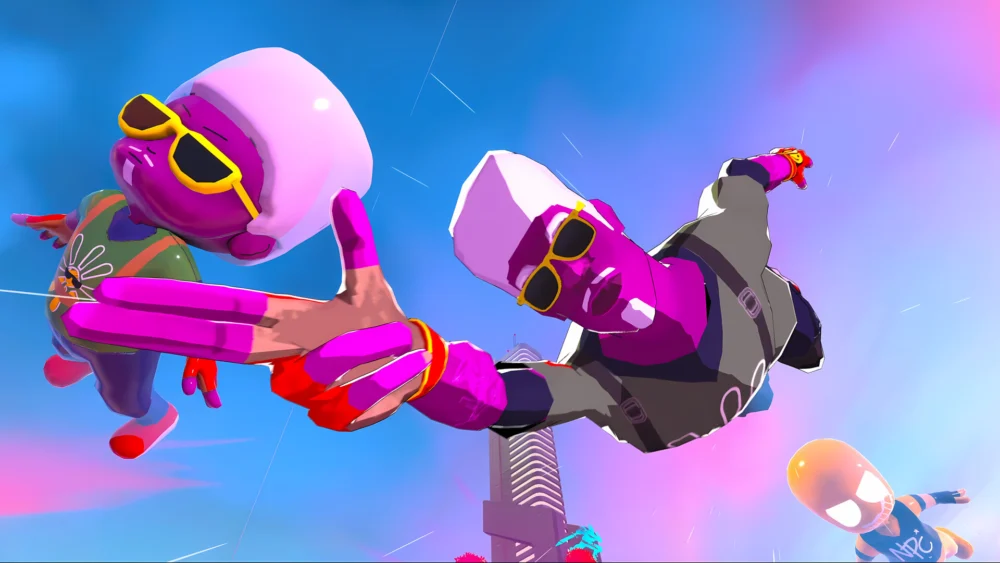
Indie developer Aerial_Knight has delivered a groundbreaking experience with DropShot, a first-person action title that masterfully blends the adrenaline rush of skydiving with exhilarating, stylish combat, offering players a uniquely captivating virtual descent that transcends the ordinary.
Aerial_Knight’s DropShot is not merely a game; it is a meticulously crafted digital experience that taps into the primal human fascination with falling, reimagining it as a canvas for high-octane action and visual flair. The game plunges players into the exhilarating, and often terrifying, sensation of freefall, but imbues this descent with a unique purpose: combat. This innovative fusion transforms what could be a passive observation into an active, engaging, and undeniably stylish challenge, setting a new benchmark for how virtual experiences can evoke extreme sensations.
The core premise of DropShot revolves around the player assuming the role of Smoke Wallace, a character whose extraordinary abilities are rooted in a fantastical origin. Following an encounter with a dragon, Wallace is bestowed with a unique appendage: a finger that can project bullets. This fantastical element serves as the primary offensive tool, allowing players to engage airborne adversaries while plummeting towards the earth. The first-person perspective is crucial to the game’s immersive quality, creating a visceral sense of speed and disorientation that authentically simulates the skydiving experience. This perspective choice is a deliberate design decision that amplifies the feeling of vulnerability and heightened awareness, crucial elements in any high-stakes engagement.

The gameplay loop is deceptively simple yet profoundly engaging. Players are tasked with navigating through a series of progressively challenging levels, each representing a segment of a freefall. The objective is twofold: survive the descent by avoiding enemy fire, environmental hazards such as laser grids, and the perils of colliding with obstacles, while simultaneously dispatching as many enemies as possible. Wallace’s offensive capabilities extend beyond his finger guns, incorporating close-quarters melee attacks, adding a layer of tactical depth to the combat encounters. Ammunition management is a key mechanic, forcing players to make strategic decisions about engagement and resource acquisition. Bullets can be replenished by successfully eliminating enemies or by flying through specially designated balloons scattered throughout the environment. This mechanic introduces an element of risk-reward, as players must decide whether to prioritize direct engagement or a brief detour to secure vital ammunition.
Each level in DropShot is designed to be a concise, impactful experience, typically lasting between 45 seconds and a minute and a half. This brevity is not a limitation but a deliberate design choice that emphasizes replayability and mastery. Upon completion, players are awarded a letter grade, ranging from a respectable C to the coveted S+++, contingent on their performance in terms of enemy elimination and efficiency. This scoring system transforms each level into a self-contained puzzle, encouraging players to experiment with different routes, combat strategies, and timing to achieve optimal scores. The procedural generation of terrain, obstacles, and enemy placements within fixed parameters ensures that while each playthrough offers a fresh challenge, the underlying structure remains consistent, allowing for the development of refined, high-scoring strategies. This blend of emergent gameplay and predictable elements fosters a unique form of strategic thinking, where precision and planning are paramount.
The aesthetic and stylistic elements of DropShot are as significant as its gameplay mechanics. The game eschews conventional character designs for a bold and vibrant visual language. Smoke Wallace’s distinctive purple skin, a consequence of his dragon bite, immediately sets him apart, signifying his extraordinary nature. His attire, particularly his sunglasses, is not merely cosmetic; these accessories offer tangible gameplay benefits, providing power-ups such as the ability to fire multiple shots simultaneously when collecting specific in-game items. The visual feedback for successful combat is equally striking, with the game momentarily entering a stylized slow-motion sequence upon each enemy defeat, emphasizing the player’s prowess and the impactful nature of their actions. The boss encounters are particularly noteworthy, pitting players against formidable adversaries like colossal dragons and heavily armed flying tanks, pushing the limits of the game’s mechanics and visual spectacle. Complementing this visual dynamism is an electrifying heavy metal soundtrack that injects an additional layer of intensity and adrenaline into every freefall. This carefully curated audio-visual package creates a cohesive and compelling experience that is both exhilarating and memorable.
The overall length of DropShot is approximately two and a half hours for a standard playthrough, a duration that has been strategically chosen to avoid player fatigue. While the game offers ample opportunity for players to further hone their skills and achieve perfect scores, its finite length ensures that its core mechanics are explored with depth and intensity rather than being diluted across an unnecessarily extended experience. This focused approach allows DropShot to deliver a consistently engaging and satisfying gameplay loop from beginning to end. Even as players approach the conclusion, the inherent excitement of soaring through the sky and engaging in combat remains undiminished, a testament to the game’s enduring appeal and well-executed design.

The implications of DropShot‘s success extend beyond its immediate player base. The game’s innovative approach to genre fusion, particularly its successful integration of extreme sports sensations with action-RPG elements, could pave the way for new avenues of game design. By demonstrating that the visceral thrill of activities like skydiving can be effectively translated into engaging gameplay mechanics, DropShot opens up possibilities for developers to explore other extreme activities and physical sensations. The emphasis on stylish presentation, rewarding player skill, and accessible yet deep gameplay mechanics also serves as a model for other independent studios aiming to make a significant impact in a competitive market. The game’s reception suggests a strong player appetite for experiences that are not only fun but also visually distinctive and thematically cohesive.
Looking ahead, the potential for DropShot is considerable. The existing framework could easily accommodate expansions introducing new environments, enemy types, power-ups, and even different aerial traversal mechanics. The rich lore hinted at through Smoke Wallace’s origin story and the fantastical boss encounters provides fertile ground for narrative expansion. Furthermore, the game’s strong emphasis on replayability and high-score chasing makes it an ideal candidate for competitive online leaderboards and community-driven challenges. The prospect of players pushing the boundaries of what is possible within the game’s mechanics, striving for ever-higher scores and more efficient runs, is a testament to its enduring appeal. Aerial_Knight has crafted not just a game, but a platform for exhilarating, stylish aerial combat that leaves players eager for what comes next. The fusion of a thrilling human experience with imaginative gameplay has resulted in a title that is both innovative and profoundly enjoyable, solidifying its place as a significant entry in the indie gaming landscape.




 Safa Marwah
 Lisa Mariana