Ridwan Kamil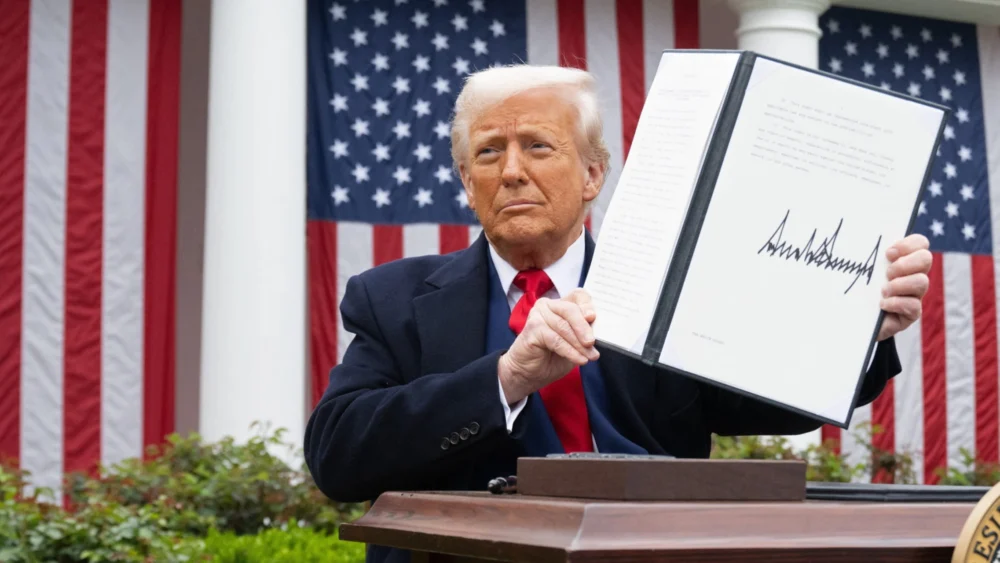
In a pivotal legal development, the United States Supreme Court has issued a ruling that substantially curtails the executive authority to impose broad tariffs, delivering a significant blow to policies championed during the Trump administration. This decision, stemming from a case that challenged the legality of certain trade duties, is poised to reshape the landscape of international trade policy and recalibrate the balance of power between the executive and legislative branches in matters of commerce.
The genesis of this landmark legal challenge can be traced to a series of tariff impositions made under the auspices of national security concerns, a justification frequently invoked by the Trump administration to circumvent traditional congressional oversight in trade matters. These tariffs, levied on a range of imported goods, were met with fierce opposition from various sectors of the economy, including manufacturers, importers, and even agricultural producers who faced retaliatory measures from affected trading partners. Critics argued that the broad application of these tariffs, often without clear and demonstrable threats to national security, constituted an overreach of executive power and inflicted undue economic hardship.
The legal battle that culminated in the Supreme Court’s decision centered on the interpretation of Section 232 of the Trade Expansion Act of 1962. This statute grants the President broad authority to adjust imports, including the imposition of tariffs, when deemed necessary for national security. However, the plaintiffs in the case contended that the administration had stretched the definition of national security beyond its intended scope, using it as a pretext to pursue protectionist trade agendas. They argued that the lack of specific congressional authorization for each instance of tariff imposition, particularly when the national security justification was tenuous, violated the separation of powers doctrine.
The Supreme Court’s majority opinion, meticulously reasoned and broadly accessible, underscored the principle that broad delegations of authority to the executive branch must be accompanied by clear statutory limitations and congressional intent. The justices highlighted the potential for unchecked executive power to disrupt established trade relationships, destabilize markets, and undermine the deliberative process that is fundamental to a functioning democracy. By emphasizing the need for congressional authorization or at least a more narrowly defined and demonstrably substantiated national security threat, the ruling effectively places greater constraints on the President’s ability to unilaterally implement sweeping trade sanctions.
This decision has far-reaching implications for future trade policy. For the Biden administration, which has largely maintained some of the tariffs imposed by its predecessor while simultaneously seeking to rebuild alliances, the ruling presents an opportunity to reassess and potentially recalibrate its approach to trade enforcement. It may necessitate a more collaborative approach with Congress, seeking legislative backing for any significant new trade measures or tariff adjustments. This could lead to more transparent and predictable trade policies, fostering greater certainty for businesses and investors.
Conversely, for those who advocate for more protectionist trade policies, particularly those who believe that the executive branch should have greater latitude to act decisively in the face of perceived unfair trade practices or national security risks, the ruling represents a significant setback. They may argue that the Court has inadvertently hampered the nation’s ability to respond effectively to foreign economic aggression and protect domestic industries. This perspective often emphasizes the need for swift action in a rapidly evolving global economic landscape, where protracted legislative processes could be detrimental.
The economic consequences of this ruling are likely to be multifaceted. Businesses that have been negatively impacted by retaliatory tariffs imposed by other nations may see some relief as the possibility of further broad-based tariffs diminishes. However, industries that benefited from the protection afforded by the previous tariffs, or those that relied on them as a bargaining chip in trade negotiations, may face increased competition. The ruling could also lead to a period of adjustment as companies re-evaluate their supply chains and trade strategies in light of a potentially altered trade policy environment.
Furthermore, the decision has implications for the broader geopolitical landscape. The United States’ ability to use tariffs as a tool in its foreign policy arsenal has been significantly constrained. This could affect its leverage in ongoing trade disputes and negotiations with countries like China, where tariffs have been a central element of the strategic competition. It may compel a greater reliance on diplomatic channels, multilateral agreements, and other forms of economic statecraft to achieve foreign policy objectives.
Legal scholars are analyzing the ruling for its potential impact on the broader understanding of executive power in areas beyond trade. The emphasis on clear statutory authorization and the separation of powers could set precedents for future challenges to executive actions in other domains, such as immigration, environmental regulation, and national security. The precise scope and long-term implications of these broader effects will likely be the subject of much legal debate and future litigation.
The dissenting opinions, while outnumbered, offered a counterpoint that warrants consideration. They often argued that the statute in question provided sufficient implicit authorization for the President to act in matters of national security, and that the Court’s decision intruded upon the executive’s constitutional role in foreign affairs. This perspective highlights the ongoing tension between the need for a decisive executive in national security matters and the fundamental principle of legislative oversight in matters of taxation and commerce.
The reverberations of this Supreme Court decision will undoubtedly be felt for years to come. It marks a critical juncture in the ongoing debate about the appropriate balance of power between the branches of government in shaping America’s economic destiny. As the nation navigates an increasingly complex and competitive global economy, the clarity provided by this ruling on the limits of executive tariff authority will likely influence the direction of trade policy, the strategies of businesses, and the nation’s engagement with the international community. The future of trade policy will now likely involve a more robust interplay between executive initiative and legislative deliberation, a dynamic that could foster greater stability and accountability in the long run. The challenges of implementing this new framework will be significant, requiring careful consideration of economic impacts, national security imperatives, and international relations.

 Aura Kasih
 Safa Marwah
 Ayu Aulia