Lisa Mariana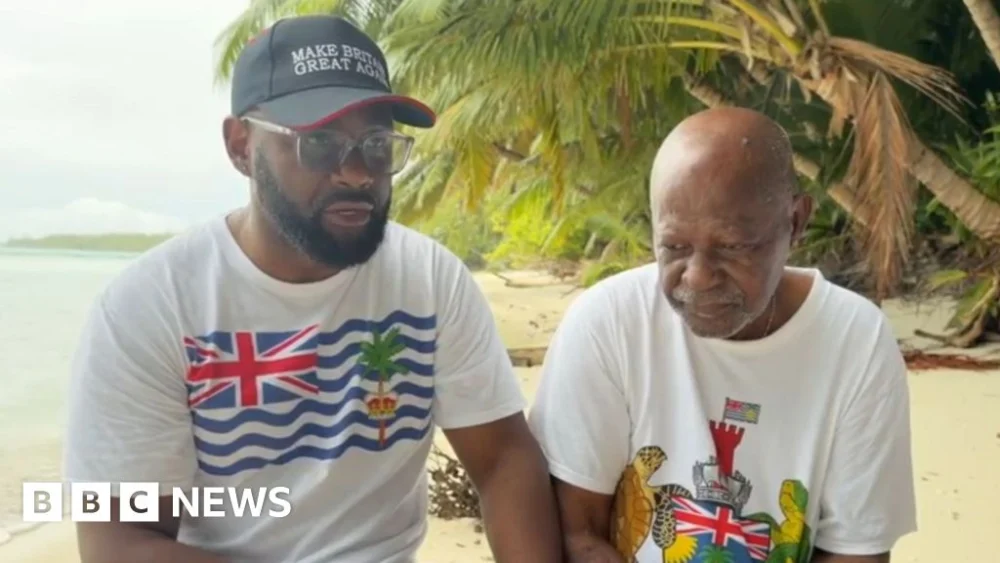
A recent judicial intervention has temporarily suspended the British government’s attempts to deport four Chagossian individuals who journeyed to the remote Chagos Archipelago, a move that significantly complicates the ongoing diplomatic efforts to cede the territory to Mauritius. The injunction, issued by the Chief Justice of the British Indian Ocean Territory (BIOT), marks a pivotal moment in the protracted struggle for the rights of the indigenous inhabitants, casting further uncertainty over the proposed sovereignty agreement and reigniting debates surrounding colonial legacies and self-determination.
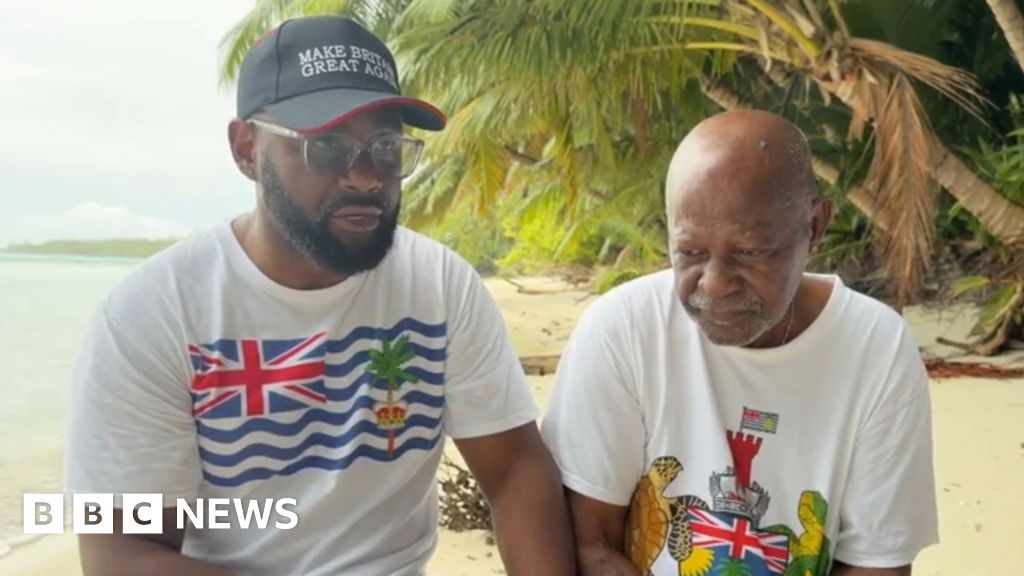
The four British-Chagossians arrived in a secluded area of the archipelago earlier this week, having embarked on a voyage from Sri Lanka with the explicit intention of establishing a permanent presence on their ancestral lands. Their defiant return was orchestrated as a direct protest against the United Kingdom’s recent agreement to transfer administrative control of the islands to Mauritius, a deal that has provoked profound discontent among many within the exiled Chagossian community. Upon their arrival, British authorities promptly served the men with eviction notices, carrying explicit warnings of potential fines or imprisonment should they fail to comply with the directive to depart the territory.
However, legal representatives acting on behalf of the four individuals swiftly sought and obtained an interim injunction, effectively preventing their forced removal for a minimum period of seven days. This crucial legal challenge underscores the complex humanitarian and legal dimensions of the dispute, forcing a temporary halt to the government’s enforcement actions. The Foreign, Commonwealth & Development Office (FCDO) has reiterated its position that the individuals should adhere to the eviction notices, maintaining that unpermitted entry to the outer Chagos Islands remains both illegal and hazardous.
In his substantive ruling, James Lewis KC, Chief Justice of the BIOT, upheld the challenges raised by the Chagossians’ legal team. The court specifically cited concerns regarding an "unreasonable delay or failure" on the part of the authorities to issue permits for the men to visit the territory, alongside questions pertaining to the fundamental lawfulness of the removal orders themselves. Chief Justice Lewis articulated that "the balance of convenience falls on the side of the claimants," emphasizing their remote location approximately 120 miles (193km) from the strategic military base on Diego Garcia and the absence of any discernible threat to national security. He further highlighted the severe practical difficulties the men would face in attempting to return if forcibly deported, granting the British administrators of the Chagos Islands a seven-day window to formulate a response to the injunction.
Misley Mandarin, one of the British-Chagossians undertaking the voyage, articulated the profound sentiment driving their actions, stating they had come "peacefully, respectfully, and without threat to anyone – simply to stand on our homeland again." He affirmed the group’s commitment to "pursuing our rights lawfully, with dignity and determination," having previously declared to media outlets that British authorities would have to "drag me from my beach" or even "kill me" to compel his departure. This resolute stance encapsulates the deep-seated connection the Chagossian people feel to their ancestral islands, a bond that transcends legal and administrative pronouncements. The protest voyage and subsequent legal battle are supported financially by donations facilitated by the Great British PAC, a right-wing British political pressure group actively campaigning against the UK government’s proposed Chagos Islands deal. Barrister James Tumbridge, representing Mandarin, underscored the significance of the injunction, noting that the BIOT and FCDO had "ignored our requests for permits," yet the judge demonstrated a willingness to address the urgent application even while traveling. Tumbridge asserted that the injunction provides a vital opportunity to scrutinize the appropriateness of deportation orders in such sensitive circumstances.
Historical Context: A Legacy of Displacement
To fully comprehend the gravity of the current situation, it is imperative to delve into the fraught history of the Chagos Archipelago. Britain has maintained control over these strategically vital islands since 1814. However, in the 1960s, a controversial and widely condemned act of forced displacement was executed. The entire indigenous population, estimated to be around 1,500 to 2,000 Chagossians, was systematically evicted from their homes to facilitate the construction of a major joint UK-US military base on Diego Garcia, the largest island in the archipelago.
The islands were formally established as the British Indian Ocean Territory (BIOT) in 1965, a move that followed a £3 million grant paid by the British government to Mauritius in exchange for retaining the archipelago, a condition imposed as Mauritius gained independence. This act of detachment and subsequent depopulation has been a source of enduring international controversy, consistently challenged in various international forums. United Nations General Assembly resolutions and advisory opinions from the International Court of Justice (ICJ) have repeatedly affirmed that the Chagos Archipelago constitutes an integral part of Mauritian territory and that the UK’s continued administration is unlawful under international law. These rulings have significantly amplified pressure on the UK to resolve the colonial dispute.
The UK-Mauritius Deal and Geopolitical Ramifications
Against this backdrop of international condemnation and persistent legal challenges, the UK government announced last year its agreement to transfer sovereignty over the Chagos Islands to Mauritius. This decision was presented as an effort to rectify a historical injustice and align with international legal opinions, while simultaneously aiming to secure the long-term future of the critical UK-US military base on Diego Garcia. Under the terms of the proposed deal, the UK has agreed to pay Mauritius an annual sum of £101 million for 99 years, ostensibly to maintain operational control of the military facility.
However, the path to implementing this agreement has proven anything but straightforward. The deal has encountered significant domestic and international resistance, notably from elements within the Chagossian diaspora and, more recently, from an unexpected quarter: former US President Donald Trump. His recent posts on Truth Social, urging Prime Minister Sir Keir Starmer not to "give away Diego Garcia," have injected a new layer of geopolitical complexity into an already intricate situation. The military base on Diego Garcia is a cornerstone of US strategic projection in the Indian Ocean and beyond, serving as a vital platform for surveillance, logistics, and power projection. Any perceived threat to its operational stability or long-term access is viewed with extreme concern by Washington. The intervention of a high-profile American political figure, particularly one with potential future influence, inevitably places the UK government in a delicate diplomatic position, balancing historical rectitude with strategic imperatives.
Divided Voices Within the Chagossian Community
The proposed sovereignty transfer, while intended to address historical wrongs, has not garnered universal approval even among the Chagossian community itself. Many Chagossians, who were granted the right to claim British citizenship in 2022, view the deal as a profound betrayal. Their primary aspiration is to return to their homeland, and they fear that ceding sovereignty to Mauritius might complicate or even extinguish their hopes for repatriation. For these individuals, the UK retaining sovereignty, albeit with guarantees for their return, is seen as the more favorable outcome. They believe that only under British administration can their right of return be fully secured and their historical grievances adequately addressed.
Conversely, other segments of the Chagossian diaspora, particularly those residing in Mauritius and the Seychelles, hold different perspectives. Some advocate for Mauritian sovereignty, believing it represents the legitimate path to decolonization and that Mauritius would be a more sympathetic guardian of their rights, including the right of return and compensation. This divergence of opinion underscores the deeply fragmented nature of the community, shaped by decades of displacement, differing experiences of exile, and varying political priorities. The nuanced tapestry of Chagossian aspirations means that no single solution can entirely satisfy all factions, adding another layer of challenge to the UK’s diplomatic tightrope walk.
Legal and Humanitarian Implications: A Path Forward?
The recent injunction highlights the enduring legal and humanitarian implications of the Chagos dispute. The judge’s ruling, which questioned the lawfulness of the removal orders and the failure to grant permits, touches upon fundamental principles of administrative justice and the rights of individuals to access their ancestral lands. While the UK government asserts its legal authority over the BIOT, the international community, through bodies like the ICJ, has increasingly challenged this claim, advocating for the principle of self-determination and the territorial integrity of Mauritius.
The temporary blocking of deportation offers a crucial window for further legal scrutiny and potentially for diplomatic engagement. It forces the FCDO to justify its actions in a court of law, potentially setting a precedent for future interactions with Chagossian individuals seeking to return. The outcome of the seven-day period and any subsequent legal proceedings will be closely watched by human rights advocates, international legal scholars, and the broader Chagossian community.
The future outlook for the Chagos Archipelago remains highly uncertain. The injunction introduces further friction into the UK-Mauritius negotiations, potentially delaying or even derailing the proposed sovereignty transfer. The involvement of the US, coupled with the determined actions of the Chagossian protestors and their legal backing, ensures that this colonial legacy will continue to be a significant point of contention on the international stage. The British government faces the unenviable task of navigating complex legal challenges, deeply felt humanitarian demands, and critical geopolitical interests, all while striving to resolve a historical injustice that has spanned generations. The path towards a lasting resolution, one that respects the rights of the Chagossian people and secures regional stability, appears fraught with continued obstacles and requires a delicate balance of diplomacy, justice, and strategic foresight.



 Aura Kasih
 Safa Marwah
 Ayu Aulia