Aura Kasih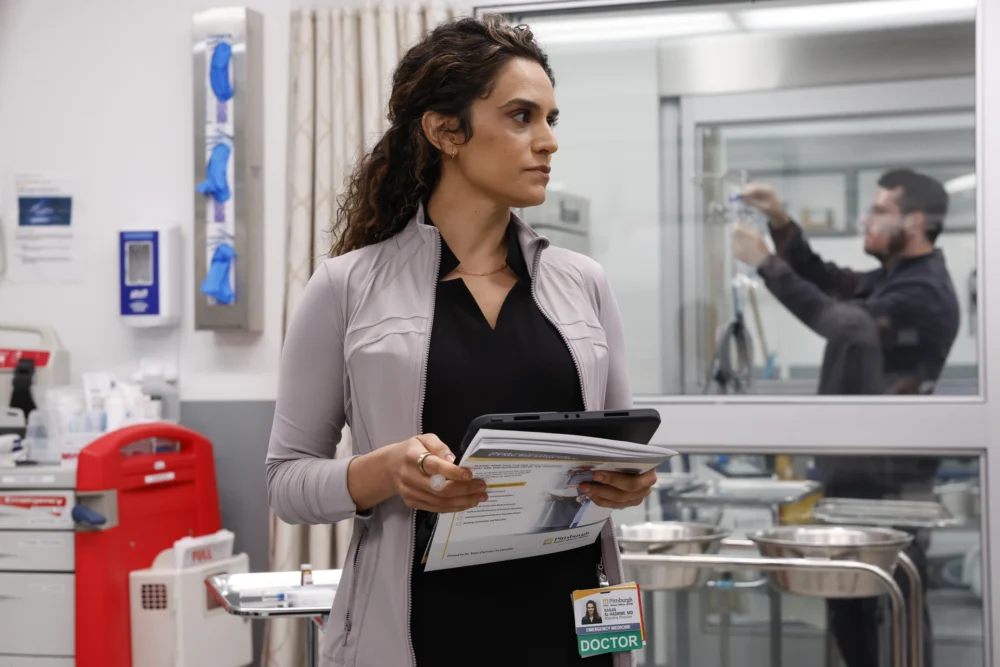
HBO’s gripping medical drama, "The Pitt," is not shying away from the visceral realities of emergency medicine, where life-or-death scenarios unfold with alarming frequency. Yet, beyond the graphic displays of trauma and the relentless pace of an emergency department, the series has woven a more insidious narrative: the creeping integration of generative artificial intelligence into hospital systems, offering a prescient commentary on the future of medical content creation and its inherent risks.
Season two of "The Pitt" plunges viewers back into the controlled chaos of the Pittsburgh Trauma Medical Center’s emergency room, chronicling a single, demanding 15-hour shift. Set against the backdrop of a bustling Fourth of July, a day synonymous with increased emergency room admissions, the narrative centers on senior attending physician Dr. Michael "Robby" Robinavitch (Noah Wyle) as he prepares for a much-anticipated sabbatical. His absence necessitates the arrival of Dr. Baran Al-Hashimi (Sepideh Moafi), a new attending tasked with bolstering the ER’s leadership. While initial professional friction arises between the two physicians, Dr. Robby generally respects Dr. Al-Hashimi’s approach, with one significant exception: her fervent advocacy for the adoption of an AI-powered transcription software.
As the initial calm of the shift dissipates, replaced by an escalating influx of patients requiring urgent care, the strain on the hospital staff becomes palpable. Second-year resident Dr. Trinity Santos (Isa Briones) finds herself particularly overwhelmed, struggling to balance the sheer volume of patients with the critical need for meticulous documentation in their medical charts. This burden of administrative tasks, exacerbated by an understaffed environment, highlights a pervasive issue within modern healthcare systems.
Dr. Al-Hashimi, despite acknowledging the inherent imperfections of AI-generated transcripts, identifies Dr. Santos as a prime candidate to benefit from the technology’s efficiency. The fictional software, in its initial deployment, demonstrates a notable accuracy in transcribing Dr. Santos’s dictations. However, the illusion of seamless integration shatters when a surgeon, incensed by glaring errors in patient charts produced by the AI, storms into the ER. These inaccuracies, potentially leading to misguided treatment plans, underscore the profound ethical and practical implications of relying on nascent AI technologies in critical medical settings.
"The Pitt" wisely sidesteps a simplistic "AI is inherently dangerous" trope, opting instead for a nuanced exploration of the motivations behind its adoption and the imperative for critical scrutiny. Dr. Al-Hashimi, while encouraging the use of the transcription software among her medical students and residents, concurrently instills a vital caution: absolute personal responsibility for patient care. She emphasizes that the ultimate accountability rests with the medical professionals, not the algorithms they employ. This recurring theme serves as a direct acknowledgment of real-world concerns, referencing documented instances of lawsuits filed against hospitals over AI-related surgical errors and studies revealing the unreliability of large language models in accurately predicting patient health outcomes. Furthermore, Dr. Al-Hashimi’s enthusiastic promotion of AI inadvertently exposes how its implementation can paradoxically increase human workload—through essential verification processes—and contribute to physician burnout, a phenomenon supported by recent surveys. While Dr. Al-Hashimi initially appears as a potential antagonist, the show’s writing team exhibits considerable foresight by focusing on the broader, systemic issues at play.
The series consistently underscores a fundamental truth: technological solutions are insufficient when they fail to address the root causes of systemic problems. While AI-powered transcription may expedite chart completion, albeit with the occasional misstep, it offers no solution to chronic understaffing or the sudden surge in patient load resulting from external crises, such as another hospital entering lockdown. The visual representation of Dr. Santos and nurses like Dana Evans (Katherine LaNasa) grappling with overcrowded waiting rooms and an overwhelming patient census mirrors the critical challenges faced by healthcare institutions nationwide. The ER staff’s urgent need for additional personnel and expanded facilities to provide adequate care is a stark reflection of contemporary hospital realities. Faced with nationwide nursing shortages and perpetual underfunding, administrators are understandably drawn to the promise of AI to enhance productivity.

"The Pitt" possesses the capacity, and perhaps the intention, to delve into the repercussions of AI-generated errors leading to critical mistakes in operating rooms, thereby exposing medical professionals to significant legal liabilities. However, the series’ current strength lies in its poignant illustration of how certain critical workplace deficiencies cannot be rectified by the mere introduction of new technologies. The underlying issue is not the speed of dictation, but the fundamental capacity of the system to deliver care.
The narrative arc of "The Pitt" concerning AI adoption serves as a microcosm of a larger societal debate. The allure of artificial intelligence in healthcare stems from its potential to streamline administrative burdens, optimize resource allocation, and potentially enhance diagnostic capabilities. Generative AI, in particular, promises to revolutionize the creation and management of medical documentation, from patient histories to research summaries. This technology has the capacity to analyze vast datasets, identify patterns, and generate comprehensive reports at speeds unattainable by human professionals. For instance, AI could assist in drafting initial patient discharge summaries, flagging potential drug interactions based on a patient’s electronic health record, or even generating preliminary research proposals by synthesizing existing literature.
However, the integration of such powerful tools is not without its inherent risks and complexities. The accuracy of AI models is heavily dependent on the quality and comprehensiveness of the data upon which they are trained. Biases present in training data can be perpetuated and amplified by AI systems, leading to disparities in care for different patient populations. In a medical context, this could manifest as AI tools being less effective in diagnosing conditions in minority groups or making recommendations that disadvantage certain socioeconomic demographics. The "black box" nature of many advanced AI algorithms, where the decision-making process is opaque, further complicates matters. When an AI system makes an erroneous recommendation, understanding why it made that error can be exceedingly difficult, hindering efforts to correct and improve the system.
The legal and ethical frameworks surrounding AI in healthcare are still in their nascent stages. Questions of liability—who is responsible when an AI makes a mistake that harms a patient?—remain largely unresolved. Is it the developer of the AI algorithm, the hospital that implemented it, or the clinician who relied on its output? The rapid evolution of AI capabilities outpaces the development of regulatory guidelines, creating a challenging environment for healthcare institutions to navigate. The potential for AI to exacerbate existing inequalities within the healthcare system is a significant concern. If AI tools are primarily developed and tested on data from privileged populations, their efficacy and safety may be compromised when applied to more diverse patient groups. This could widen the existing gap in healthcare access and outcomes.
Moreover, the deployment of AI in clinical settings raises profound questions about the role of human judgment and the doctor-patient relationship. While AI can process information and generate insights with remarkable speed, it lacks the empathy, intuition, and nuanced understanding of human experience that are central to effective medical care. The therapeutic alliance between a patient and their physician is built on trust, communication, and a shared understanding of the patient’s values and preferences. Over-reliance on AI could, in some scenarios, depersonalize care and erode this vital human connection. The drive to adopt AI is often fueled by the promise of cost savings and increased efficiency. Hospitals facing financial pressures may see AI as a panacea for staffing shortages and operational inefficiencies. However, the initial investment in AI technology, including software, hardware, and training, can be substantial. Furthermore, the long-term costs associated with maintaining, updating, and ensuring the security of AI systems must be carefully considered.
The narrative in "The Pitt" highlights the crucial distinction between efficiency gains and fundamental problem-solving. While AI may accelerate the process of documentation, it does not address the underlying systemic issues of understaffing and resource scarcity that plague emergency departments. The show’s portrayal of Dr. Al-Hashimi’s initial enthusiasm for AI, followed by the stark realization of its limitations when confronted with real-world crises, offers a valuable lesson. It suggests that technology, while a powerful tool, is not a substitute for robust infrastructure, adequate staffing, and sound administrative policies.
The future outlook for AI in healthcare content and beyond is one of cautious optimism tempered by a strong imperative for responsible development and deployment. As AI technologies mature, they hold immense potential to revolutionize medical practice, from drug discovery and personalized medicine to administrative efficiency and patient engagement. However, realizing this potential requires a concerted effort from all stakeholders—researchers, developers, healthcare providers, policymakers, and the public—to address the ethical, legal, and societal challenges that accompany this transformative technology. The ongoing dialogue, exemplified by the thoughtful portrayal in "The Pitt," is essential to ensure that AI serves to enhance, rather than undermine, the core mission of healthcare: to provide safe, equitable, and compassionate care for all. The critical analysis presented by the show serves as a timely reminder that while innovation is crucial, it must be guided by a deep understanding of human needs and a commitment to ethical principles.



 Safa Marwah
 Lisa Mariana