Ridwan Kamil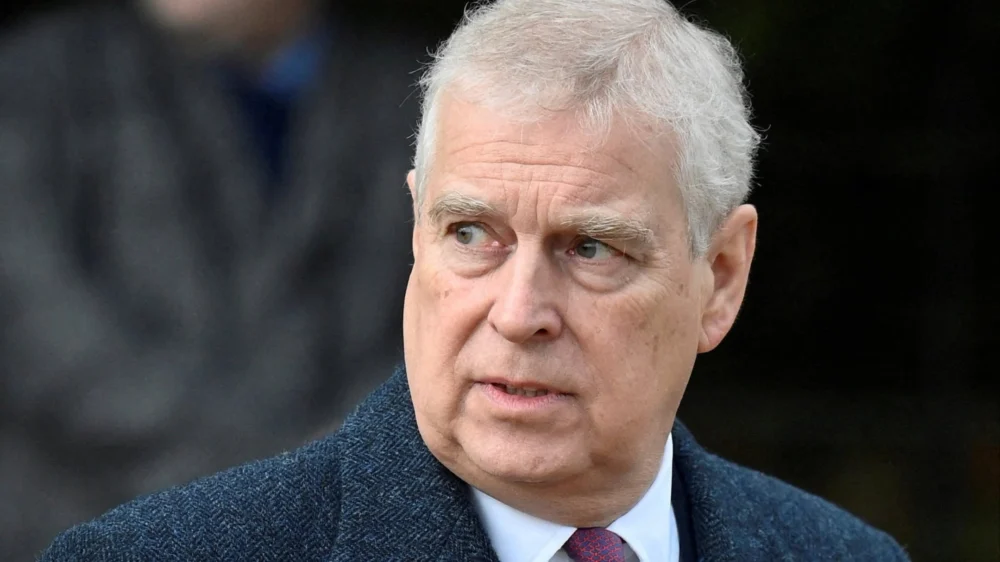
A significant development has emerged from the ongoing fallout of the Jeffrey Epstein scandal, with reports indicating the arrest of Andrew Mountbatten-Windsor, a member of the British Royal Family, in connection with revelations that have continued to surface. This arrest marks a dramatic escalation in the investigation, drawing the global spotlight onto individuals previously considered beyond reproach and raising profound questions about accountability within elite circles.
The Epstein saga, a sprawling investigation into sex trafficking and abuse involving the late financier Jeffrey Epstein and his associates, has consistently produced shocking revelations that have implicated a vast network of powerful individuals across political, financial, and social spheres. The recent detainment of Andrew Mountbatten-Windsor, the younger son of Prince Andrew and Sarah Ferguson, and a grandson of the late Queen Elizabeth II, represents a seismic shift, bringing the scandal uncomfortably close to the highest echelons of global influence. While official statements remain scarce, the mere suggestion of royal involvement in such a deeply disturbing investigation sends ripples of unprecedented magnitude through both established institutions and public perception.
A Network Unraveling: The Scope of the Epstein Investigations
Jeffrey Epstein, a convicted sex offender and financier with deep connections to influential figures worldwide, died in a New York jail in August 2019 while awaiting trial on sex trafficking charges. His death did little to quell the insatiable public and legal appetite for uncovering the full extent of his alleged criminal enterprise. Investigations, spearheaded by U.S. federal authorities, have been meticulously dissecting Epstein’s activities and his extensive network of associates, revealing a pattern of alleged abuse and exploitation that spanned decades and continents.
The legal ramifications have been extensive, with Epstein’s former associate, Ghislaine Maxwell, already serving a lengthy prison sentence for her role in procuring underage girls for Epstein. However, the investigations have always been aimed at identifying and potentially prosecuting other individuals who may have facilitated, participated in, or benefited from Epstein’s alleged crimes. The release of previously sealed court documents, including victim testimonies and lists of alleged associates, has acted as a continuous catalyst, propelling the investigations into new and often surprising territories. These documents have been instrumental in piecing together the intricate web of relationships Epstein cultivated, often leveraging his wealth and influence to gain access to and maintain favor with powerful individuals.
Royal Entanglement: The Historical Context and Current Implications
The British Royal Family has faced scrutiny in relation to Epstein in the past, primarily through Prince Andrew’s documented friendship with the financier. Prince Andrew himself stepped back from public duties in 2019 following widespread criticism and a civil lawsuit alleging sexual abuse. The current development involving Andrew Mountbatten-Windsor, while distinct from his father’s direct legal entanglements, inevitably casts a long shadow and raises uncomfortable questions about the family’s broader associations and any potential awareness or involvement.
The implications of a royal arrest, even if preliminary or based on information that may be later disproven, are immense. It underscores the pervasive reach of the Epstein network and the potential for individuals from all walks of life, regardless of their status, to be implicated. For the monarchy, this represents a significant reputational challenge, further eroding public trust at a time when it is already navigating a period of transition and adaptation. The institution’s ability to maintain its perceived moral authority and its role as a symbol of national stability is directly tested by such allegations.
The Legal and Investigative Landscape
The arrest of Andrew Mountbatten-Windsor, if confirmed and substantiated, would signify a critical juncture in the ongoing investigations. It suggests that law enforcement agencies have uncovered evidence warranting detention, moving beyond mere association to potential complicity. The specifics of the charges, if any have been formally laid, will be crucial in understanding the exact nature of the alleged wrongdoing. This could range from direct participation in illicit activities to offenses related to conspiracy, obstruction of justice, or harboring knowledge of criminal conduct without reporting it.
Legal experts anticipate a rigorous and potentially lengthy investigative process. The complexity of the Epstein network, with its global reach and the involvement of individuals who have historically enjoyed significant protections, presents formidable challenges. International cooperation between law enforcement agencies will likely be paramount, particularly if evidence suggests activities that crossed national borders. Furthermore, the legal principles of due process and the presumption of innocence will be central to how this case unfolds, irrespective of the individual’s public profile.
Public Reaction and Societal Impact
The news of a royal arrest in connection with the Epstein scandal is poised to generate intense public interest and debate. For many, it represents a stark reminder of the enduring power of wealth and influence to shield individuals from accountability. The allegations, if proven, would serve as a powerful indictment of societal structures that allow such exploitation to persist.
The potential for a royal to face legal consequences also raises broader questions about equality before the law and the dismantling of privilege. Public discourse is likely to focus on the need for transparency, robust oversight, and the unwavering pursuit of justice, regardless of the accused’s social standing. The scandal has already prompted calls for greater regulation of powerful individuals and institutions, and this latest development is likely to amplify those demands. The impact on public trust in both governmental and royal institutions could be profound, necessitating a concerted effort to rebuild confidence through demonstrable integrity and accountability.
Future Outlook: Accountability and Institutional Reform
The arrest of Andrew Mountbatten-Windsor, and the ongoing investigations into the Epstein network, signal a critical moment for accountability within elite circles. The legal and societal ramifications will likely unfold over months and years, with the potential to reshape public perception and drive significant institutional reforms.
The ultimate outcome of these investigations will depend on the strength of the evidence presented and the legal processes that follow. However, the mere fact that such an arrest has occurred indicates a shift in the landscape, suggesting that no individual, regardless of their background or connections, is entirely immune from scrutiny. The future outlook points towards a continued demand for transparency, a re-evaluation of power dynamics, and a reinforced commitment to ensuring that justice prevails for all victims of exploitation and abuse. The Epstein scandal, through its relentless revelations, continues to serve as a potent catalyst for confronting uncomfortable truths and demanding a more equitable and just society.



 Lisa Mariana
 Aura Kasih
 Safa Marwah
 Ayu Aulia