Lisa Mariana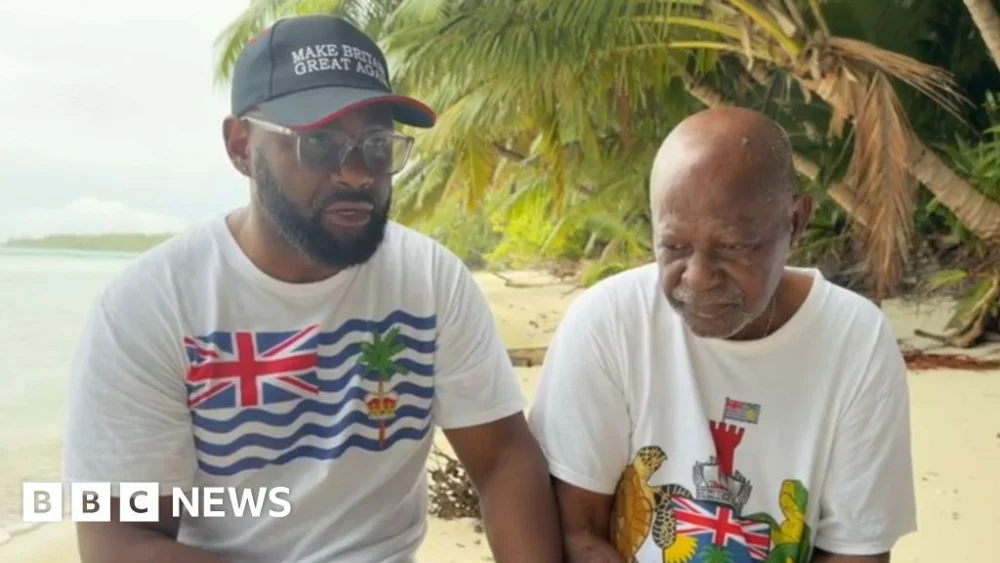
A recent assertion of ancestral claims has seen a contingent of exiled Chagossians establish a presence on the remote islands of their heritage, directly contravening directives issued by British administrative entities, thereby intensifying a protracted sovereignty dispute just as the United Kingdom considers a significant territorial transfer to Mauritius. This act of civil disobedience, initiated by a small group of islanders determined to reclaim their ancestral lands, underscores the profound human dimension of a complex geopolitical issue involving historical injustices, strategic military interests, and international legal challenges.
The incident unfolded earlier this week when four individuals, identifying as Chagossians, arrived on a secluded portion of the archipelago following a maritime journey from Sri Lanka. Their stated objective was to establish a permanent settlement, symbolically asserting their inalienable right to return to what they unequivocally define as their homeland. This audacious move was explicitly framed as a protest against a proposed agreement between the United Kingdom and Mauritius, which aims to cede control of the Chagos Islands to the latter. In response to their unauthorized landing, a British patrol vessel dispatched officials who served the group with formal eviction notices, stipulating potential penalties including fines or incarceration for non-compliance. The British Foreign Office subsequently characterized the expedition as an "illegal, unsafe stunt," while simultaneously downplaying any security threat to the vital UK-US military installation located on Diego Garcia, the largest island in the archipelago.
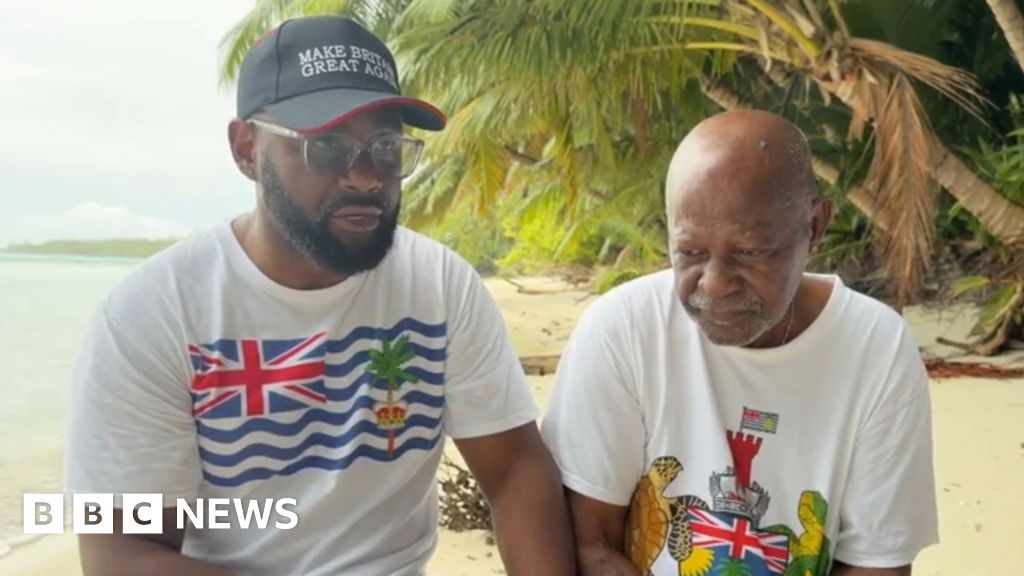
Leading the defiant group is Misley Mandarin, a British-Chagossian citizen who has publicly declared himself the "first minister" of a self-styled Chagossian government-in-exile. Mandarin conveyed a resolute message to the media, asserting that British authorities would have to "drag me from my beach" or even resort to lethal force to compel his departure. He passionately articulated the group’s conviction that the islands "belong to us," urging the UK government to abandon the proposed deal and facilitate the return of Chagossians to their homeland as British subjects. Legal representatives supporting the islanders have indicated their readiness to mount a robust judicial challenge against the removal orders, signaling a potential escalation of the dispute into the courts. The four individuals are currently supported by a crew aboard a vessel anchored approximately 182 meters offshore from Ile du Coin, part of the Peros Banhos atoll, the site of their landing.
Adding another layer of complexity to the unfolding drama is the involvement of Adam Holloway, a former Conservative Member of Parliament who has since aligned himself with Reform UK. Holloway not only facilitated the Chagossians’ return journey but remains on the island, actively assisting in the establishment of the nascent settlement. He has vociferously condemned the proposed transfer of the islands to Mauritius, labeling it a "catastrophically stupid mistake" within the current global geopolitical landscape. Holloway emphasized the indispensable strategic importance of the Diego Garcia base to Western security, arguing that the deal undermines critical interests. Reports from the supporting crew suggest that Holloway, unlike the Chagossians, has thus far evaded service of the eviction papers, purportedly by remaining concealed within the island’s dense jungle terrain. The removal orders themselves were issued by an immigration official representing the British Indian Ocean Territory (BIOT) administration. Video documentation captured the official’s arrival ashore via an inflatable dinghy, delivering the eviction notice directly to Mandarin at a rudimentary encampment. Intriguingly, the supporting crew claimed that the BIOT patrol boat encountered difficulty approaching the shore and reportedly borrowed their dinghy to execute the formal delivery of the removal order.
Historical Roots of Dispossession and International Scrutiny
To fully comprehend the gravity of the current standoff, it is imperative to delve into the historical narrative of the Chagos Islands. Britain’s colonial claim over the archipelago dates back to 1814. However, the most controversial chapter began in the 1960s when, under an agreement with the United States, the entire indigenous population, numbering approximately 1,500 to 2,000 people, was systematically and forcibly expelled to make way for the construction of a major Anglo-American military base on Diego Garcia. This act of mass displacement, executed between 1968 and 1973, involved deception, coercion, and brutal measures, effectively eradicating a settled community that had inhabited the islands for generations. The islands were formally established as a British Overseas Territory in 1965, designated as the British Indian Ocean Territory (BIOT), following a £3 million payment to Mauritius in exchange for relinquishing its claim to the archipelago – a transaction widely viewed as a cynical colonial maneuver.
For decades, the displaced Chagossians and their descendants have campaigned tirelessly for their right of return and for recognition of the profound injustices inflicted upon them. Their struggle has garnered significant international attention, leading to a series of legal and diplomatic setbacks for the United Kingdom. In 2019, the International Court of Justice (ICJ) issued an advisory opinion concluding that the UK’s administration of the Chagos Archipelago was unlawful and that the decolonization of Mauritius had not been lawfully completed. The ICJ advised the UK to promptly end its administration of the islands. This opinion was subsequently overwhelmingly endorsed by the United Nations General Assembly, which passed a resolution demanding that the UK withdraw from the archipelago within six months. Despite these strong international condemnations, the UK initially maintained its position, arguing that the ICJ opinion was merely advisory and not legally binding, and that it had legitimate reasons to retain sovereignty, particularly concerning the strategic military base.
The Proposed Deal and Its Discontents
The recent shift in the UK’s stance, leading to the proposed deal with Mauritius, represents a significant policy reversal, driven largely by persistent international pressure and the erosion of its legal position. Last year, the UK government publicly acknowledged its intention to transfer sovereignty of the Chagos Islands to Mauritius. Under the proposed terms, while sovereignty would be transferred, the UK would secure a 99-year lease agreement for the continued operation of the joint UK-US military base on Diego Garcia, reportedly involving annual payments of £101 million. The stated rationale for this complex arrangement was to address the international legal judgments while simultaneously safeguarding crucial strategic interests in the Indian Ocean.
However, this meticulously crafted diplomatic solution has encountered unexpected turbulence. Former US President Donald Trump, utilizing his social media platform, publicly urged Prime Minister Sir Keir Starmer not to "give away Diego Garcia," injecting an unpredictable element into the negotiations. This intervention underscores the high geopolitical stakes associated with the base and suggests potential internal US political resistance to any arrangement perceived as undermining its strategic access or operational capabilities.
Crucially, the proposed deal has also failed to appease many within the Chagossian diaspora, who view it not as a resolution but as a betrayal. While the UK granted Chagossians the right to claim British citizenship in 2022, a measure intended to address past wrongs, many still aspire to return to their homeland under British sovereignty, believing this offers the most secure pathway for their resettlement and the preservation of their cultural identity. They fear that a transfer of sovereignty to Mauritius, despite Mauritian assurances, might not fully guarantee their right of return or their ability to shape the future of their ancestral islands. This faction believes that the UK, having dispossessed them, retains a moral and historical obligation to facilitate their return under its protective framework.
It is important to acknowledge, however, that the Chagossian community itself is not monolithic. Displaced across the UK, Mauritius, and the Seychelles, their voices and aspirations are diverse. Some factions, particularly those based in Mauritius, may view the deal more favorably, hoping that Mauritian sovereignty will finally pave the way for their resettlement, perhaps with better financial compensation and direct support from the Mauritian government. This internal divergence within the community adds another layer of complexity to any lasting resolution.
A Plea to the Prime Minister and Official Response
Misley Mandarin, reflecting the sentiment of his group, characterized the historical removal of Chagossians from their homeland as a "stain on British politics." He issued a direct appeal to Prime Minister Sir Keir Starmer, suggesting that the Labour leader now has a unique opportunity to become a "hero." Mandarin urged Starmer to "Don’t ratify that deal, cancel that deal and let Chagossians come back to their homeland as British." Having grown up in Mauritius but residing and working in the UK for many years, Mandarin’s declaration of return upon setting foot on the territory was a potent assertion of his "right of self-determination." He expressed an expectation that more Chagossians would eventually undertake similar journeys, signaling a potential for broader acts of defiance.
The British Foreign Office reiterated its official position, stating that entry into the BIOT without a valid permit is illegal, and any individual found in violation would be subject to a removal order. A spokesperson for the Foreign Office affirmed the government’s recognition of the islands’ importance to the Chagossian community, highlighting ongoing efforts to collaborate with Mauritius on a program of heritage visits to the archipelago. However, the spokesperson firmly reiterated that the current "illegal, unsafe stunt" is not the appropriate means to achieve these objectives. Reassurances were again provided regarding the lack of any security risk posed by the vessel to Diego Garcia.
Geopolitical Stakes and Future Trajectories
The Chagos Archipelago, and specifically Diego Garcia, holds immense strategic value. Situated in the central Indian Ocean, it provides a critical forward operating base for both the United Kingdom and the United States. Its location allows for rapid deployment of air and naval assets across a vast region, supporting operations ranging from counter-terrorism to humanitarian aid, and projecting power across the Middle East, Africa, and Asia. This strategic imperative has historically underpinned the UK’s reluctance to cede sovereignty and continues to be a primary consideration in any future arrangement. Holloway’s and Trump’s interventions highlight a deep concern within certain political circles about maintaining unrestricted access and control over this vital asset.
The current standoff places the UK in a precarious position. Forcibly removing the Chagossians could provoke further international condemnation and fuel accusations of perpetuating historical injustices, particularly in light of the ICJ’s advisory opinion. Allowing them to remain, however, could set a precedent for further unauthorized settlements, challenging the BIOT’s administrative authority and potentially complicating the proposed deal with Mauritius. The legal battle that the Chagossians’ lawyers are preparing could further delay or derail the sovereignty transfer, forcing the UK to revisit its approach to both its international obligations and its strategic interests.
The future trajectory of the Chagos Islands dispute remains highly uncertain. The defiance shown by Misley Mandarin and his group, coupled with the unexpected political intervention from the US, introduces significant volatility into a process that the UK government hoped to manage diplomatically. Potential scenarios include a prolonged legal challenge to the removal orders, a more aggressive enforcement action by British authorities, or a renewed round of negotiations that must now factor in the determined stance of a segment of the Chagossian community. The underlying human rights issues, the legacy of colonial dispossession, and the critical geopolitical importance of the archipelago ensure that the Chagos Islands will remain a focal point of international scrutiny and a testament to the enduring struggle for justice and self-determination. The delicate balance between historical redress and contemporary strategic imperatives will continue to define this complex and emotionally charged territorial dispute.



 Aura Kasih
 Safa Marwah
 Ayu Aulia