Lisa Mariana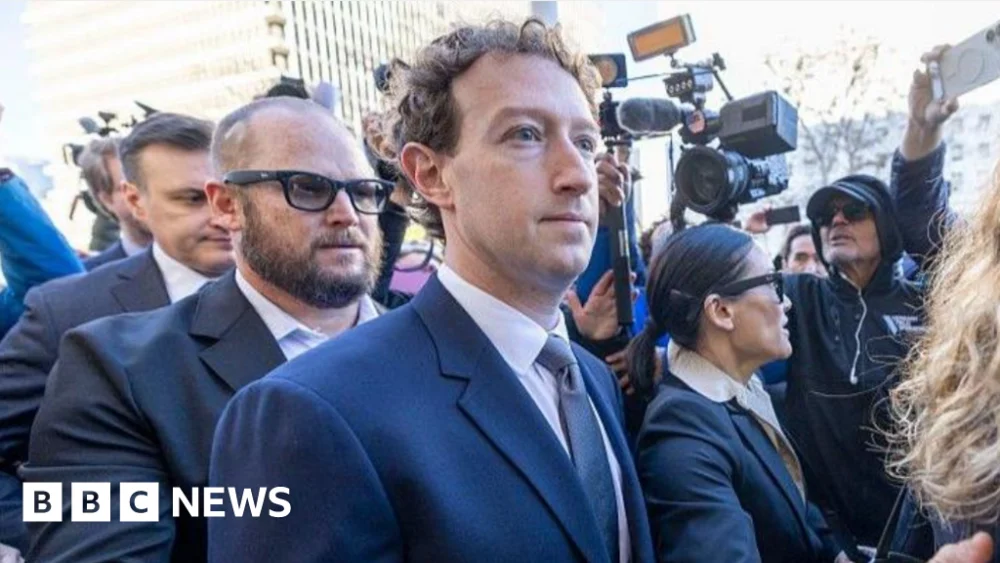
Mark Zuckerberg, the Chief Executive Officer of Meta Platforms, found himself under intense scrutiny in a Los Angeles courtroom this week, as he mounted a defense against accusations that his company deliberately designed its platforms to foster addiction, particularly among young users. The founder of the social media giant, which owns Instagram, Facebook, and WhatsApp, faced a barrage of internal company communications presented by plaintiffs’ counsel, designed to illustrate a calculated strategy targeting impressionable demographics. His testimony marks a significant moment in the burgeoning legal battle confronting the tech industry over the mental health impact of its products.
The proceedings unfolded as part of a landmark legal challenge, alleging that social media platforms cultivate addictive behaviors in children and adolescents. During his cross-examination, Zuckerberg frequently asserted that the plaintiffs’ attorneys were "mischaracterizing" the context and intent behind the internal documents, maintaining that Meta has consistently prioritized user safety. This appearance before a jury represents a watershed moment for the tech magnate, occurring after years of escalating public and regulatory backlash directed at Meta’s operational practices and their societal ramifications.
The ongoing trial, which also names Google’s YouTube as a defendant, is being meticulously observed by legal scholars, industry analysts, and public health advocates alike. Its outcome is expected to significantly influence the trajectory of thousands of similar lawsuits currently pending across the United States. Notably, other prominent social media entities, TikTok and Snapchat, previously implicated in the multi-district litigation, reached undisclosed settlement agreements shortly before the trial commenced, underscoring the mounting pressure on the industry.
Meta has consistently reiterated its stance that the company has implemented robust measures to safeguard its younger user base, including a strict prohibition against individuals under the age of 13 creating accounts. However, plaintiffs’ attorney Mark Lanier, representing the lead plaintiff identified by the initials K.G.M., presented an internal email that directly challenged this assertion. The correspondence highlighted internal concerns regarding the "unenforced" nature of the company’s age restrictions, implying a systemic difficulty in substantiating claims of comprehensive user protection. The email, attributed to Nick Clegg, Meta’s former head of global affairs and a former UK Deputy Prime Minister, reportedly stated that such lax enforcement made it "difficult to claim we’re doing all we can."
Further undermining Meta’s defense, a 2018 internal presentation was introduced, detailing discussions within the company concerning the "retention of tweens" on its platforms. This revelation directly contradicted the stated policy of barring users under 13. Zuckerberg, while expressing regret over the pace of progress in identifying underage users, ultimately conveyed his belief that the company had "reached the right place over time" in addressing this issue. He accused Lanier of selectively quoting the "tween" document, arguing that it pertained to "various discussions" about developing a regulated version of the product specifically for children under 13, citing the Messenger Kids service—which he noted he uses with his own children—as an example. "You’re mischaracterizing what I’m saying," Zuckerberg insisted, adding, "I’m not surprised that people internally were studying this."
The legal team for the plaintiffs also confronted Zuckerberg with evidence suggesting a concerted effort to increase engagement among teenage users. Emails penned by Zuckerberg himself, alongside other internal communications, explicitly detailed discussions among employees regarding "teen usage" and strategies to amplify it. A 2015 email from Zuckerberg to a group of executives outlined his annual objectives, which included a "12% increase in time spent" and a directive for the "teen trend to be reversed." A subsequent 2017 email from an executive further solidified this narrative, stating that "Mark has decided the top priority for the company is teens." While Zuckerberg acknowledged setting goals for executives to boost user engagement "at an earlier point in the company," he maintained that this operational approach was no longer in practice.
The lead plaintiff, K.G.M., who reportedly began using Instagram and YouTube during her childhood, was present in the courtroom, observing the proceedings from a position directly opposite Zuckerberg, who arrived with a substantial entourage of security personnel and associates. The emotional weight of the trial was further underscored by the presence of bereaved parents, attending to witness the unfolding testimony.
The trial is anticipated to extend over several weeks and is slated to feature testimony from former Meta employees who have since publicly voiced concerns about the company’s internal practices. While YouTube CEO Neal Mohan was initially expected to testify, reports indicate his appearance is no longer scheduled.
In earlier testimony, Adam Mosseri, the head of Instagram, challenged the very concept of social media addiction, controversially asserting that even 16 hours of daily Instagram use did not definitively signify addiction. During his own questioning, Zuckerberg offered a similar perspective, stating that if a product holds inherent value, "people tend to use it more." Lanier swiftly countered this by noting that individuals struggling with addiction also typically exhibit increased usage of the addictive substance or behavior. To this, Zuckerberg responded, "I don’t know what to say to that. I think that may be true but I don’t know if that applies here."
Background and Evolving Landscape of Digital Accountability
The current legal confrontation is not an isolated incident but rather a prominent manifestation of a rapidly expanding legal and ethical battleground. Thousands of lawsuits, initiated by aggrieved families, state prosecutors, and school districts, are currently navigating the complexities of the U.S. judicial system. These legal challenges collectively accuse Meta and other social media entities, including TikTok, Snapchat, and YouTube, of deploying design elements that foster addiction, resulting in demonstrable harm to a significant number of children and adolescents.
This wave of litigation follows a decade of increasing scrutiny over the social and psychological impacts of digital platforms. Prior controversies involving Meta, such as the Cambridge Analytica scandal which exposed vulnerabilities in user data privacy, and the revelations by whistleblower Frances Haugen concerning internal research on Instagram’s negative effects on teen mental health, have laid the groundwork for the current legal climate. These past events collectively painted a picture of a company struggling to balance unprecedented growth with corporate responsibility, particularly concerning the well-being of its youngest and most vulnerable users. The evolution of social media from simple communication tools to sophisticated, algorithm-driven engagement engines designed to maximize time on platform is central to the plaintiffs’ arguments.
Expert Analysis: The Strategic Contours of the Legal Battle
The core of the plaintiffs’ argument rests on the assertion that these platforms are not merely passive tools but are intentionally engineered with features that exploit psychological vulnerabilities, leading to compulsive use. The presentation of internal documents directly from Meta executives, including Zuckerberg himself, is a critical strategic move by the plaintiffs. These documents aim to demonstrate explicit knowledge and intent within the company to increase engagement among young users, even as concerns about age restrictions and potential harm were apparently circulating internally. The defense’s strategy of "mischaracterization" and emphasizing context attempts to reframe these documents as part of legitimate product development or market analysis, rather than evidence of predatory design.
The concept of "addiction" itself is a contentious point. While medical and psychological communities recognize behavioral addictions, applying this framework to social media presents unique challenges compared to substance abuse. The legal battle requires a clear articulation of how "addiction" manifests in this digital context and the causal link between platform design and user harm. The testimony from Meta executives, like Mosseri’s dismissal of prolonged usage as non-addictive, highlights the industry’s reluctance to concede the addictive nature of their products, which could have profound legal and regulatory consequences.
The "tween dilemma" illuminated by the internal documents is particularly damning for Meta. The apparent internal discussions about retaining or even developing products for users under 13, despite public age restrictions, exposes a potential disconnect between stated policy and internal strategic objectives. This raises fundamental ethical questions about corporate responsibility and the pursuit of market share versus the protection of minors. The algorithms, designed to personalize content and maximize engagement through reward mechanisms and infinite scroll, are central to the argument that these platforms are inherently addictive.
Implications for the Digital Future
The implications of this trial are far-reaching, potentially setting a significant precedent for the entire technology sector. A judgment in favor of the plaintiffs could trigger a cascade of legal victories in the thousands of pending lawsuits, leading to substantial financial liabilities for Meta and other defendants. Beyond monetary damages, the reputational damage sustained by these companies could be immense, further eroding public trust and intensifying calls for stricter regulation.
The ongoing litigation is also serving as a catalyst for increased regulatory scrutiny globally. In one notable case, 29 state attorneys general in the U.S. are advocating for a California federal court to mandate immediate changes from the platforms, including the removal of all accounts known to belong to users under 13 years of age. This demonstrates a growing consensus among government bodies that voluntary measures by tech companies are insufficient.
Future Outlook: A Shifting Regulatory and Design Landscape
The outcome of this trial, regardless of the verdict, is likely to accelerate a global trend towards more stringent regulation of social media platforms, especially concerning their impact on young people. Countries such as Australia have already implemented bans on social media accounts for individuals under 16, with the United Kingdom, Denmark, France, and Spain actively considering similar legislative measures. This global momentum suggests a future where age verification, algorithmic transparency, and default privacy settings for minors become standard, potentially mandated by law.
Platforms may be compelled to fundamentally redesign their user interfaces and algorithmic functions, shifting focus from maximizing "time spent" and engagement metrics to prioritizing user well-being and digital health. This could involve introducing features that actively limit usage, promote breaks, or offer more robust parental controls. The emphasis might move towards responsible product design that considers developmental psychology and potential harms.
Furthermore, the legal and public discourse surrounding this trial will likely spur a greater emphasis on digital literacy education for both children and parents, empowering users to navigate online environments more safely. The long-term future of social media may involve a more fragmented and regulated landscape, where platforms are held to a higher standard of accountability for the psychological and social impacts of their pervasive technologies. The Los Angeles trial represents a critical juncture in this ongoing evolution, signaling a potential paradigm shift in how society views and governs the powerful digital ecosystems that shape modern life.




 Aura Kasih
 Safa Marwah
 Ayu Aulia