Lisa Mariana
In a surprising and diplomatically challenging turn, former United States President Donald Trump has publicly denounced the United Kingdom’s prospective agreement to transfer sovereignty of the Chagos Archipelago to Mauritius, a move that would entail leasing back the strategically critical military installation on Diego Garcia. This direct intervention, articulated through social media, starkly contradicts the official endorsement given by the current Washington administration just days prior, injecting considerable uncertainty into a meticulously negotiated resolution of a long-standing colonial dispute.
Trump’s pronouncements, delivered via his preferred digital platform, conveyed a categorical opposition to the proposed arrangement, asserting that the territory "should not be taken away from the U.K." He characterized the potential transfer as a "blight on our Great Ally," thereby generating a complex diplomatic quandary for both London and Washington. This public dissent from a prominent political figure, especially one with a strong potential to return to the presidency, introduces an unforeseen obstacle to an agreement that had appeared to be gaining international momentum. The timing is particularly sensitive, preceding scheduled bilateral discussions between the United States and Mauritius, adding an layer of apprehension to those high-level talks.
The Chagos Archipelago, officially known as the British Indian Ocean Territory (BIOT), holds immense strategic value, primarily due to Diego Garcia, its largest island. This remote atoll serves as an indispensable joint United States-United Kingdom military base, a pivotal operational hub for naval and air forces in the Indian Ocean region. The proposed agreement sought to navigate the intricate balance between acknowledging Mauritius’s claims to sovereignty and preserving the uninterrupted functionality of this critical defense asset through a long-term lease-back arrangement, reportedly for 99 years. Trump’s vocal disapproval, however, threatens to unravel this delicate equilibrium.
In his social media dispatch, Trump specifically addressed United Kingdom Prime Minister Keir Starmer, expressing strong reservations about the proposed century-long lease. "I have been telling Prime Minister Keir Starmer, of the United Kingdom, that Leases are no good when it comes to Countries, and that he is making a big mistake by entering a 100 Year Lease," he wrote. This statement not only publicly criticizes the incumbent British leadership but also reflects a characteristic skepticism towards long-term international agreements and a preference for outright ownership or more transactional arrangements. He underscored Diego Garcia’s vital position, describing it as "strategically located in the Indian Ocean," a point universally acknowledged by defense strategists globally.
Further escalating his critique, Trump accused Prime Minister Starmer of "losing control of this important Island by claims of entities never known of before," a phrase widely interpreted as a dismissive reference to Mauritius’s historical and legally substantiated claims, as well as the international legal bodies that have supported them. He then broadened his commentary, linking the situation to a perceived weakening of British resolve in the face of contemporary cultural and political shifts, stating, "We will always be ready, willing, and able to fight for the U.K., but they have to remain strong in the face of Wokeism, and other problems put before them." This rhetorical framing attempts to align the sovereignty transfer with broader cultural anxieties, a common theme in his political discourse.
Adding another layer of urgency and geopolitical rationale to his position, Trump explicitly connected the retention of Diego Garcia to potential future military contingencies. He remarked, "Should Iran decide not to make a Deal, it may be necessary for the United States to use Diego Garcia… in order to eradicate a potential attack by a highly unstable and dangerous Regime." This assertion directly links the island’s status to ongoing, sensitive international negotiations concerning Iran’s nuclear program, a matter of significant concern for the United States and its allies. The United States and European powers have consistently voiced suspicions that Tehran is pursuing the development of nuclear weapons, an ambition consistently denied by the Iranian government, which maintains its nuclear activities are solely for peaceful purposes. Trump’s framing positions Diego Garcia as a crucial asset in counteracting perceived threats from states like Iran, thereby elevating its importance beyond a mere territorial dispute.
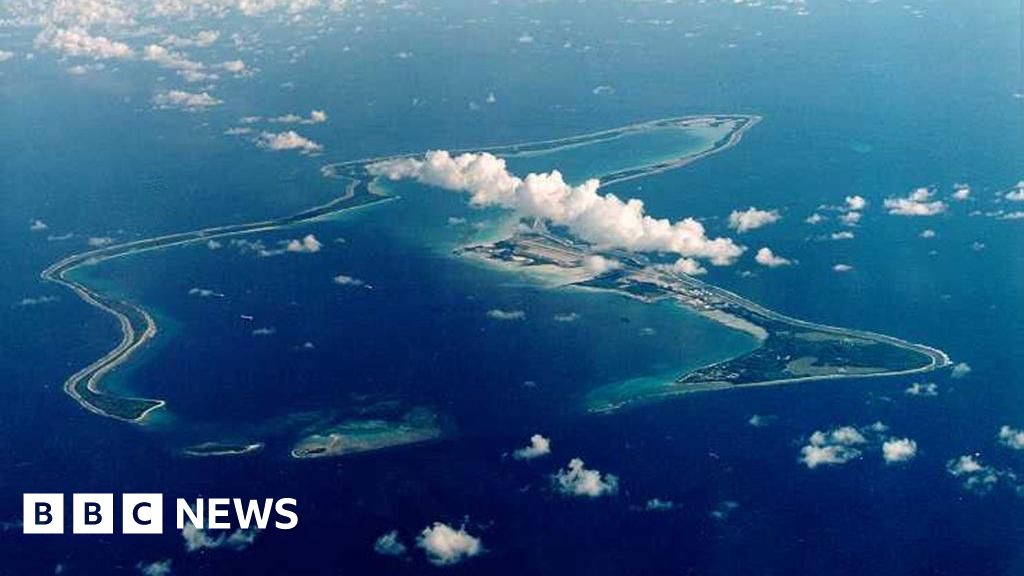
The Chagos Archipelago’s journey to its current contested status is rooted in a complex colonial history. Situated approximately 9,332 kilometers southeast of the United Kingdom and about 2,010 kilometers northeast of Mauritius, these islands have been under continuous British administration since the Treaty of Paris in 1814, which formalized the transfer of various territories from French to British control following the Napoleonic Wars. In 1965, the United Kingdom government controversially detached the Chagos Islands from Mauritius, then a self-governing colony, paying a sum of £3 million for the territory. This act created the British Indian Ocean Territory (BIOT) as a separate overseas territory, a move that Mauritius has consistently argued was illegally coerced as a condition for its independence in 1968.
Crucially, the establishment of BIOT facilitated the subsequent construction of the joint UK-US military base on Diego Garcia. This development, however, came at a profound human cost: between 1968 and 1973, approximately 1,500 to 2,000 indigenous Chagossians, also known as Ilois, were forcibly removed from their homes on Diego Garcia and other islands in the archipelago. They were relocated, often under dire circumstances, to Mauritius, Seychelles, and the UK, their ancestral lands cleared to make way for the military installation. This displacement, a dark chapter in post-colonial history, has since become a central component of Mauritius’s sovereignty claims and a subject of intense international scrutiny and condemnation.
Mauritius has long championed the cause of the Chagossians and relentlessly pursued its claim to the archipelago through various international forums. Its efforts gained significant traction in 2019 when the International Court of Justice (ICJ) issued an advisory opinion, concluding that the separation of the Chagos Archipelago from Mauritius in 1965 was unlawful and that the UK’s continued administration constituted a wrongful act of colonization. The ICJ advised the UK to promptly complete the decolonization of the territory. This was followed by a similar ruling from the International Tribunal for the Law of the Sea (ITLOS) in 2021, further bolstering Mauritius’s legal position. The United Nations General Assembly subsequently passed resolutions urging the UK to comply with the ICJ’s opinion. These international legal pronouncements placed considerable diplomatic pressure on the UK, leading to its eventual acknowledgment of Mauritius’s sovereignty claims and the initiation of negotiations for a transfer.
The proposed UK-Mauritius agreement, therefore, represents an attempt by London to align with international law, rectify a historical injustice, and resolve a lingering colonial dispute, all while safeguarding its strategic defense interests and those of its key ally, the United States. For Mauritius, the agreement signifies the culmination of decades of advocacy, promising the restoration of territorial integrity and offering a potential pathway for the return of the Chagossian people to their homeland, albeit with explicit provisions to ensure the continued operation of the military base.
Trump’s sudden intervention, however, threatens to disrupt this carefully constructed diplomatic framework. His rationale, blending strategic concerns over the base’s control with broader ideological critiques of "Wokeism" and a distrust of international leases, positions him as a significant spoiler. This move could be interpreted as a pre-emptive strike, aiming to signal his unyielding stance on the base’s status ahead of any future presidential term, or as a tactical maneuver to influence the ongoing US-Mauritius discussions. Regardless of the immediate motivation, it creates a profound challenge for the current US administration, which had just affirmed its support for the UK’s plan, and places the UK in an awkward position between its international legal obligations, its commitment to Mauritius, and the potential pressure from a future US leader.
The implications of Trump’s stance are far-reaching. For the United Kingdom, it complicates its efforts to conclude a deal that would address its colonial legacy while securing access to a vital military asset. Retreating from the agreement under US pressure could damage its international standing and undermine its commitment to international law. For the United States, it creates internal policy contradictions and risks alienating Mauritius, a nation with increasing regional importance. For Mauritius, it injects uncertainty into a long-fought battle for sovereignty and potentially jeopardizes the future of its Chagossian population. Ultimately, the future of Diego Garcia and the Chagos Archipelago remains enmeshed in a complex web of historical grievances, strategic imperatives, and now, unpredictable geopolitical interventions, demanding a delicate and steadfast diplomatic approach from all parties involved.


 Aura Kasih
 Safa Marwah
 Ayu Aulia