Lisa Mariana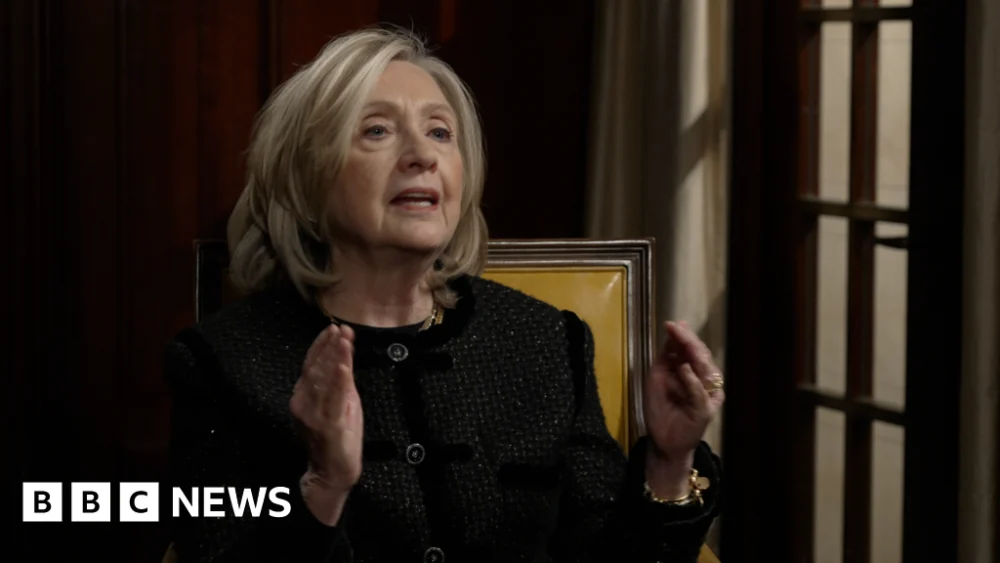
Former Secretary of State Hillary Clinton has leveled a significant accusation against the current presidential administration, alleging a deliberate obstruction in the comprehensive disclosure of sensitive materials pertaining to the late financier and convicted sex offender, Jeffrey Epstein. This charge, delivered during an interview with a major international broadcaster in Berlin, underscores the persistent political reverberations of the Epstein scandal and the ongoing quest for full transparency regarding his extensive network.
Clinton’s assertion, articulated during her attendance at the prestigious annual World Forum in the German capital, highlighted concerns over the sluggish pace of document release. She explicitly called for an expedited process, stating, "The files must be released. Their current handling suggests a deliberate delay." This challenge immediately drew a sharp retort from the White House, which countered by claiming its administration had undertaken more substantive actions to aid victims of Epstein’s abuses than any previous Democratic efforts, citing the public release of numerous documents as evidence of its commitment to accountability.
The controversy surrounding the Epstein files has evolved into a highly politicized battleground, with both major parties attempting to frame the narrative to their advantage. The vast cache of documents, mandated for public release by a congressional act earlier this month, comprises millions of pages related to investigations into Epstein’s illicit activities. These materials have ignited a fresh wave of public and media interest, renewing calls for accountability from individuals associated with Epstein, irrespective of their political affiliations or social standing.
Central to the ongoing discussions is the continued pressure on Prince Andrew, Duke of York, to provide testimony before a congressional committee in the United States. When pressed on whether the former royal should appear, Hillary Clinton offered a definitive stance: "I believe anyone requested to testify should comply." Prince Andrew has consistently and vehemently denied any wrongdoing concerning his association with Epstein. His legal team reached an out-of-court settlement with his prominent accuser, Virginia Giuffre, in 2022, a resolution that explicitly contained no admission of liability on his part. Despite these denials and the settlement, the chorus of demands for his testimony from US officials and Ms. Giuffre’s family remains undiminished, highlighting the persistent public and legal appetite for a comprehensive understanding of Epstein’s network.
Jeffrey Epstein’s death in a New York correctional facility in August 2019, while awaiting trial on federal sex trafficking charges, remains a point of intense public speculation and scrutiny. His demise, ruled a suicide, occurred more than a decade after his initial conviction for soliciting prostitution from a minor, which led to his registration as a sex offender. The unresolved nature of his death and the lingering questions surrounding his powerful associates have fueled an enduring demand for answers, transforming the release of these documents into a pivotal moment for potential revelations.
Adding another layer of complexity to the unfolding drama, both former President Bill Clinton and former Secretary of State Hillary Clinton are slated to appear before the House Oversight Committee. Their names reportedly appear numerous times within the newly disclosed Epstein files. Bill Clinton is scheduled to testify on February 27, with Hillary Clinton appearing the preceding day. This development marks a rare historical occurrence; it will be the first instance of a former US president testifying before a congressional panel since Gerald Ford’s appearance in 1983. The agreement by the Clintons to testify came after a planned vote to hold them in contempt of Congress was shelved, underscoring the significant political leverage exerted by the committee.
The Clintons have publicly advocated for their hearings to be conducted openly rather than in a closed-door deposition. "We are prepared to appear, but we firmly believe a public hearing would better serve the interests of transparency," Hillary Clinton stated. This call for public proceedings is framed by the Clintons as a commitment to openness, aligning with Hillary Clinton’s assertion that "sunlight is the ultimate disinfectant." However, Republican committee chair James Comer had previously accused the Clintons of intentional "delay tactics," suggesting their agreement to testify only materialized under the imminent threat of a contempt vote.
Bill Clinton has acknowledged his acquaintance with Epstein but has consistently denied any knowledge of his sex offending activities at the time, asserting that he severed all contact with the disgraced financier two decades prior to Epstein’s death. Neither of the Clintons has been accused of wrongdoing by survivors of Epstein’s abuse, and both have maintained their ignorance regarding the true nature of Epstein’s illicit conduct. Hillary Clinton further elaborated on her position, stating, "We have nothing to conceal. We have consistently advocated for the full release of these documents." She suggested that she and her husband were being strategically utilized as a "diversionary tactic" to redirect public attention away from the current President. While Hillary Clinton affirmed she had "never met the guy" (Epstein), she did confirm having met Ghislaine Maxwell, Epstein’s convicted associate, on "a few occasions."
President Donald Trump, whose name also reportedly appears hundreds of times within the Epstein files, has similarly denied any wrongdoing in connection with Epstein, claiming to have severed ties with him decades ago. No victims of Epstein’s abuse have brought accusations of criminal conduct against President Trump. The Department of Justice (DoJ) has previously addressed allegations against Trump, stating, "Certain documents contain unsubstantiated and sensational claims against Trump that were submitted to the FBI shortly before the 2020 election. To be unequivocally clear, these claims are baseless and false, and if they possessed any modicum of credibility, they would undoubtedly have been leveraged against President Trump long ago."
The White House, in its defense of the administration’s actions, reiterated its commitment to transparency and victim support. A spokesperson articulated, "Through the release of thousands of pages of documents, active cooperation with the House Oversight Committee’s subpoena requests, and President Trump’s recent calls for further investigations into Epstein’s associates identified as Democrats, this administration has demonstrably done more for the victims than any prior Democratic administration." This statement underscores the deeply partisan nature of the discourse surrounding the Epstein scandal, where accusations and defenses are frequently framed through a political lens.
The continuous unfolding of the Epstein saga, amplified by the release of these extensive files, presents a multifaceted challenge to the political landscape. The accusations of a "cover-up" from a prominent political figure like Hillary Clinton inject a significant element of distrust into the already strained relationship between political factions. This narrative suggests a deliberate manipulation of information, potentially undermining public confidence in governmental processes and the pursuit of justice.
The implications of these developments extend beyond mere political point-scoring. For the victims of Jeffrey Epstein’s horrific crimes, the release of documents and the ensuing public scrutiny represent a renewed, albeit often painful, opportunity for accountability and closure. The demand for testimony from figures like Prince Andrew and the Clintons is driven by a societal desire to understand the full scope of Epstein’s influence and the extent to which powerful individuals may have facilitated or ignored his egregious conduct. The legal and reputational consequences for those identified in the files remain a critical aspect of the ongoing investigation.
Furthermore, the strategic maneuvering by both Republican and Democratic parties highlights how high-profile scandals can be weaponized in the electoral arena. The White House’s emphasis on "Democrat friends" of Epstein, juxtaposed with the DoJ’s dismissal of "unfounded and false" claims against Trump, illustrates a calculated effort to deflect criticism and shift focus. This partisan dynamic risks overshadowing the primary objective of the investigations: to uncover truth and deliver justice.
The forthcoming congressional testimonies of the Clintons are poised to be a landmark event. Their decision to advocate for public hearings, while framed as a commitment to transparency, also serves as a strategic move to control the narrative and mitigate potential political damage. Public scrutiny of their past association with Epstein, however tangential, will be intense, regardless of their protestations of innocence and calls for equitable treatment. The historical precedent set by a former president testifying underscores the gravity of the situation and the enduring power of congressional oversight.
In conclusion, the Epstein scandal, far from receding into history, continues to generate significant political and social tremors. Hillary Clinton’s direct accusation of a "cover-up" injects a fresh dose of contention into an already volatile environment. As millions of pages of documents are meticulously reviewed and powerful figures prepare for public testimony, the quest for complete transparency, accountability, and justice for victims remains paramount, even as the narrative is increasingly shaped by entrenched partisan rivalries and strategic political maneuvers. The long-term impact on the reputations of those implicated and the broader political discourse promises to be substantial and enduring.



 Aura Kasih
 Safa Marwah
 Ayu Aulia