Lisa Mariana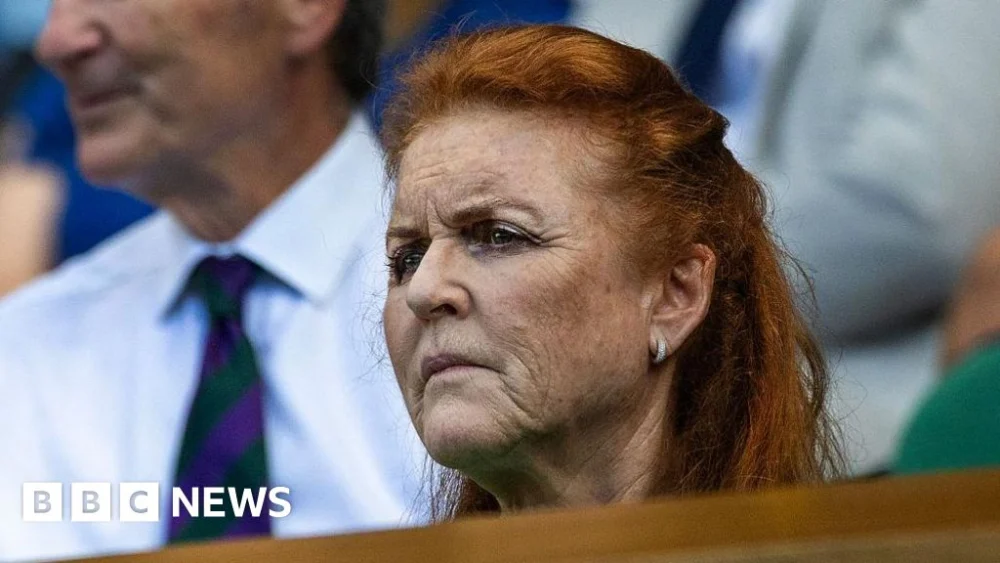
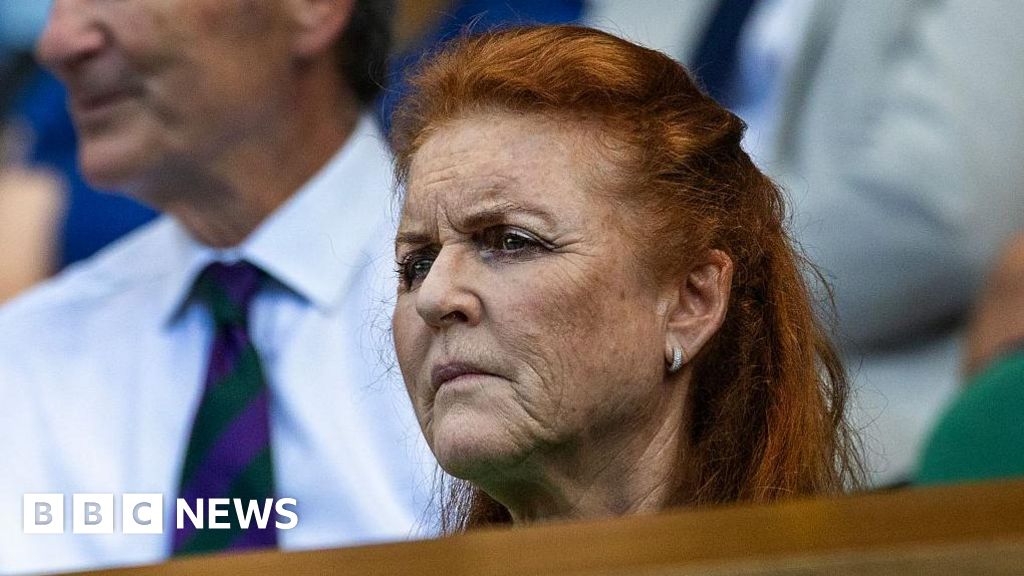
A significant restructuring of the Duchess of York’s commercial holdings is underway, as six companies affiliated with Sarah Ferguson are in the advanced stages of being formally dissolved, a move that coincides with recent disclosures from confidential files illuminating her past financial vulnerabilities. Public records from the UK’s Companies House reveal that these entities, all under Ferguson’s directorship, are slated for removal from the official register within the coming days, absent any substantive legal challenge preventing their cessation. This administrative action signals a notable consolidation of her business interests, occurring as the spotlight on her financial history has intensified due to revelations from the Jeffrey Epstein legal documents.
The process of "striking off" a company from the Companies House register is a formal legal procedure that leads to its ultimate cessation. When a company is struck off, it ceases to exist as a legal entity, and its assets typically pass to the Crown if not distributed beforehand. This action can be initiated either by the company itself, often due to inactivity or a strategic decision to discontinue operations, or by Companies House if statutory obligations, such as filing annual accounts or confirmation statements, are not met. In this instance, the indication of an "application to strike the company off" for five of the six entities, alongside Ferguson’s authentication of such an application for S Phoenix Events, suggests a deliberate, voluntary decision to wind down these particular ventures. This methodical closure of multiple corporate vehicles points to a strategic re-evaluation of her commercial engagements, potentially aimed at simplifying her business structure or divesting from non-performing assets.
The nature of the six companies slated for dissolution — S Phoenix Events, Fergie’s Farm, La Luna Investments, Solamoon Ltd, Philanthrapreneur Ltd, and Planet Partners Productions Ltd — offers a glimpse into the breadth, and perhaps diffuse nature, of Ferguson’s past entrepreneurial ambitions. While specific commercial activities remain largely undisclosed, the available classifications suggest a varied portfolio, ranging from public relations and retail to potential investment vehicles, agricultural ventures, and even entertainment production. The consistent classification of most of these entities as "dormant companies" underscores a prolonged period of minimal or no reported commercial activity. A dormant company, in the UK, is one that has had no "significant accounting transactions" during a financial year. While this status can be maintained for legitimate reasons, such as holding intellectual property or maintaining a brand for future use, a collection of long-standing dormant entities often signifies ventures that did not achieve anticipated commercial traction or were established for purposes that no longer align with current strategic objectives. The dissolution of such entities is a routine practice for many entrepreneurs seeking to streamline their corporate footprint and reduce administrative overheads.
Sarah Ferguson’s journey in the commercial sphere has been a subject of considerable public and media interest for decades, particularly following her divorce from Prince Andrew. Diverging from the traditional path of senior working royals, she has actively pursued various entrepreneurial avenues, leveraging her public profile to forge an independent career. Her ventures have spanned authorship, television appearances, brand endorsements—most notably with Weight Watchers—and the development of lifestyle brands. This history paints a picture of a public figure actively seeking to establish a financially independent identity through diverse commercial engagements. The challenges inherent in such a path are manifold, encompassing intense public scrutiny, the difficulty of translating celebrity into sustained commercial success, and the need to navigate the complexities of corporate governance. The winding down of these six companies could be interpreted as a pragmatic response to these challenges, consolidating her focus on more viable or personally fulfilling projects.
This corporate rationalization gains additional layers of context from the recent unsealing of documents related to Jeffrey Epstein. These files, while not implicating Ferguson in any wrongdoing, brought to light highly personal communications revealing her acute financial distress. Emails exchanged between Ferguson and Epstein indicated that she sought his financial counsel concerning a substantial debt burden, reported to be around £6 million, even during his incarceration for soliciting prostitution from a minor. These revelations underscored the immense financial pressure she experienced, with one communication reportedly expressing her feeling on the verge of "exhaustion." While the legal proceedings surrounding Epstein’s activities are distinct from Ferguson’s business operations, the public disclosure of these interactions casts a renewed light on her financial vulnerabilities and the circumstances under which some of her business decisions may have been made. The association, irrespective of any impropriety on Ferguson’s part, inevitably attracts heightened public and media scrutiny, which can impact a public figure’s commercial endeavors and brand perception.
Indeed, Sarah Ferguson’s financial narrative has been a recurring theme in public discourse for many years. Reports of significant debt and various financial challenges have punctuated her post-royal life, ranging from the infamous "cash for access" scandal in 2010 to persistent speculation about the viability of her numerous business ventures. These historical financial difficulties provide a critical backdrop against which the current dissolution of her companies can be understood. Rather than an isolated event, this streamlining could be seen as a continuation of efforts to manage and restructure her financial affairs, potentially aiming for greater stability and reduced liabilities. The public exposure of her private financial struggles through the Epstein files has, in effect, stripped away any remaining ambiguity regarding the pressures she has faced, making her current business decisions appear as a direct, albeit delayed, response to these long-standing challenges.
An interesting detail within the Companies House filings is the recent change in her directorial details from "Sarah Duchess of York" to "Sarah Margaret Ferguson." This shift, noted late last year, could be interpreted in several ways. It might signify a strategic rebranding, moving towards a more private or simplified business identity that distances her commercial activities from her royal connections. In an era where members of the extended royal family often seek to define their own professional paths, adopting a more civilian nomenclature in business contexts could reflect a desire for greater autonomy and a less formal association with her former royal title in the corporate sphere. Alternatively, it could be a practical administrative update, aligning her official corporate identity with a personal preference or a broader strategy to streamline her public persona.
Despite the dissolution of these six entities, Sarah Ferguson remains an active director for three other registered businesses: Ginger and Moss, Coat, and Librasol. Ginger and Moss is described as a lifestyle brand, set up to market products such as tea, jewellery, and housewares, aligning with her long-standing interest in wellness and domestic aesthetics. Coat is classified under "motion picture production activities," suggesting an ongoing involvement in media or entertainment content creation, an area where she has considerable experience as an author and television personality. Librasol, categorized under "artistic creation," could encompass a range of creative projects, from writing to other artistic endeavors. The continued operation of these companies indicates that while she is rationalizing her older, less active portfolio, she maintains a core set of business interests that align more closely with her current public activities and creative pursuits. This suggests a strategic consolidation rather than a complete withdrawal from the commercial landscape, focusing her efforts on ventures that potentially offer greater current or future viability.
Looking forward, the dissolution of these companies signifies a potential strategic pivot for Sarah Ferguson. It could represent a concerted effort to streamline her commercial operations, shed inactive or underperforming assets, and consolidate her focus on a more manageable and potentially profitable core portfolio. For public figures, particularly those with a royal connection, navigating the commercial world presents a unique set of challenges, including constant media scrutiny, high expectations for brand alignment, and the inherent difficulty of separating personal identity from corporate ventures. This corporate streamlining might be an attempt to mitigate some of these challenges, providing a clearer, more focused path for her future endeavors. The ongoing public interest in her financial affairs, exacerbated by the Epstein revelations, will undoubtedly continue to shape perceptions of her commercial activities, making transparency and strategic clarity paramount for her continued success. The move could be a step towards greater financial stability and a more defined business identity, allowing her to channel her energies into a select few ventures that align with her established public persona and personal interests, ultimately seeking a more sustainable and less financially tumultuous future.



 Aura Kasih
 Safa Marwah
 Ayu Aulia