Ridwan Kamil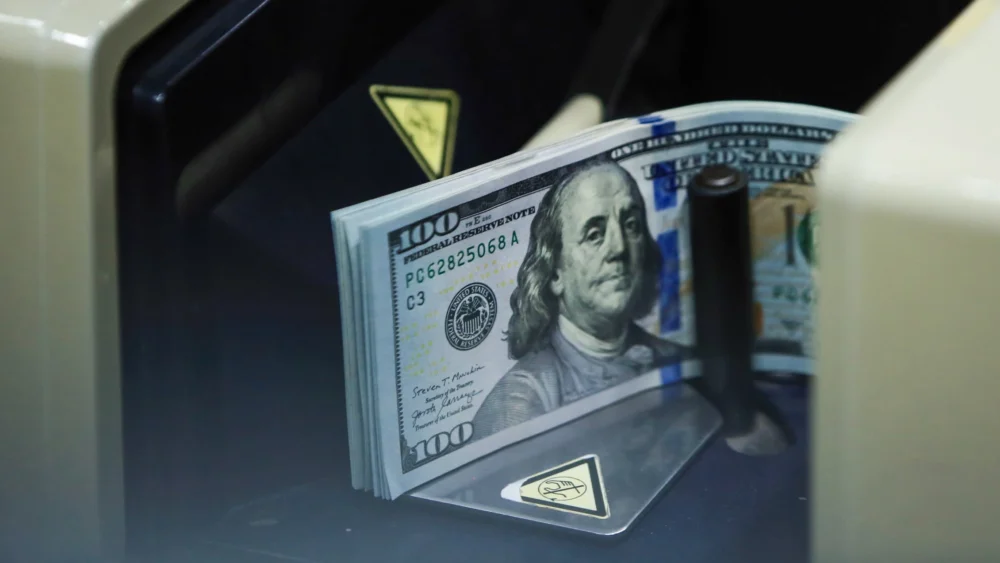
A significant shift in sentiment is rippling through the global investment community, with fund managers expressing the most pessimistic outlook on the U.S. dollar in the last ten years, indicating a potential recalibration of international capital flows and currency valuations.
This profound bearishness towards the world’s preeminent reserve currency is not a sudden development but rather a culmination of several interwoven economic and geopolitical factors that have been steadily eroding the dollar’s traditional strengths. For a decade, the greenback has benefited from a confluence of circumstances, including its status as a safe-haven asset during periods of global uncertainty, the relative strength of the U.S. economy, and the Federal Reserve’s dominant monetary policy influence. However, a new economic paradigm appears to be taking hold, prompting a strategic reassessment by those who allocate vast sums of capital across international markets.
The prevailing sentiment among a broad spectrum of fund managers points to a sustained period of dollar weakness. This conviction is not merely a fleeting reaction to recent market volatility but reflects a deeper, more structural reassessment of the dollar’s future trajectory. Several key drivers are fueling this sentiment, chief among them being the evolving global economic landscape, the recalibration of interest rate differentials, and a growing appetite for alternative investment destinations.
One of the most significant catalysts for this bearish dollar view is the perceived shift in the Federal Reserve’s monetary policy stance. While the Fed has historically been at the forefront of monetary tightening cycles, signaling strength and stability for the dollar, recent signals suggest a potential pivot or at least a pause in aggressive rate hikes. This shift, driven by concerns about economic growth and inflation dynamics within the U.S., has diminished the interest rate differential advantage that the dollar has enjoyed. As other major central banks, particularly in Europe and Asia, continue to tighten their own monetary policies, the allure of dollar-denominated assets solely based on yield is diminishing. This narrowing of yield premiums makes other currencies more attractive, thereby increasing selling pressure on the dollar.
Furthermore, the narrative of U.S. economic exceptionalism, which has long underpinned the dollar’s strength, is facing increasing scrutiny. While the U.S. economy has demonstrated resilience, there are growing concerns about its long-term growth prospects, particularly in light of persistent inflationary pressures, high levels of national debt, and potential structural headwinds. Conversely, several other economies, including those in emerging markets and even some developed nations, are showing signs of stabilization and potential growth acceleration. This divergence in economic outlooks prompts fund managers to reallocate capital away from perceived slower-growing economies towards those offering more robust expansion opportunities.
The geopolitical landscape also plays a crucial role in this shift. The increasing fragmentation of the global order, coupled with ongoing geopolitical tensions and trade disputes, has led some investors to question the long-term stability and dominance of any single currency. While the dollar has historically served as a safe haven, the current global environment is prompting a diversification of risk. This includes a growing interest in alternative reserve currencies and a de-emphasis on assets denominated in a single dominant currency, reflecting a desire for greater portfolio resilience in an increasingly unpredictable world.
The implications of this widespread bearishness on the dollar are far-reaching and multifaceted. For the U.S. economy, a sustained period of dollar depreciation could lead to higher import costs, potentially exacerbating inflationary pressures. However, it could also make U.S. exports more competitive, providing a boost to domestic industries. For American consumers, a weaker dollar means that international travel and imported goods will become more expensive.
Globally, a weaker dollar can have a significant impact on commodity prices, many of which are denominated in dollars. A depreciating dollar typically leads to higher prices for oil, gold, and other commodities, as buyers in other countries need to spend more of their local currency to acquire these dollar-priced assets. This can have inflationary consequences for economies that are net importers of these commodities.
Moreover, a weakening dollar can signal a broader shift in global economic power. As investors diversify away from dollar-denominated assets, there is a potential for increased demand for assets denominated in other currencies, such as the euro, yen, or even emerging market currencies. This could lead to a rebalancing of global financial markets and a gradual erosion of the dollar’s hegemony.
The sentiment among fund managers is often a forward-looking indicator, and their current bearish stance suggests that they are anticipating a sustained period of dollar weakness. This expectation could translate into concrete investment decisions, such as reducing dollar holdings, increasing investments in foreign currencies, and seeking out assets that are likely to benefit from a weaker dollar environment.
This trend is not necessarily a sign of imminent collapse for the U.S. dollar. The dollar’s deep liquidity, its role in international trade and finance, and the sheer size and depth of U.S. capital markets provide it with a fundamental resilience. However, the current sentiment does suggest a significant moderation of its upward momentum and a potential for a prolonged period of correction or depreciation.
The future trajectory of the dollar will likely depend on a complex interplay of factors, including the future path of U.S. monetary policy, the relative performance of the U.S. economy compared to its global peers, and the evolution of geopolitical risks. Fund managers will be closely monitoring these developments, and any signs of a reversal in these trends could prompt a swift recalibration of their dollar exposure.
In conclusion, the unprecedented level of pessimism surrounding the U.S. dollar among global fund managers signifies a pivotal moment in international finance. This sentiment is driven by a confluence of shifting economic fundamentals, evolving monetary policy landscapes, and a recalibration of geopolitical risk. The implications of this widespread bearishness are profound, potentially reshaping global capital flows, influencing commodity prices, and signaling a gradual but significant alteration in the global financial order. As investors position themselves for this potential new era, the dollar’s dominance, while still considerable, appears to be facing its most significant challenge in a decade.



 Lisa Mariana
 Aura Kasih
 Safa Marwah
 Ayu Aulia