Safa Marwah
The digital security landscape has once again highlighted the relentless cat-and-mouse game between developers and malicious actors, as Google moved swiftly to deploy urgent updates for its Chrome web browser. This proactive measure addresses a severe security flaw, designated as a zero-day vulnerability, which has been confirmed to be actively exploited in real-world attacks. This incident marks the inaugural instance of such a critical security bypass requiring an emergency patch since the commencement of the current year, underscoring the persistent threat posed by sophisticated cyber adversaries.
The vulnerability, identified as CVE-2026-2441, was disclosed through a security advisory issued by Google, which explicitly acknowledged its exploitation "in the wild." This phrase signifies that threat actors have already developed and deployed exploits targeting the flaw, posing an immediate and elevated risk to Chrome users globally. The prompt release of an out-of-band patch is a testament to the severity and urgency of the situation, aiming to neutralize the threat before it can be more widely leveraged.
At its core, CVE-2026-2441 is characterized as a use-after-free vulnerability. This class of memory corruption bug arises when a program attempts to use memory after it has been freed, often leading to unpredictable behavior, crashes, or, in more severe cases, arbitrary code execution. Specifically, this flaw stems from an iterator invalidation bug within Chrome’s CSSFontFeatureValuesMap, which is an internal component responsible for handling Cascading Style Sheets (CSS) font feature values. The vulnerability was brought to Google’s attention by security researcher Shaheen Fazim, whose diligent work allowed the company to begin addressing the problem.

Successful exploitation of such a flaw can grant attackers significant leverage over a user’s browser session. The potential consequences range from minor annoyances like browser crashes and rendering anomalies to more serious outcomes such as data corruption or the execution of arbitrary code, which could lead to a complete system compromise. The technical nature of a use-after-free bug means that once a memory region is deallocated, an attacker might be able to allocate their own malicious data in that same memory location. If the program then attempts to use the original (now freed) pointer, it would inadvertently access the attacker’s controlled data, leading to a variety of exploits. In the context of a browser, this could allow an attacker to escape the browser’s sandbox and execute malicious code on the underlying operating system.
Analysis of the Chromium commit history, which documents changes made to the Chrome codebase, reveals that the patch for CVE-2026-2441 was specifically tagged as addressing "the immediate problem." However, a crucial detail emerges from this commit: it also references "remaining work" tracked under bug 483936078. This notation suggests that while the current patch resolves the immediate exploit vector, there may be deeper, related issues or further hardening required to fully mitigate the underlying architectural weakness that gave rise to this specific vulnerability. Such a scenario is not uncommon in complex software development, where immediate fixes are deployed to halt active attacks, while more comprehensive, long-term solutions are developed and integrated into future releases.
The decision to "cherry-pick" this patch—a term used in software development to describe applying a specific commit from one branch to another—across multiple stable releases further emphasizes the criticality of the vulnerability. Instead of waiting for the next scheduled major version update, Google elected to backport the fix into existing stable channels. This accelerated deployment strategy is typically reserved for severe security issues, especially those already under active exploitation, to ensure that the broadest possible user base receives the protection as quickly as possible. This approach prioritizes user safety over adherence to a strict release cadence, a common practice when facing imminent cyber threats.

Despite confirming active exploitation, Google has maintained its standard policy of withholding extensive details regarding the specific incidents or the nature of the threat actors involved. This strategic silence is a deliberate measure to prevent further exploitation by other malicious entities. The company’s rationale is clear: restricting public access to bug details and associated links until a significant majority of users have updated their browsers minimizes the window of opportunity for attackers to reverse-engineer the patch and develop new exploits. This information embargo also extends to vulnerabilities residing in third-party libraries that other projects might depend on, ensuring that a coordinated patching effort can occur across the broader software ecosystem. This cautious disclosure strategy is a cornerstone of responsible vulnerability management, balancing transparency with the imperative to protect users.
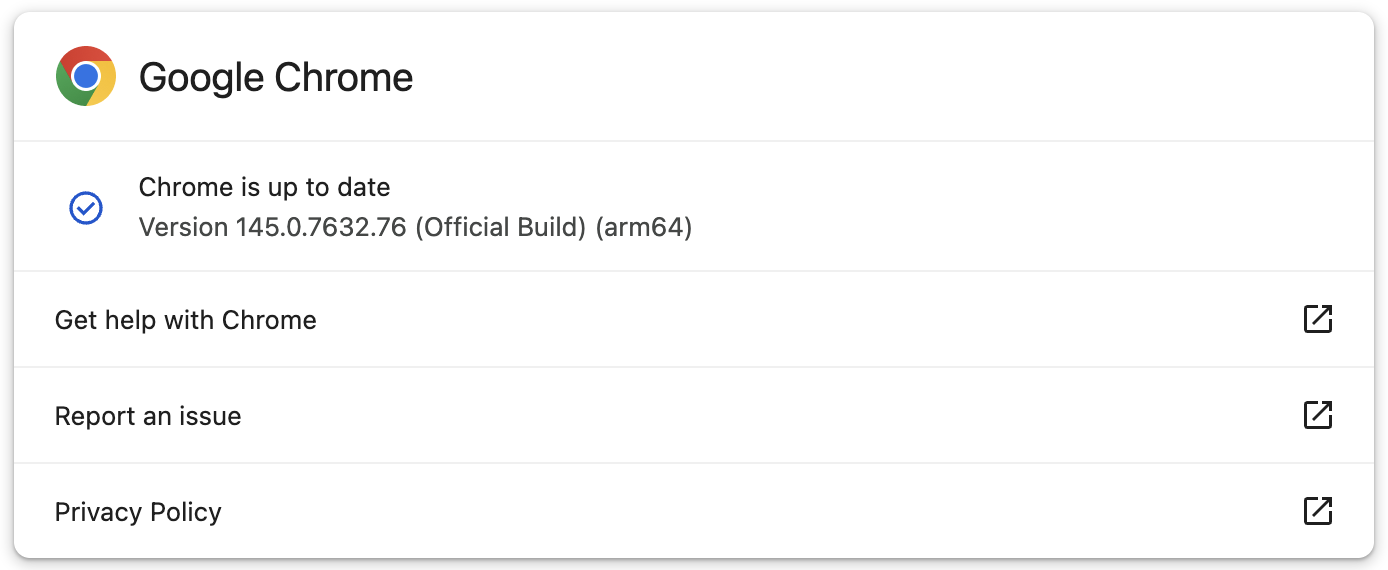
The emergency updates have been progressively rolled out to users on the Stable Desktop channel. This includes Windows, macOS, and Linux platforms, with specific version numbers such as 145.0.7632.75/76 for macOS and Windows, and 144.0.7559.75 for Linux. The phased deployment ensures a smooth transition, reaching users worldwide over the coming days and weeks. For optimal security, users are strongly advised to ensure their Chrome browser is updated to the latest available version. While manual checks can be performed through the browser’s settings, Chrome is typically configured to automatically check for and install updates upon the next launch, making it crucial for users to restart their browsers regularly to apply these vital security patches.
This recent incident serves as a stark reminder of the continuous assault on browser security. While this marks the first actively exploited Chrome zero-day patched in the current year, it follows a concerning trend from the previous year. In 2025, Google addressed a total of eight zero-day vulnerabilities that were actively abused in the wild. A significant portion of these critical flaws were identified and reported by Google’s renowned Threat Analysis Group (TAG). TAG is an elite team of security researchers widely recognized for its expertise in tracking and identifying sophisticated state-sponsored and commercial spyware operations that often target high-risk individuals, including journalists, human rights activists, and political dissidents. Their persistent efforts play a pivotal role in uncovering and mitigating advanced persistent threats (APTs) before they can cause widespread harm.
The implications of actively exploited zero-days extend beyond individual users. For enterprises, these vulnerabilities represent a significant risk to data integrity, operational continuity, and overall network security. Organizations relying on Chrome as their primary browser must implement robust patch management policies and ensure that their endpoints are updated promptly. The rapid discovery and exploitation of browser vulnerabilities highlight the need for a multi-layered security strategy that includes endpoint detection and response (EDR) solutions, network intrusion detection systems, and comprehensive user training on cybersecurity best practices.
The ongoing battle against zero-day exploits underscores the dynamic nature of cybersecurity. Browser vendors like Google invest heavily in security research, bug bounty programs, and internal threat intelligence to identify and mitigate vulnerabilities. However, the sophistication of threat actors, often backed by nation-states or well-funded criminal organizations, ensures that new attack vectors are constantly being explored. The "remaining work" referenced in the patch commit for CVE-2026-2441 further illustrates the depth of the security challenge. It suggests an iterative process of hardening and refinement that is necessary to address not just the symptom (the exploit) but also the underlying systemic issues.
In conclusion, the patching of the first Chrome zero-day of the year, actively exploited in attacks, serves as a critical reminder for all users to prioritize software updates. The continuous vigilance of security researchers, coupled with rapid response from vendors, forms the bedrock of defense in an increasingly complex threat landscape. As digital life becomes more integrated with web browsers, the security of these platforms remains paramount, demanding perpetual innovation in defensive strategies and unwavering commitment to prompt vulnerability remediation. The cybersecurity community will undoubtedly continue to monitor the progression of bug 483936078, anticipating further enhancements to fortify Chrome against future sophisticated threats.




 Lisa Mariana
 Aura Kasih
 Ayu Aulia